In which we visit two very different gardens, a charming Mediaval village and have some interesting bus driving.
After a fairly sleepless night (3 a.m. wakeup for me, 4 a.m. for Alison; clearly jetlag is not done with us!) Alison and I went for a morning walk to explore the grounds of the Spa Hotel. The top acre was curated, very pleasant with trails, rhodos in bloom and benches, then below was uncultured meadows and woodland comprising the rest of the 14 acres advertised. We then got a tour of the spa facilities which include communal and seperate single sex saunas, a lovely pool in a conservatory like environment, a wet sauna and an extensive gym from weights to exercise machines. Also of course treatment rooms for various treatments from reflexology to hot stone massage (prices comparable to Spa Utopia in Canada).
The buffet breakfast was good, complete with typically English cold toast with either full breakfast or granola/yoghourt/fruit versions. The coffee was foul, glad I had brought my own instant with me…. we had thought last night it was just the decaf made hastily that was bad but confirmed this morning it’s all coffee at the hotel.
Off we went at 10:15 to Sissinghurst, a 45 min drive with informative and entertaining info provided along the way by Lynn, the local guide. We were briefed on what to see at the garden, and its’ background. There was a booked entry time of 11 a.m. and we were welcomed by the National Trust representative on board the bus then piled out towards the entrance. There we were given our tickets and – what? let loose?
Big disappointment, I had shelled out the big bucks for this tour assuming that we were getting a guided tour from an expert. Instead, I was told that he was there to answer any questions, but – go to it. Alas the cell signal from my carrier, Three, was fairly poor so frequently when I asked “Picture This” to identify a flower, it would decline, citing poor connection. So once again, we wandered around admiring the scenery, but not entirely sure quite often what flowers we were looking at. So much for brushing up on perennial names and learning! Definitely a big minus, and frankly, a swiz.
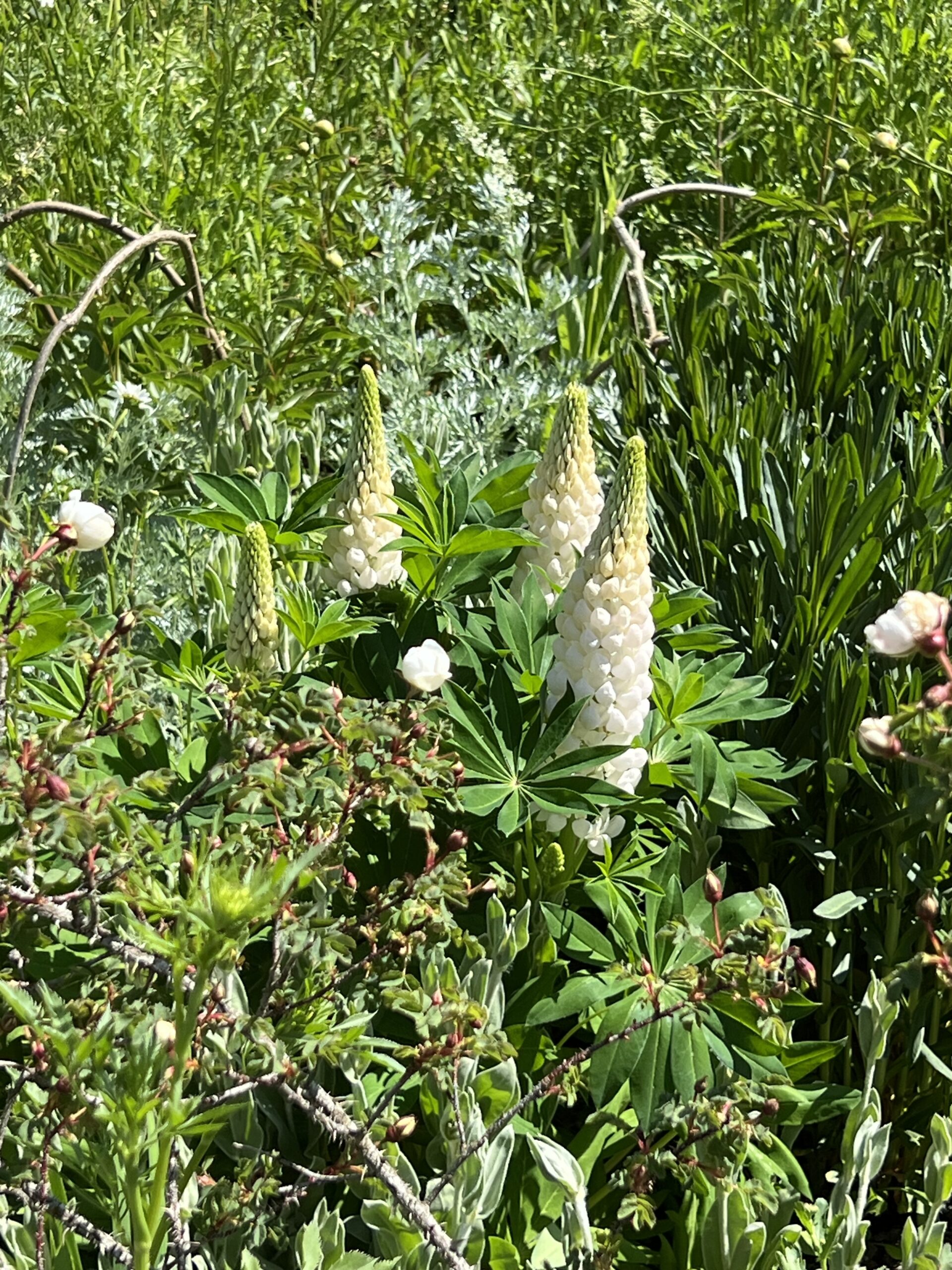
It was, however, quite beautiful, and a lovely day to boot with warmth and sunny skies but not too hot. I recall the last visit was in summer heat, but I think there was more out during that visit. And not to say that we didn’t thoroughly enjoy the visit, albeit the white garden was very underwhelming after a big buildup (perhaps better in a couple of weeks?). White lupines were pretty cool though. But overall, not what I had expected at all. I took pictures of the unknown named flowers with the expectation of running them through “Picture This” when back to a better cell connection, but alas there are too many and it’s now too late in the evening to contemplate starting. Maybe on the trains on the way upcountry… I was surprised to see how far ahead the vegetables were; artichokes already formed, and the beans 2′ tall.
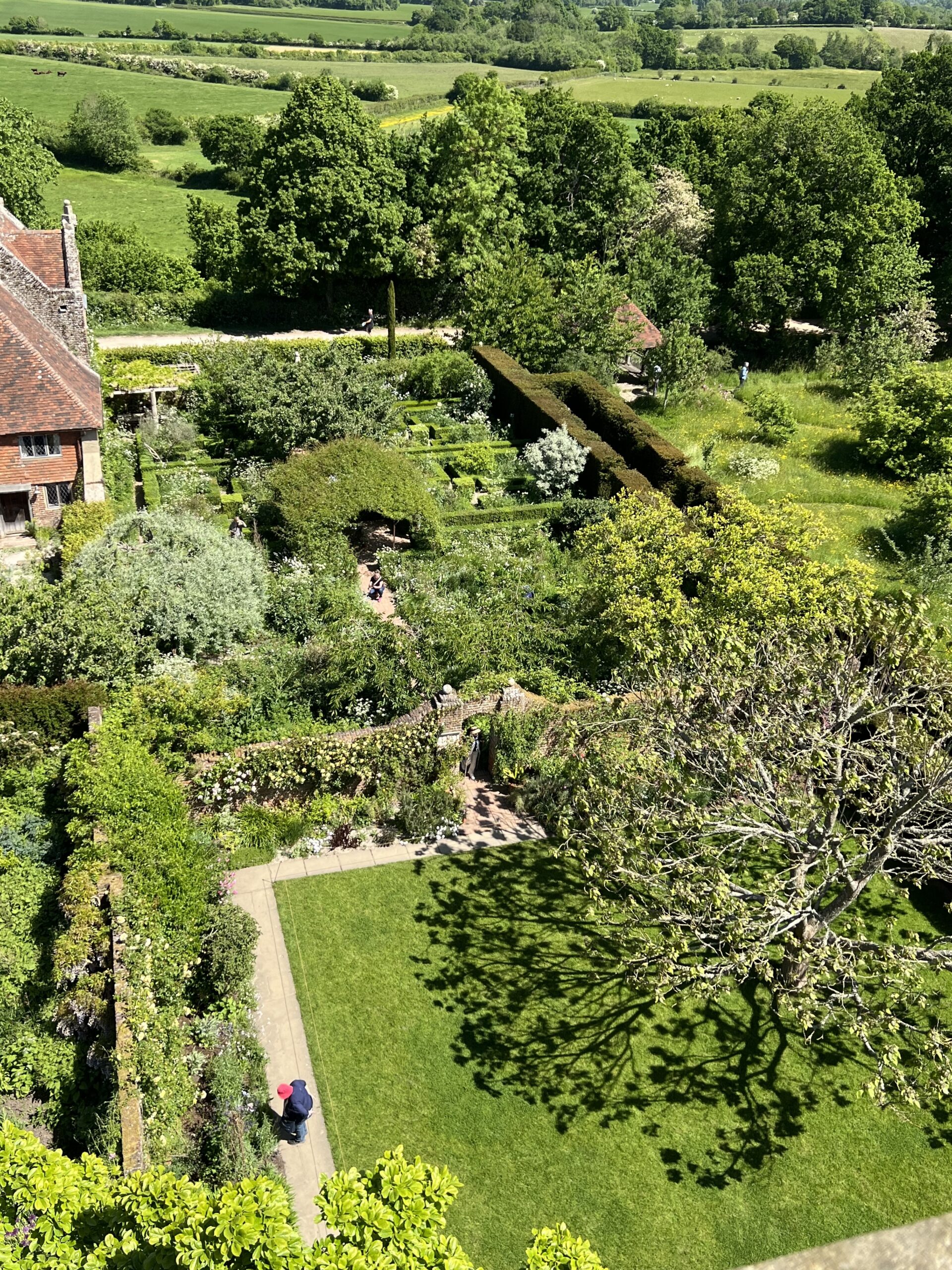
Part of the garden from the tower
Some of the other garden parts were pretty, and happily there weren’t masses of people about – it got busier when we left at 1:15 p.m. after having queued for a sandwich and REAL coffee, eating on the lawn.
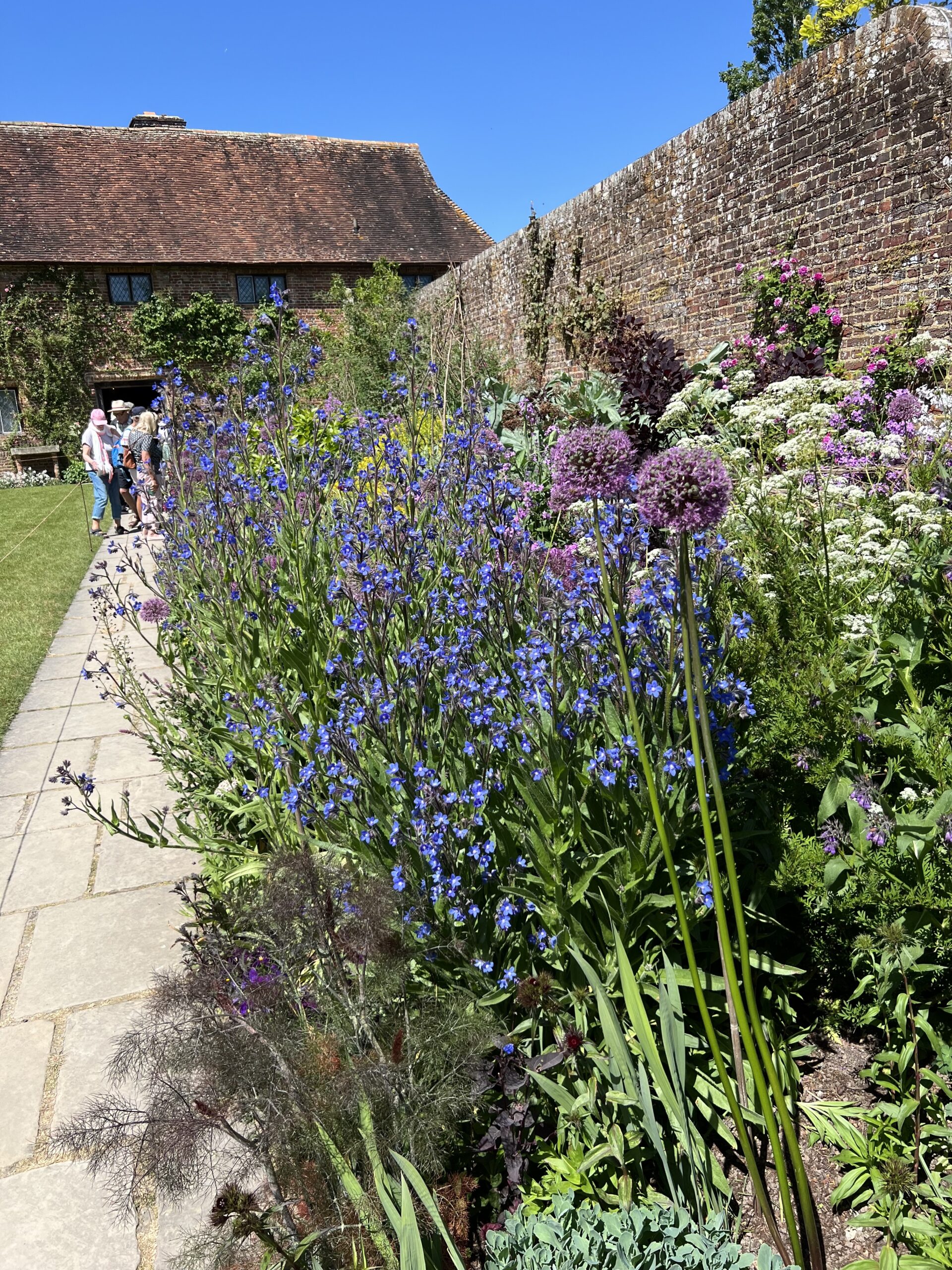
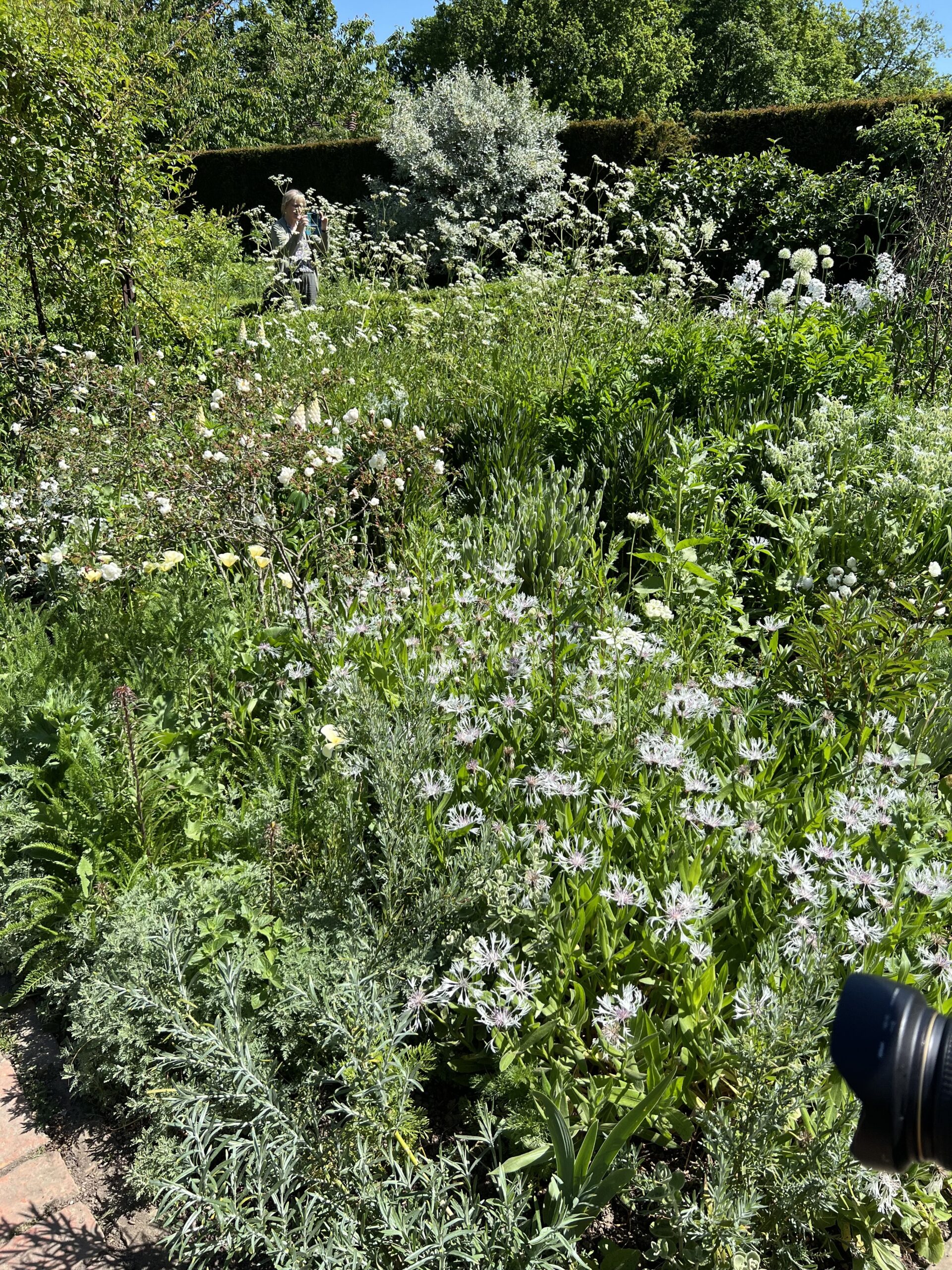
The underwhelming white garden but the white lupines were unusual…
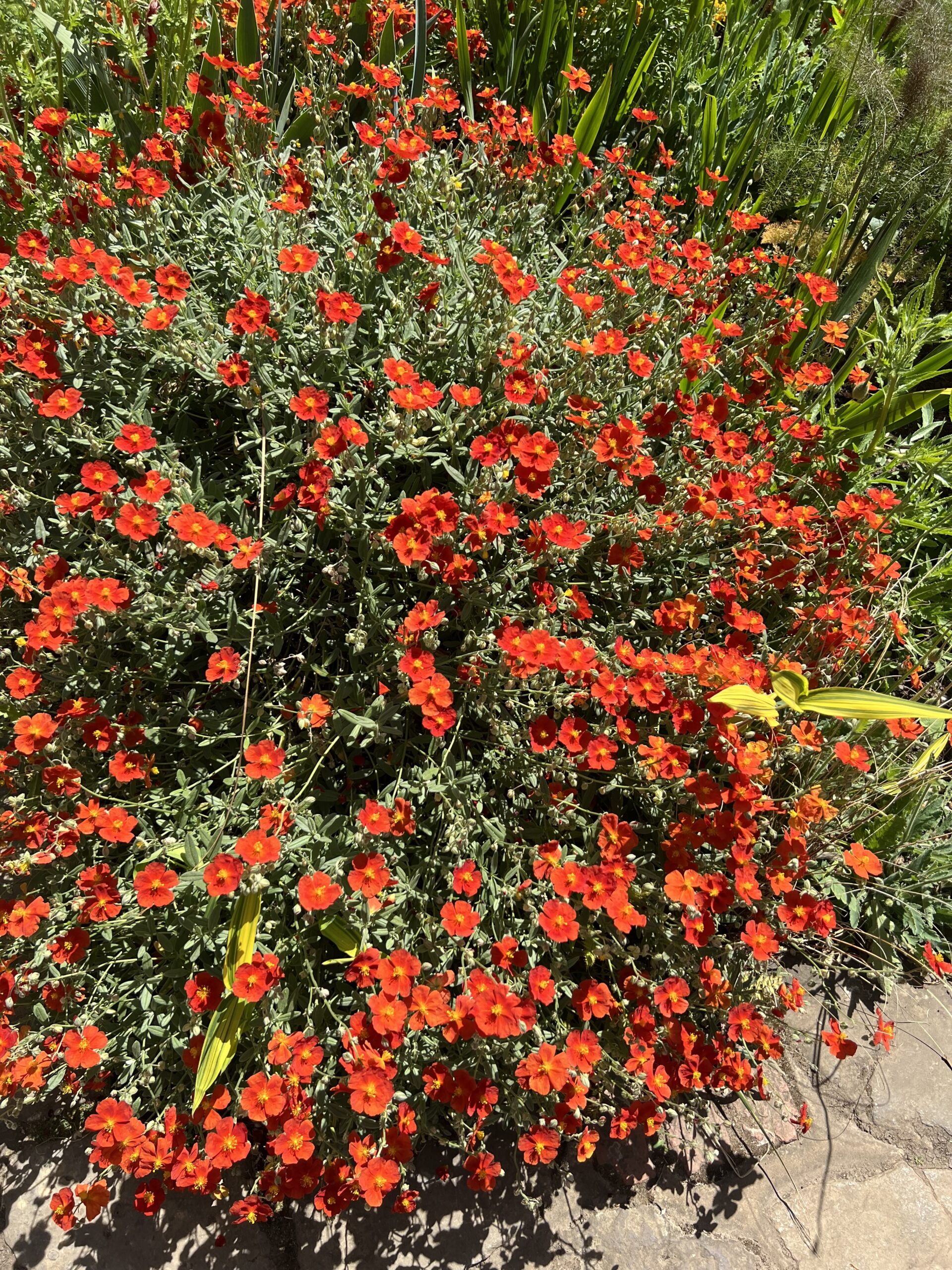
in the xeroscopic garden
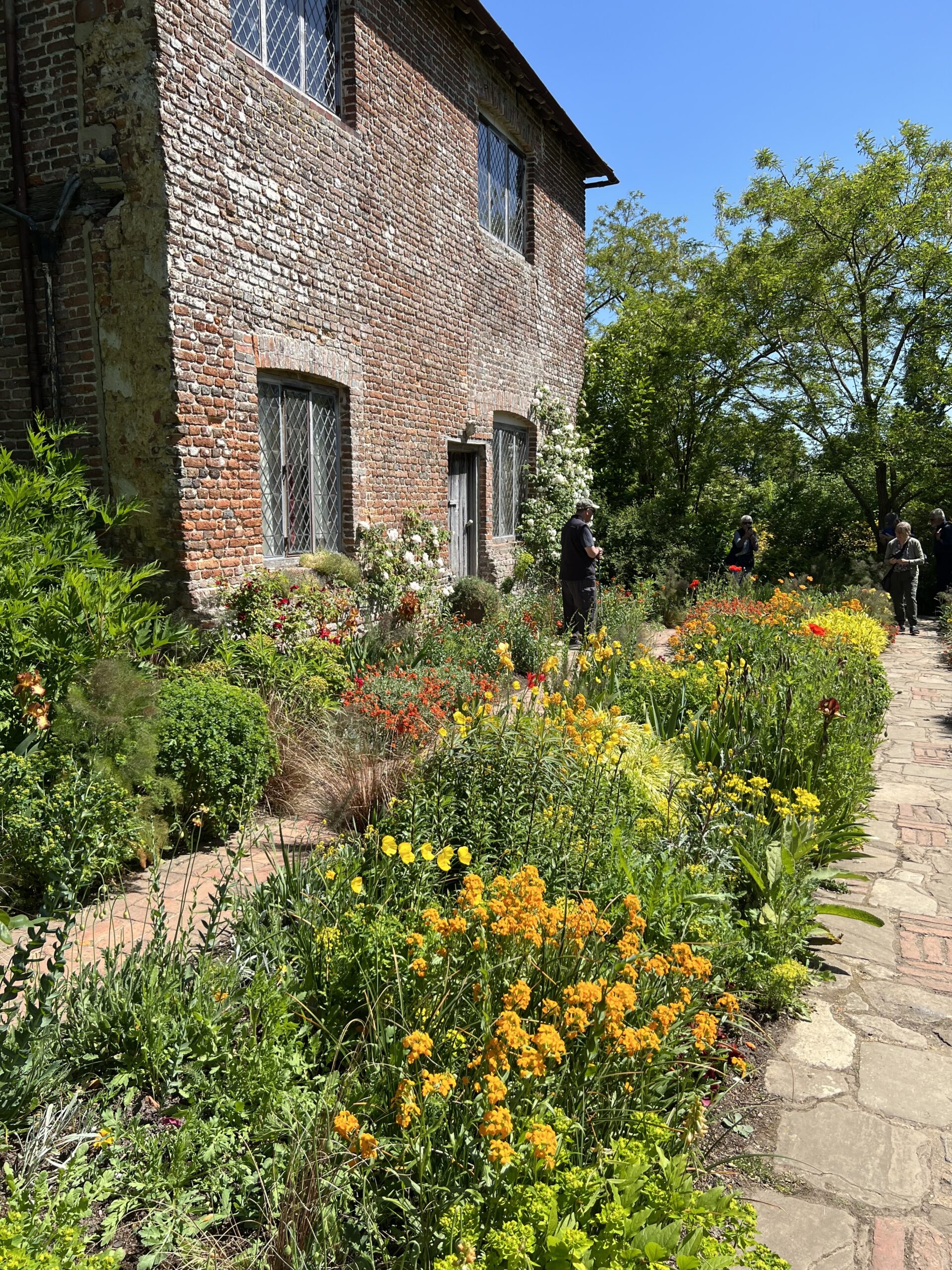
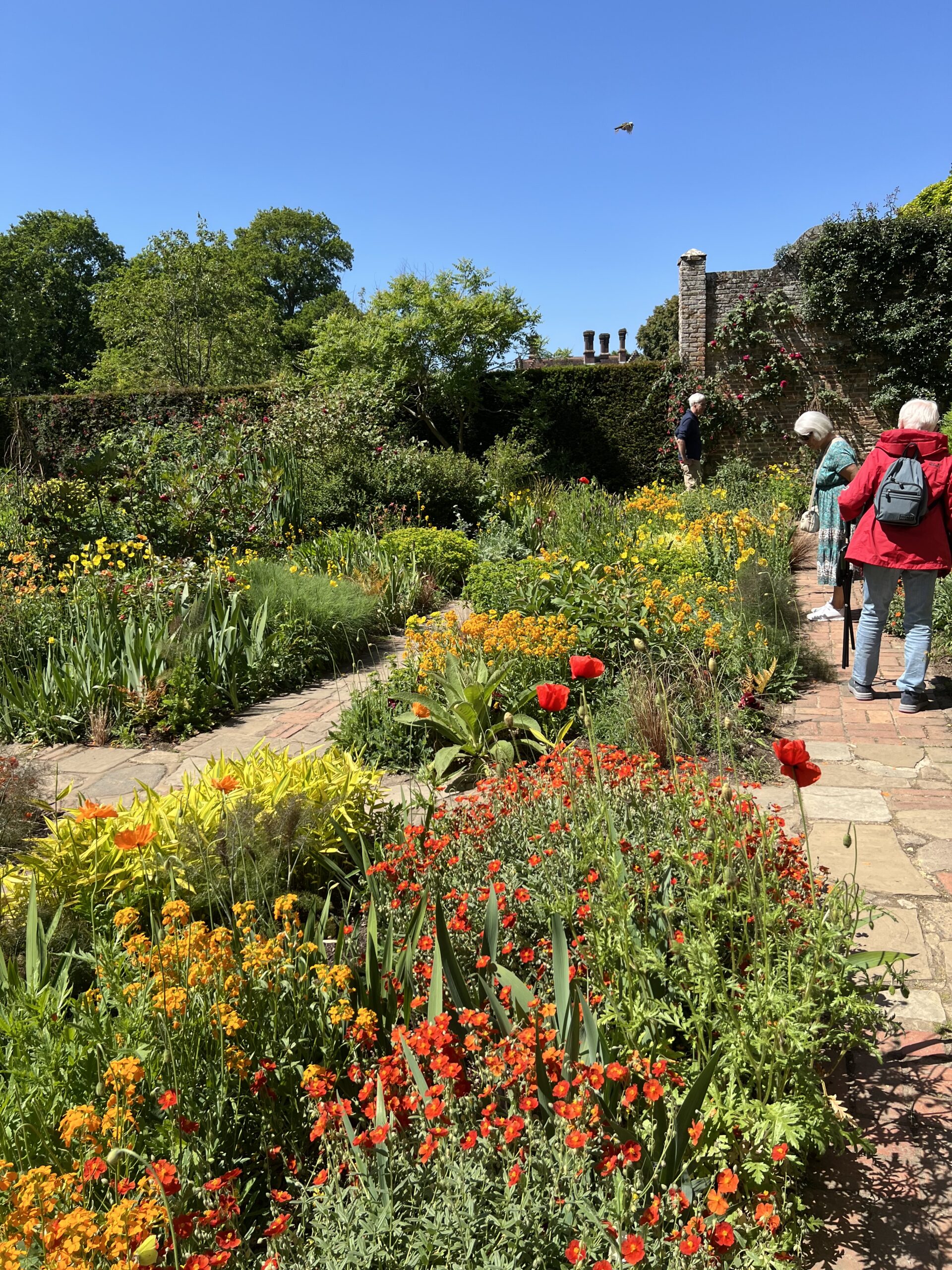
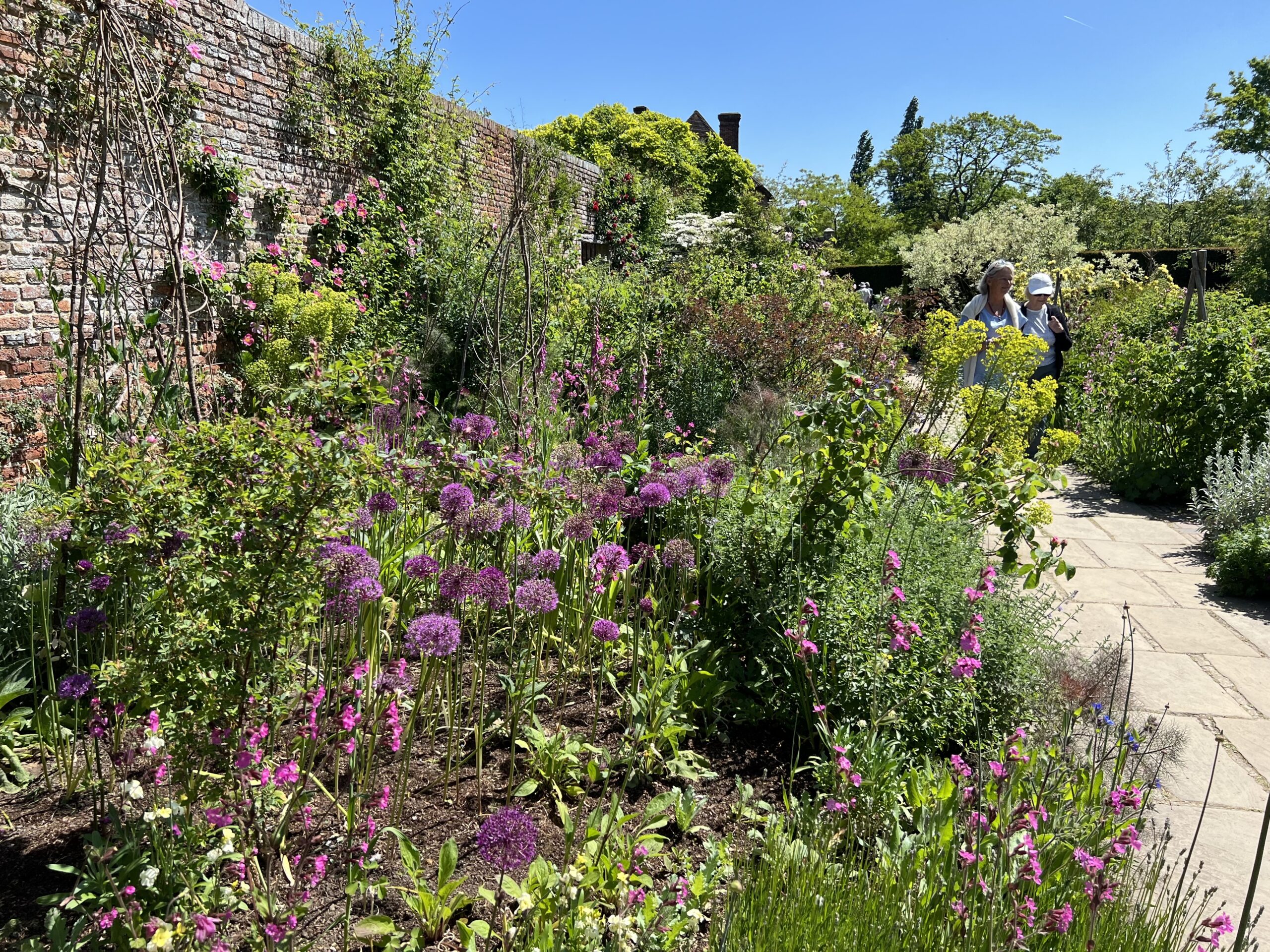
Borders!
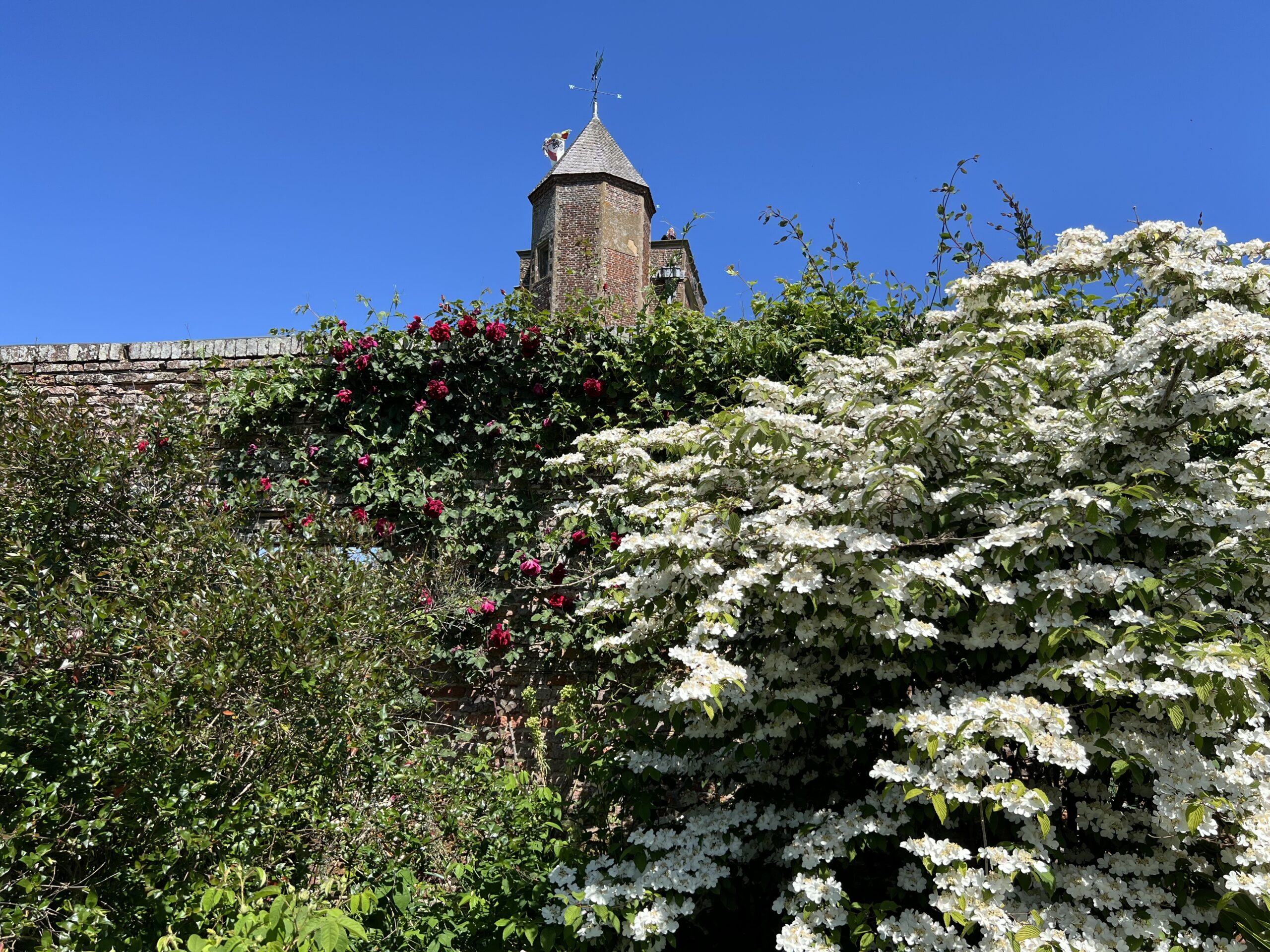
lovely juxtaposition of dogwood + roses
wisteria row
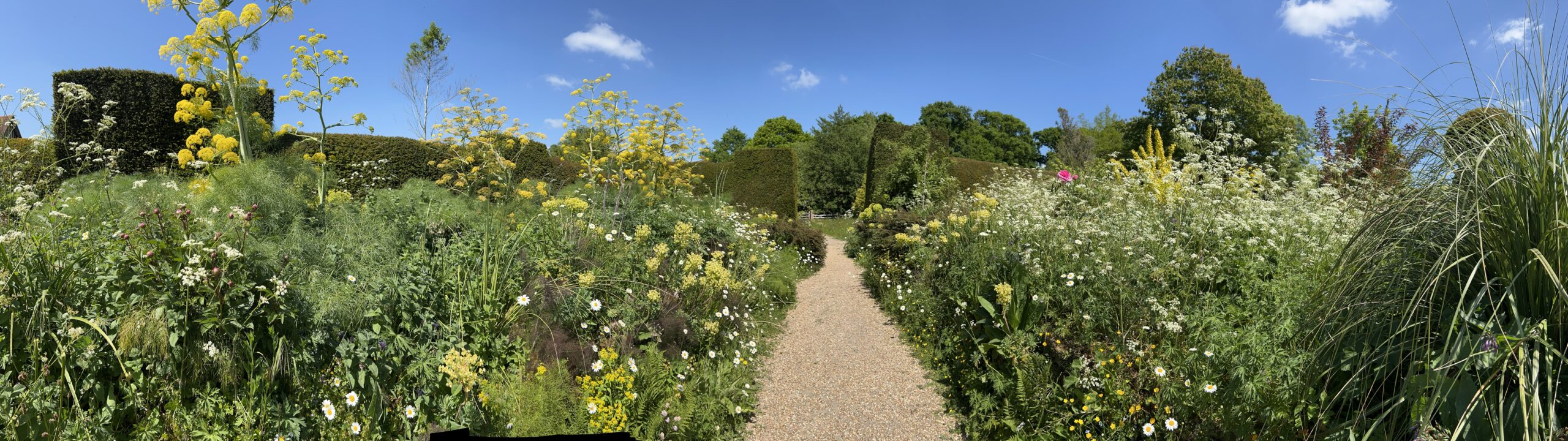
And so, off to Great Dixter…. I was really looking forward to this one, having had a couple of lectures in the master gardener meetings and spring conference by the head gardener, Fergus Garrett. He came out to meet us and talked a bit about the garden and its philosophy of biodiversity beside a bed of giant fennel plants (seeds from Turkey).
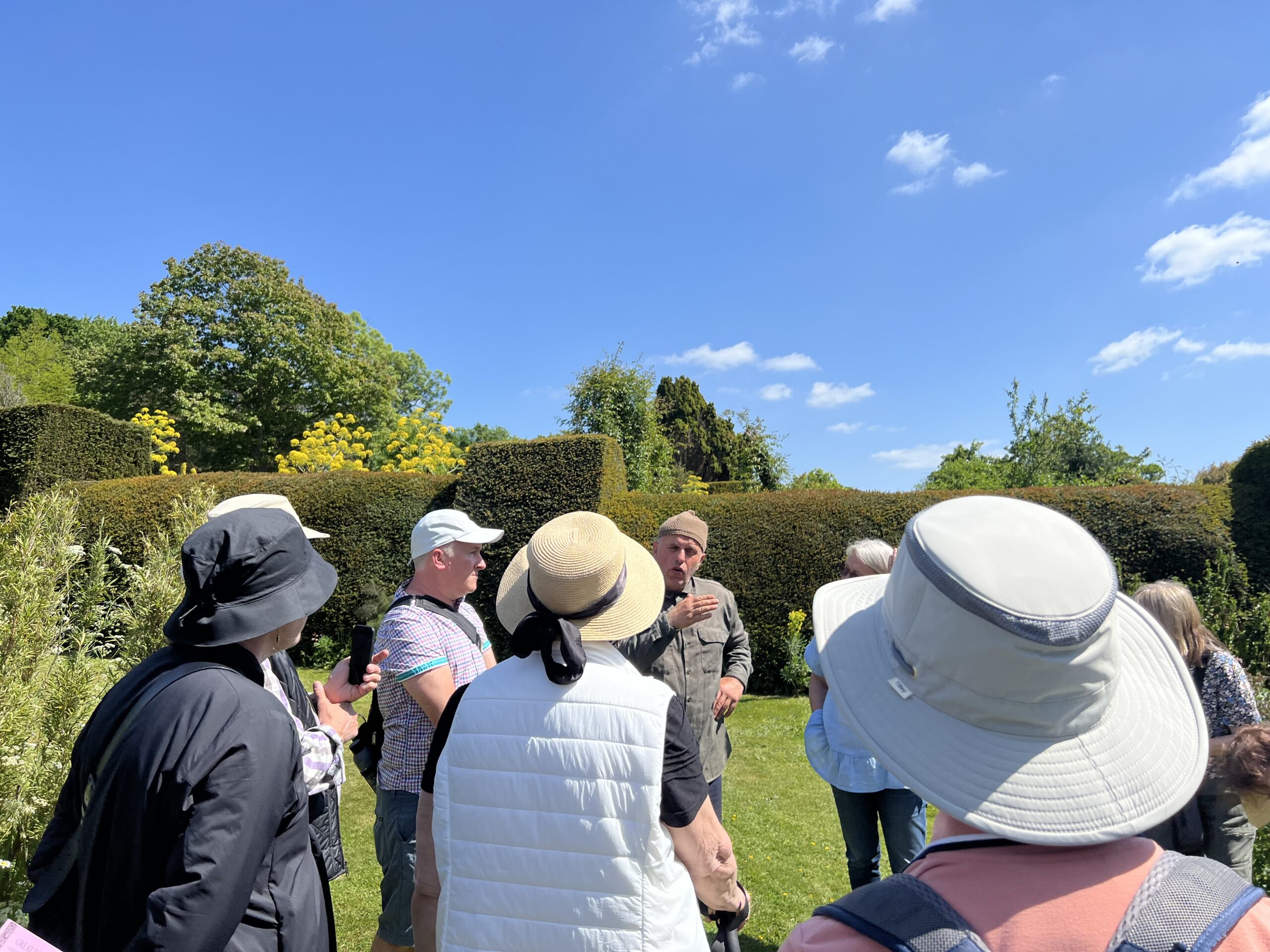
Fergus Garrett in the centre giving some background to the garden.
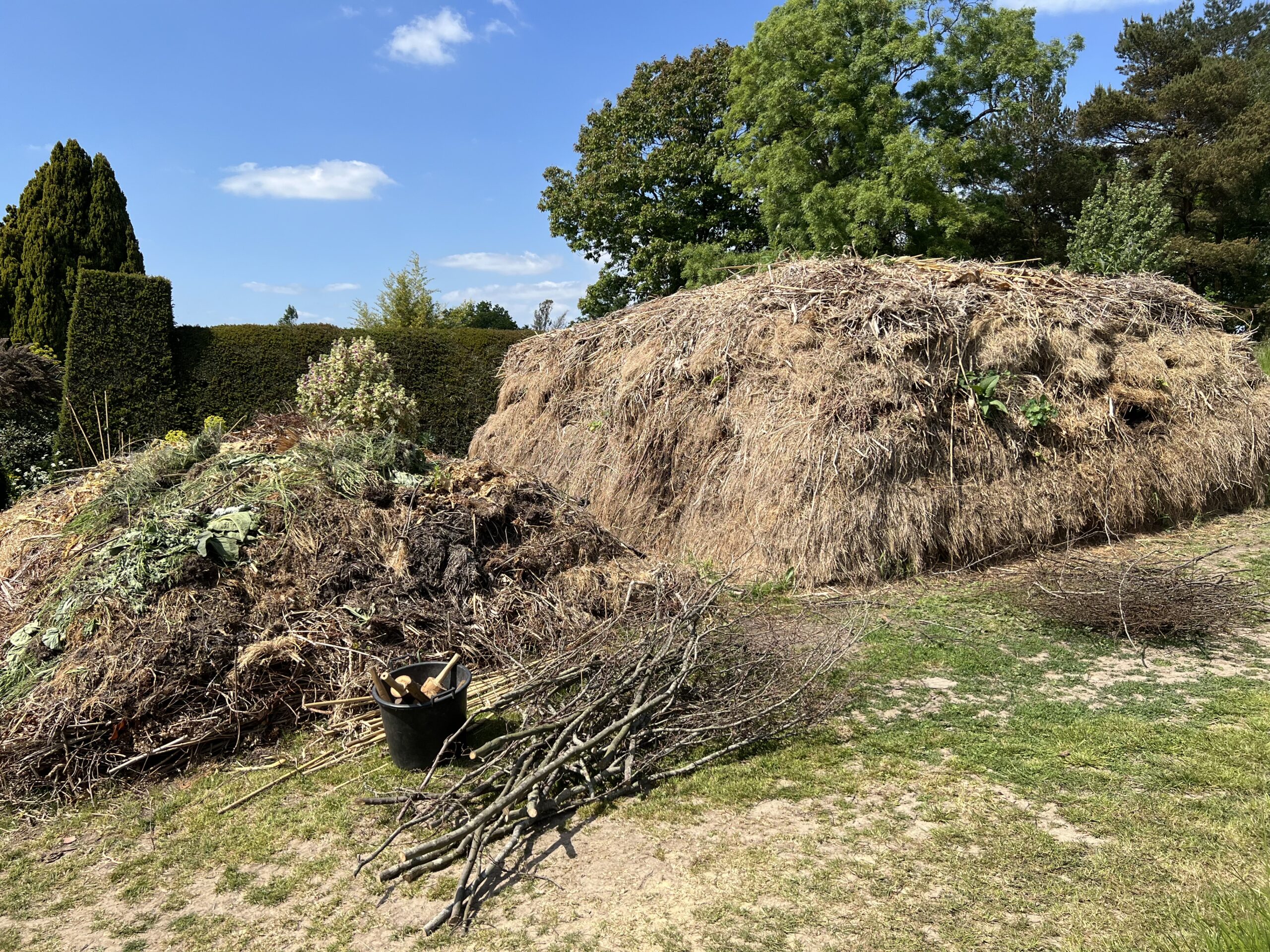
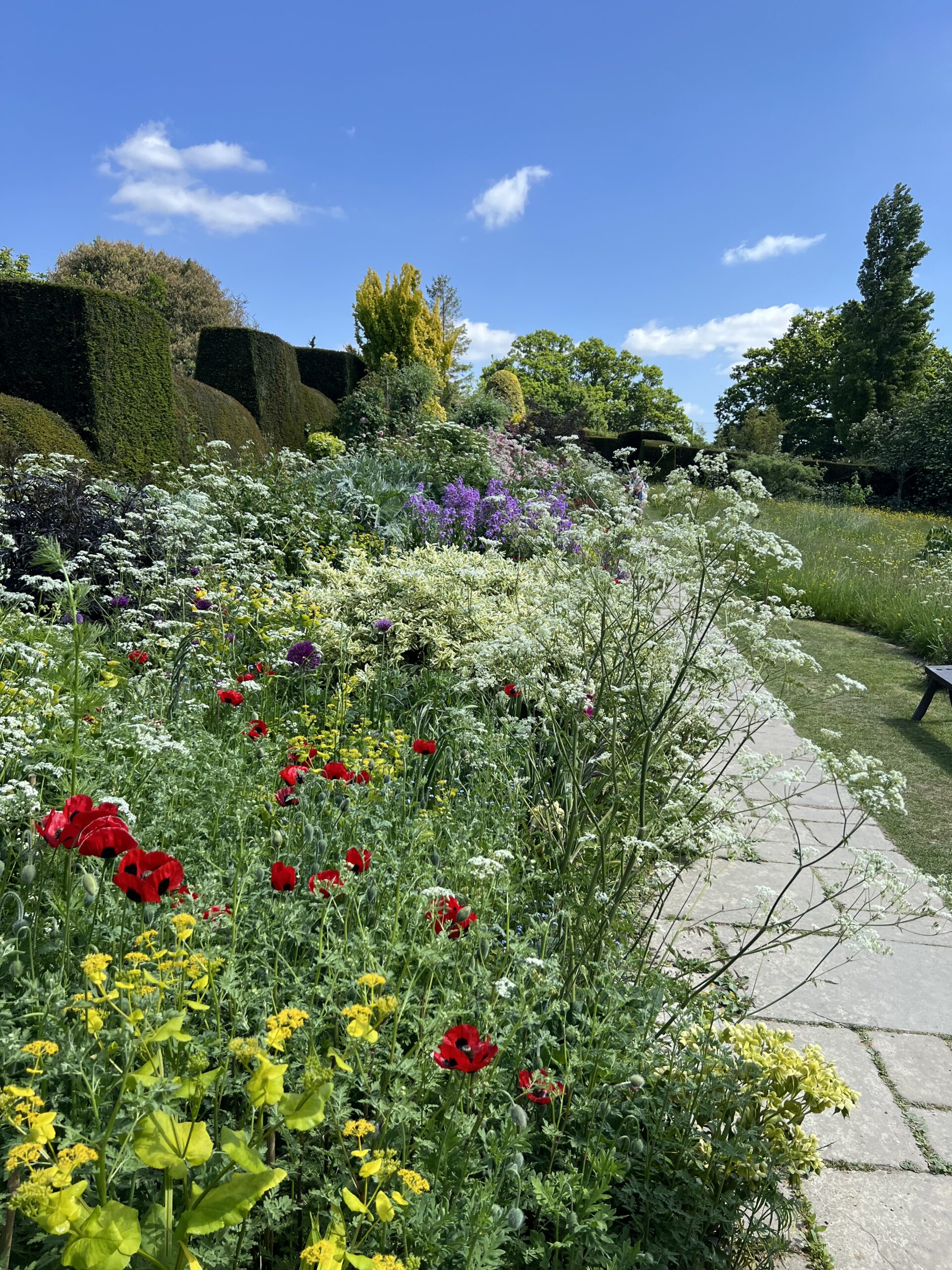
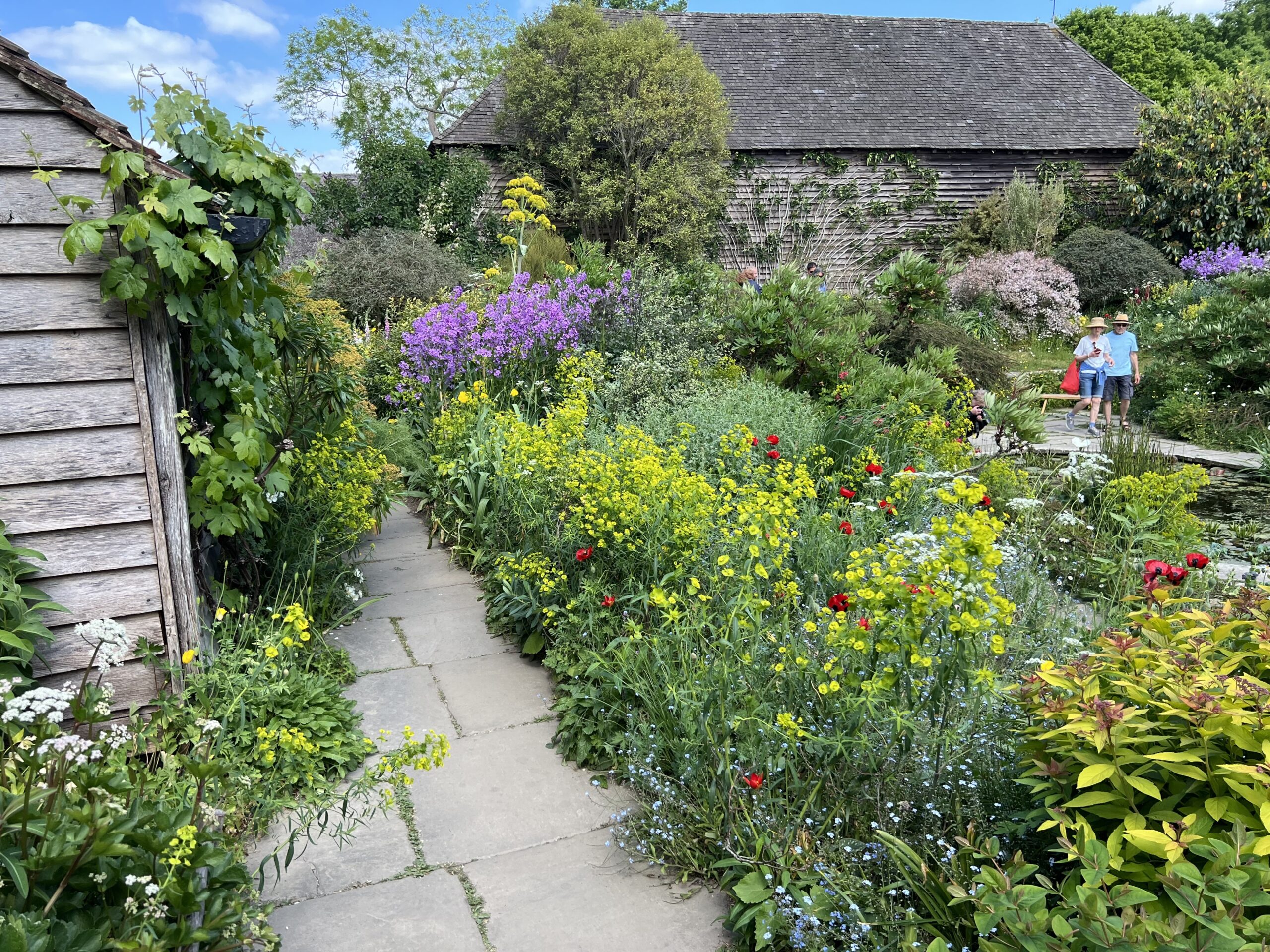
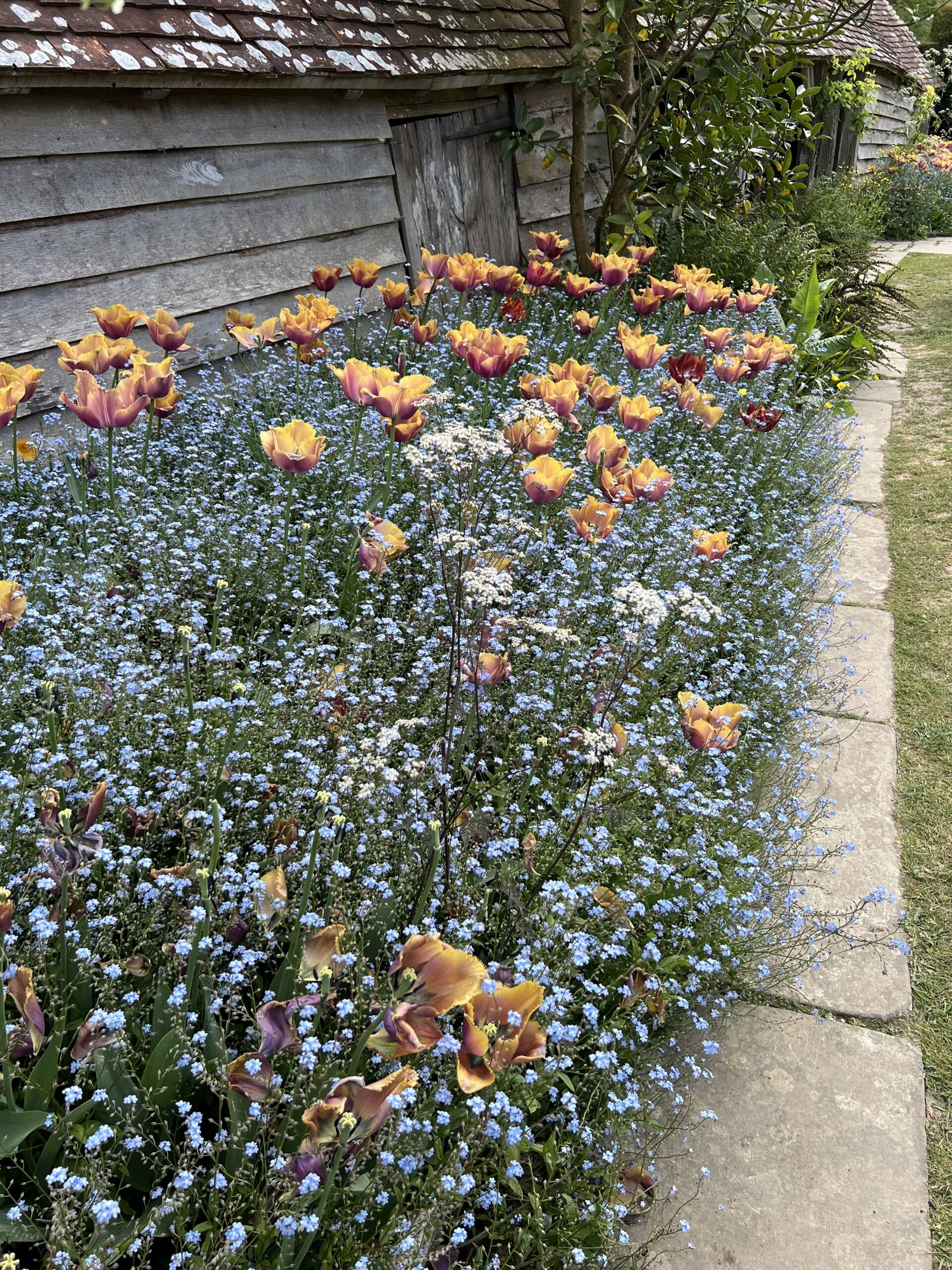
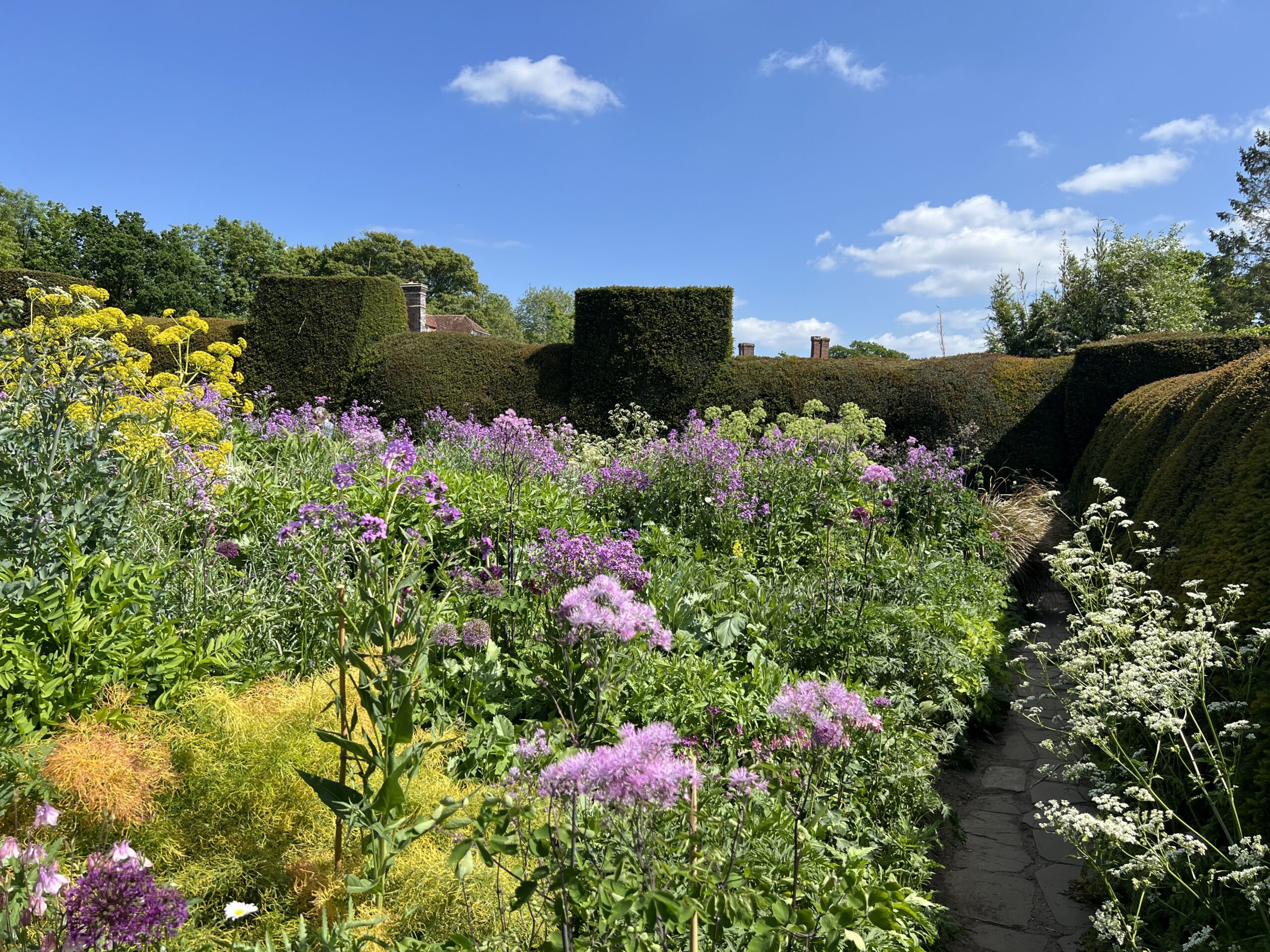
Great Dixter was an amazing exploration, of flamboyant growth and artfully crafted borders and beds. It was easy to understand why it got such a high number of species in the biodiversity audit. I’ve included a picture of the famous compost pile!
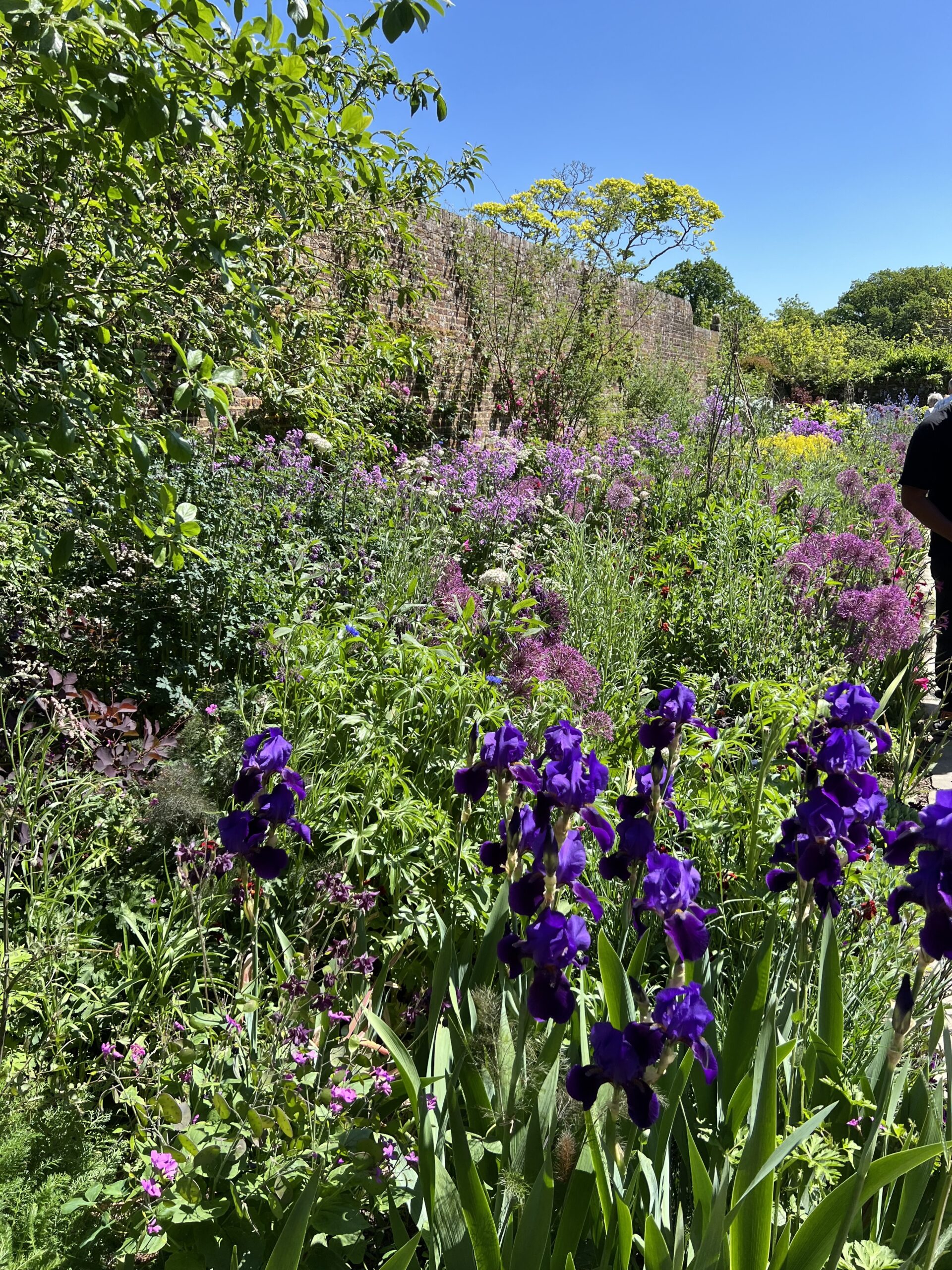
Borders of all colours and shapes:
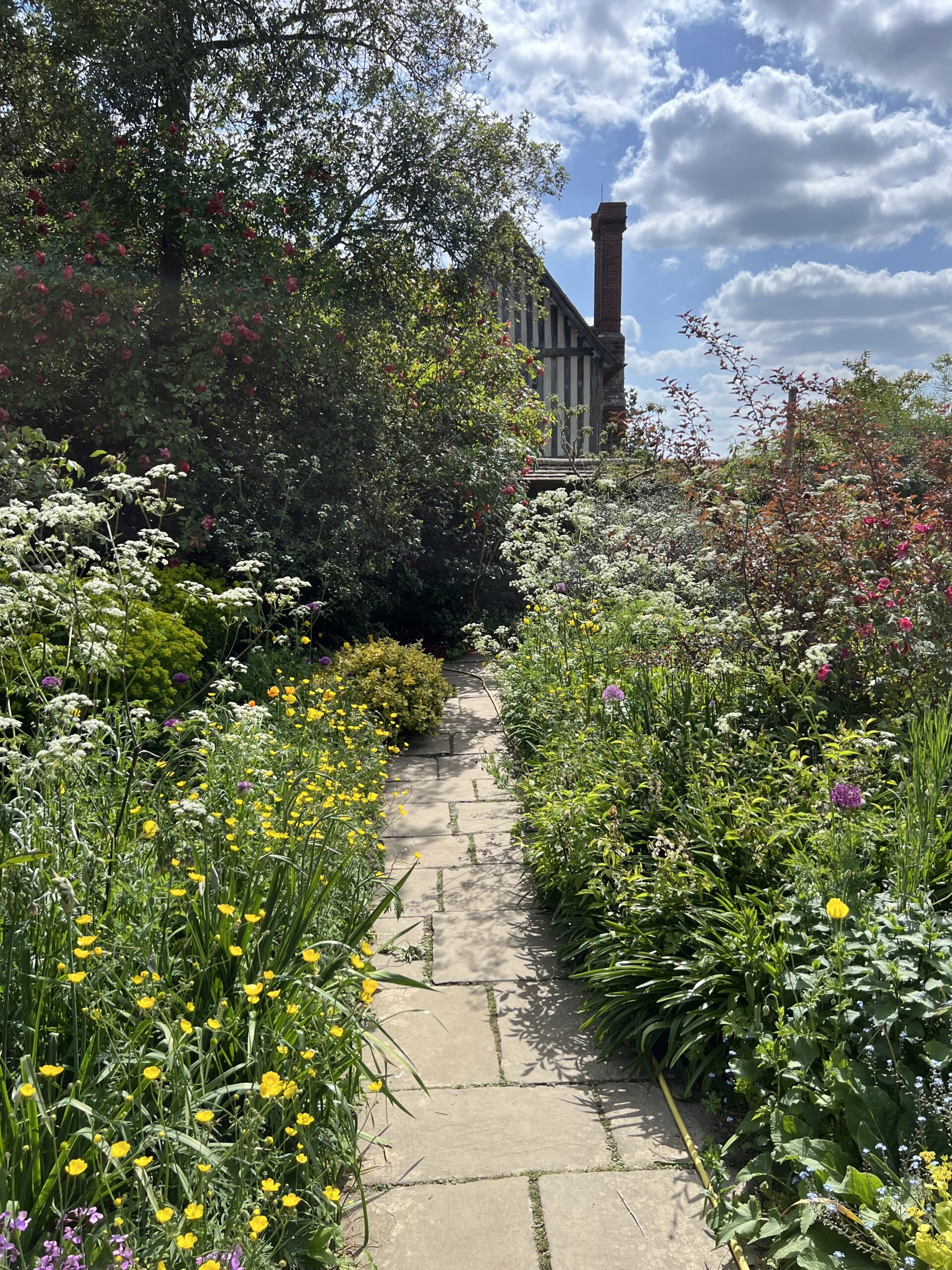
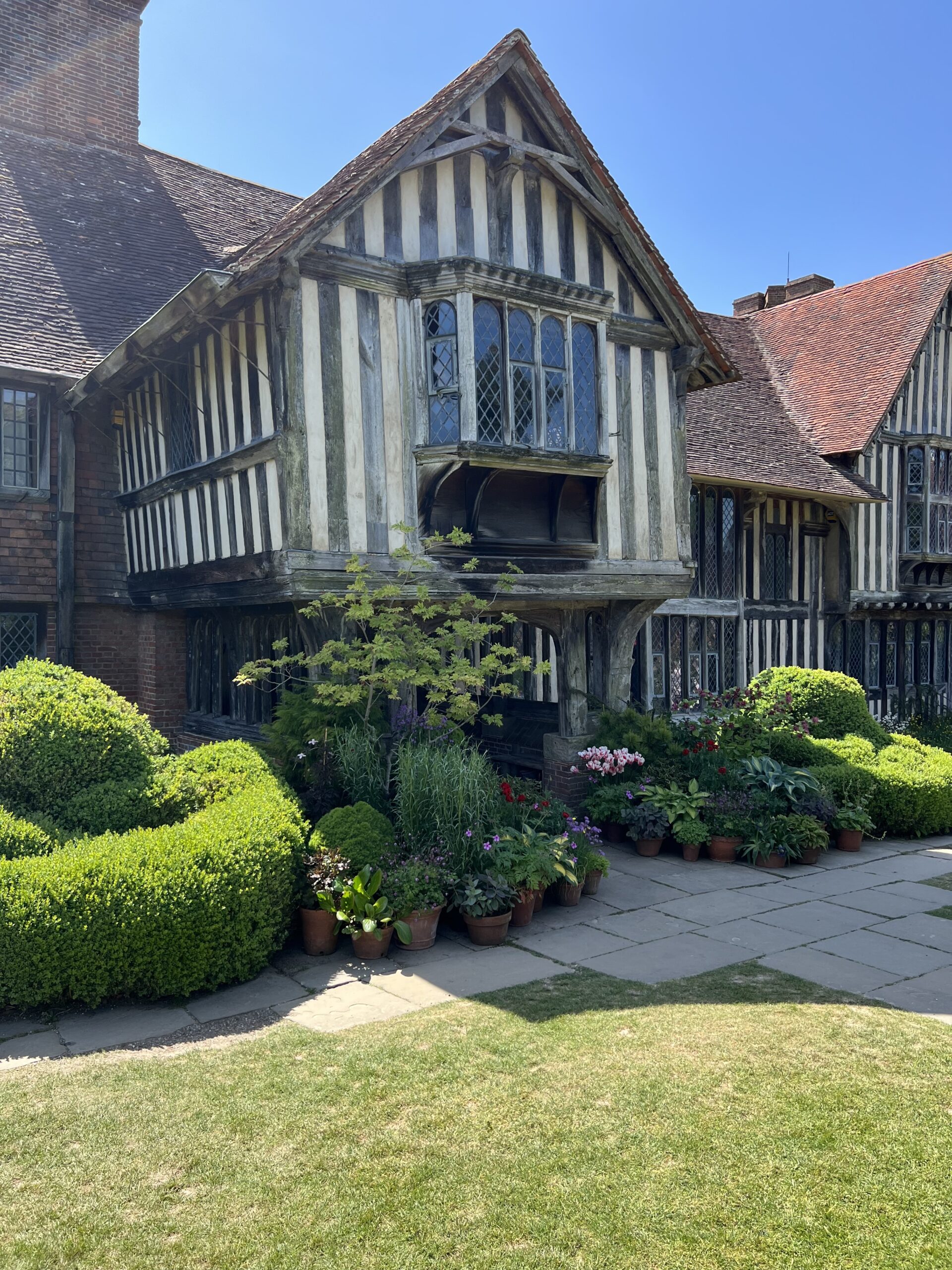
The house of Christopher Lloyd, the original curator of the garden.
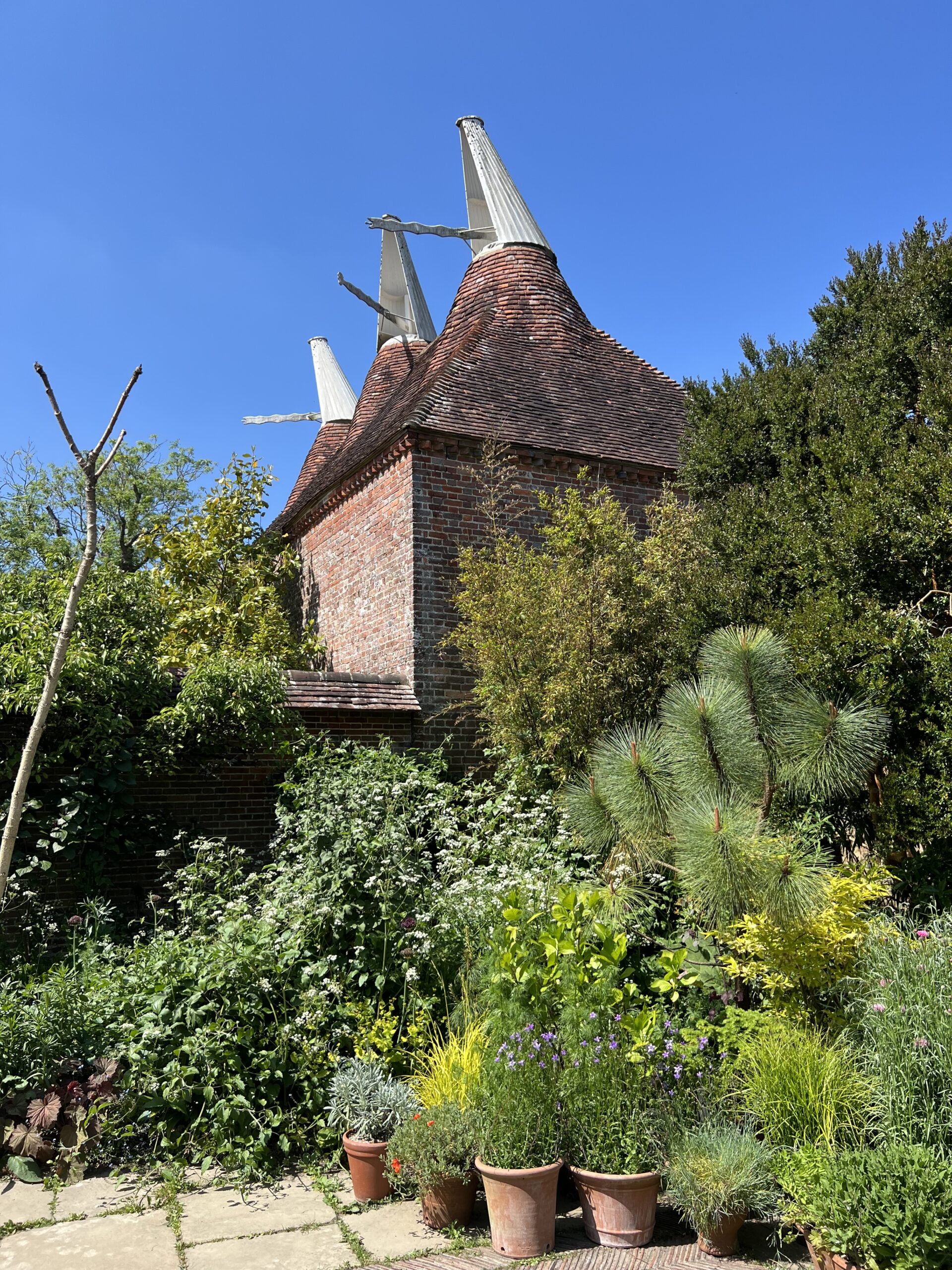
Christopher Lloyd was also famous for enthusiastic use of container gardening. The conical chimneys are oasts, indicating hops are being dried in here. Kent is famous for it’s craft beer and hops are prolific.
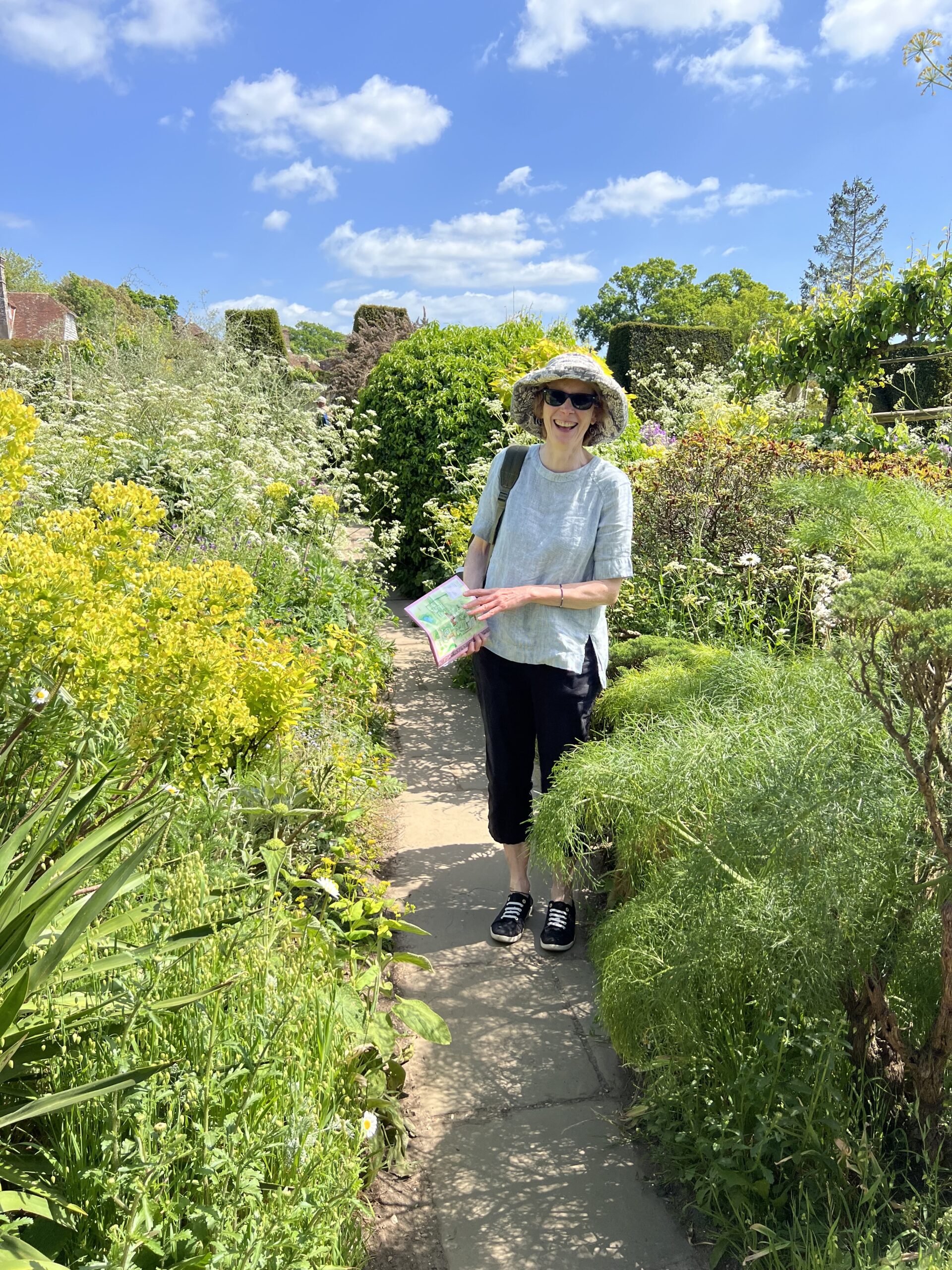
Look what I found in the garden!
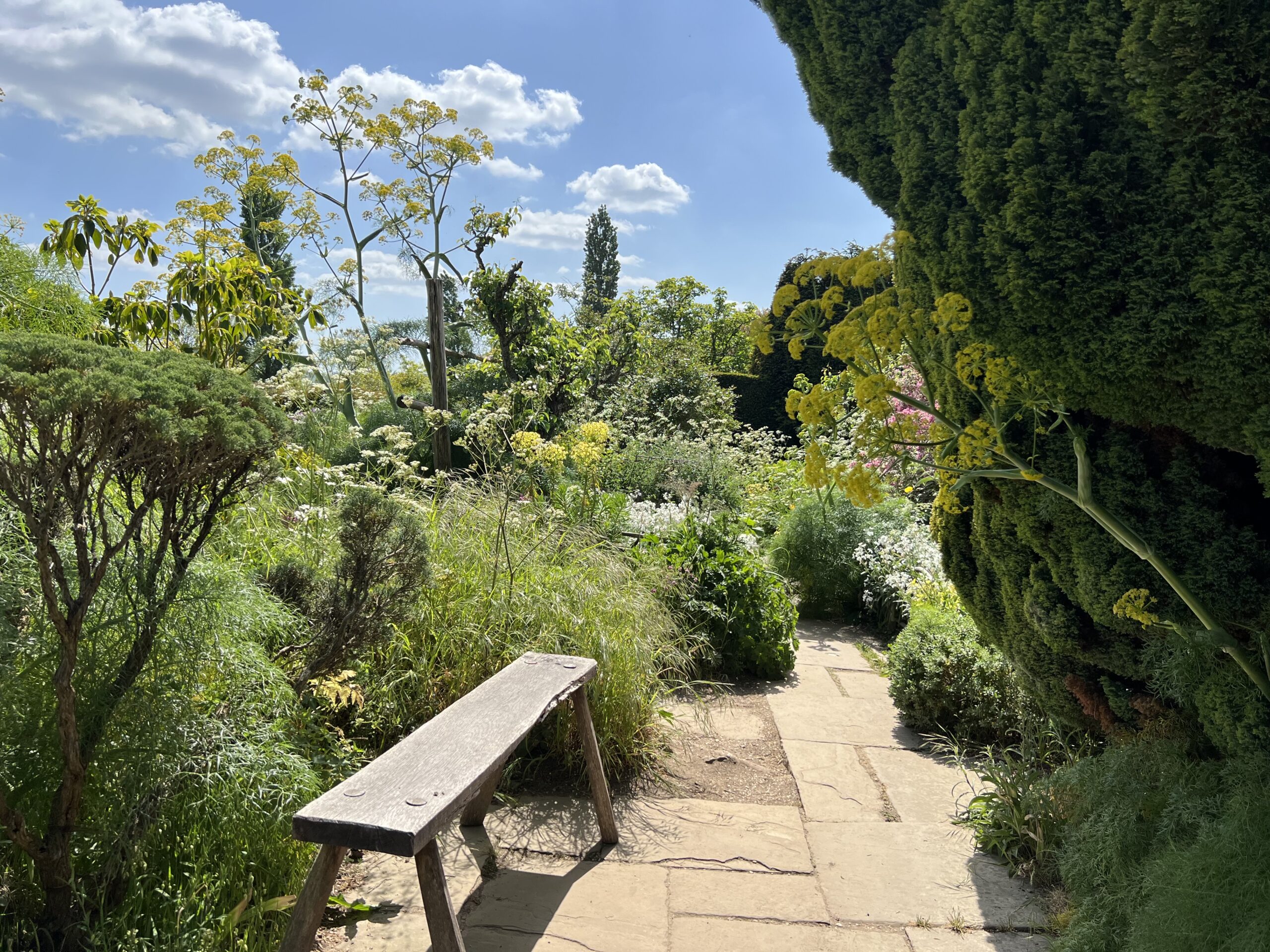
So many lovely places to sit and contemplate the riotous growth around.
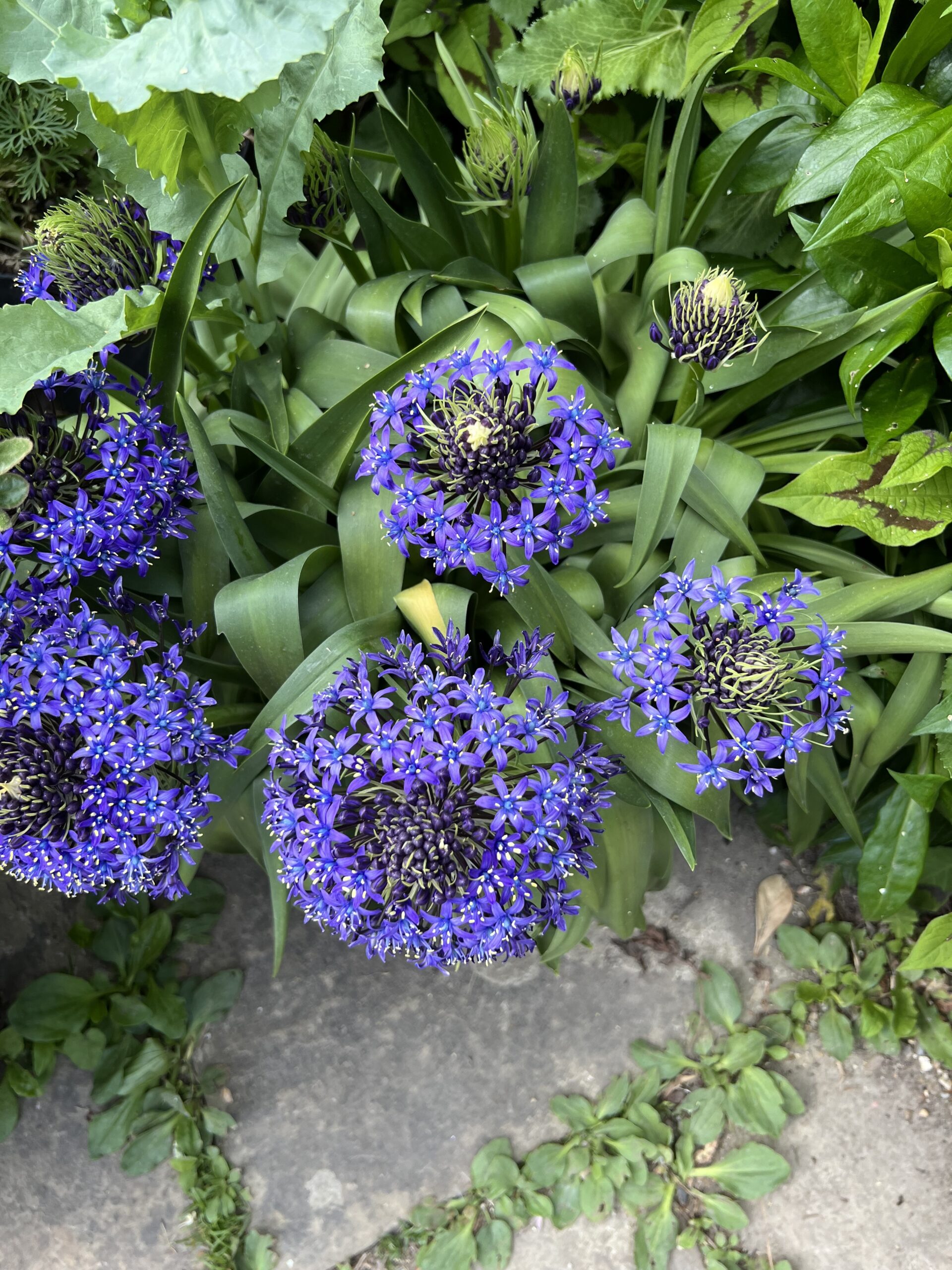
Lily of the Nile
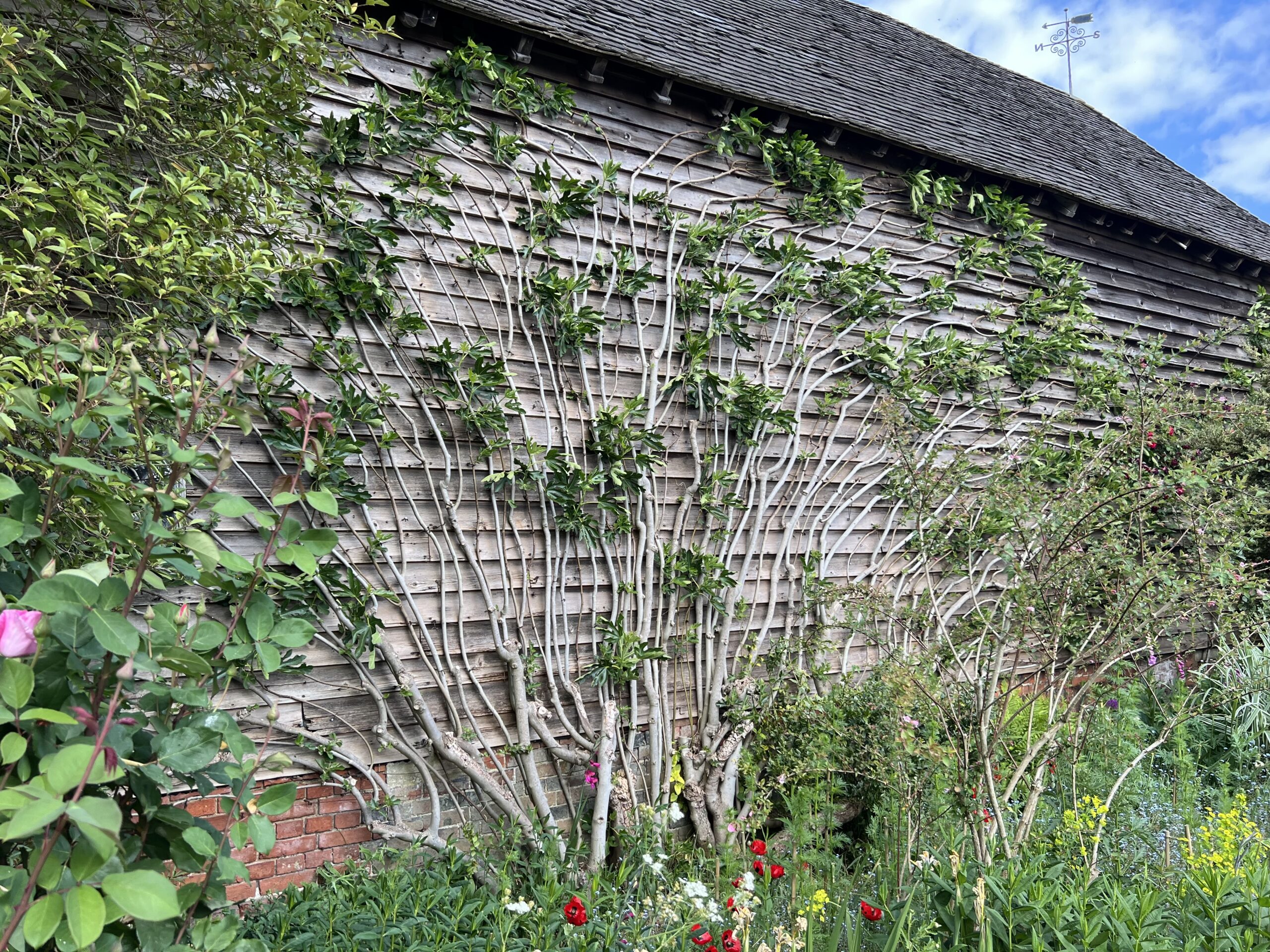
spectacular espaliered fig
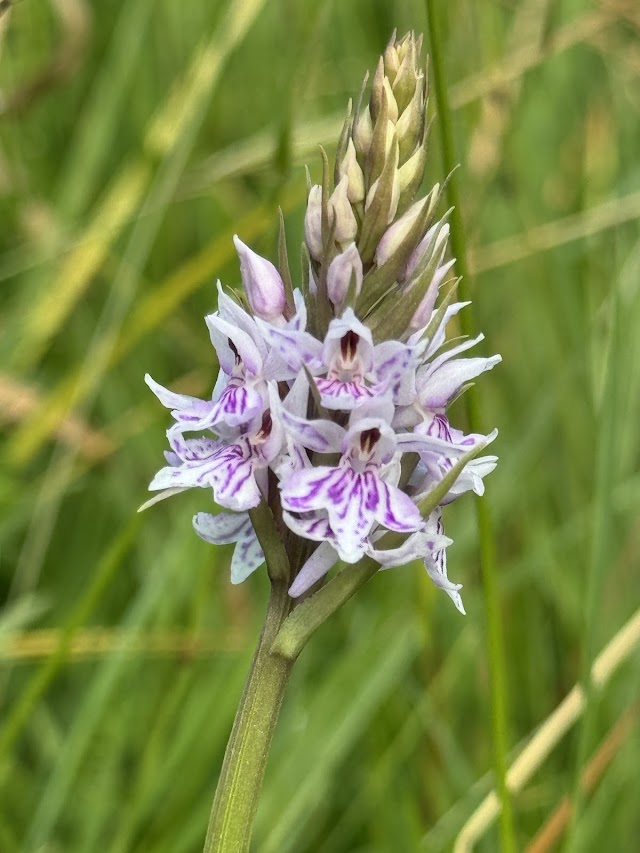
Orchid in the meadow, photo courtesy of Gary Lewis
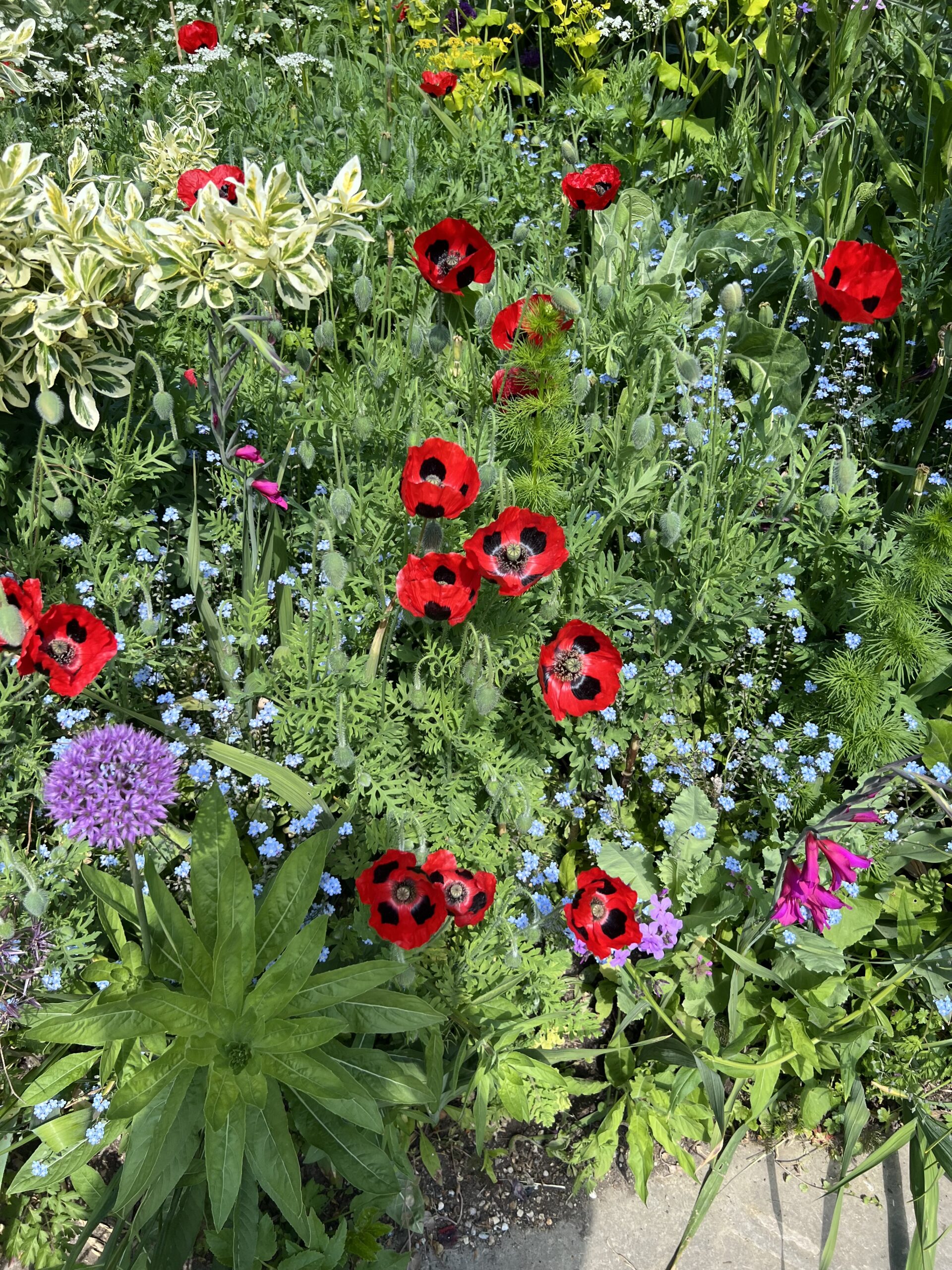
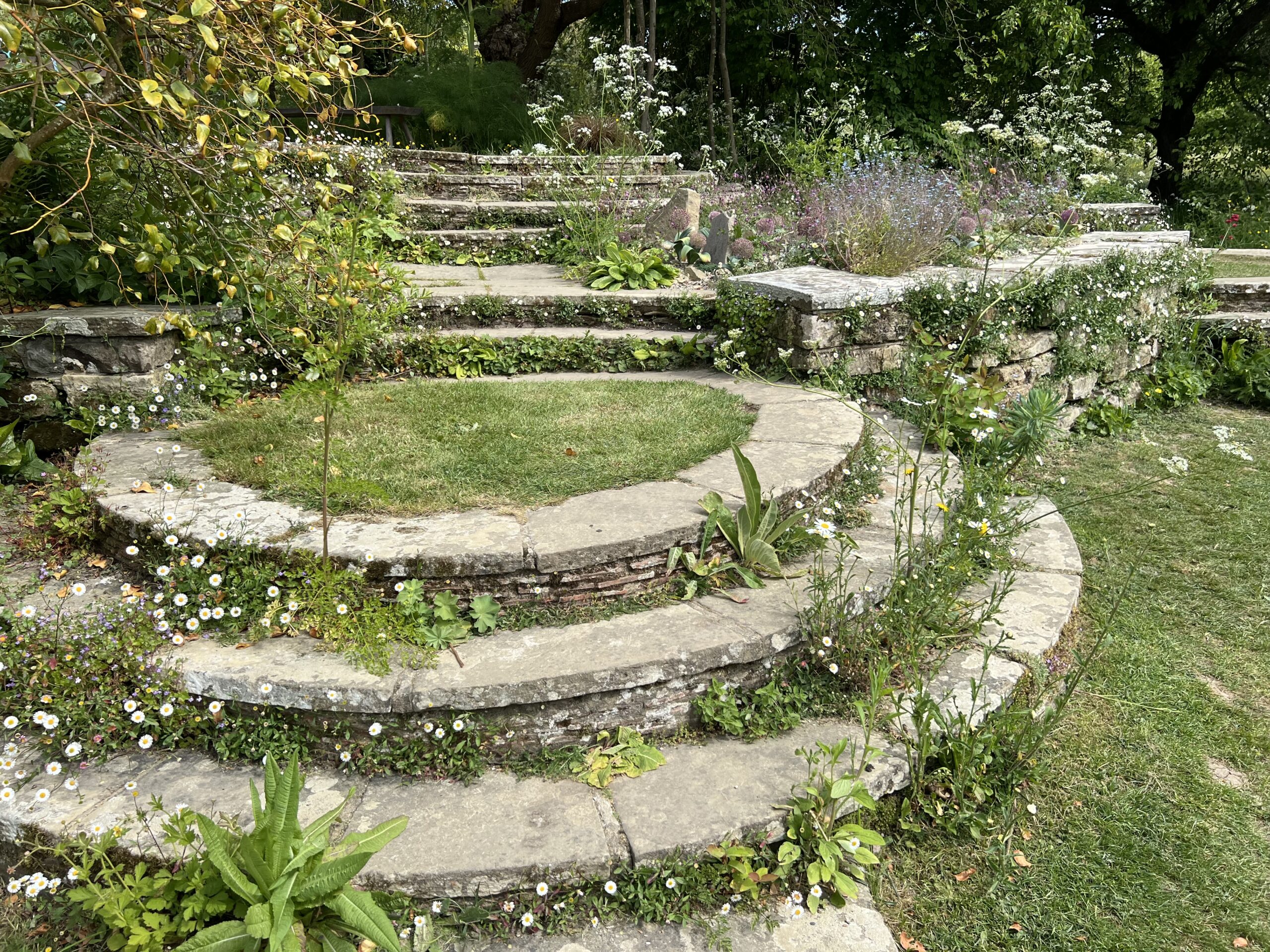
Even the steps down to the tropical garden were artfully sporting growth. My flagstones just sport weeds!
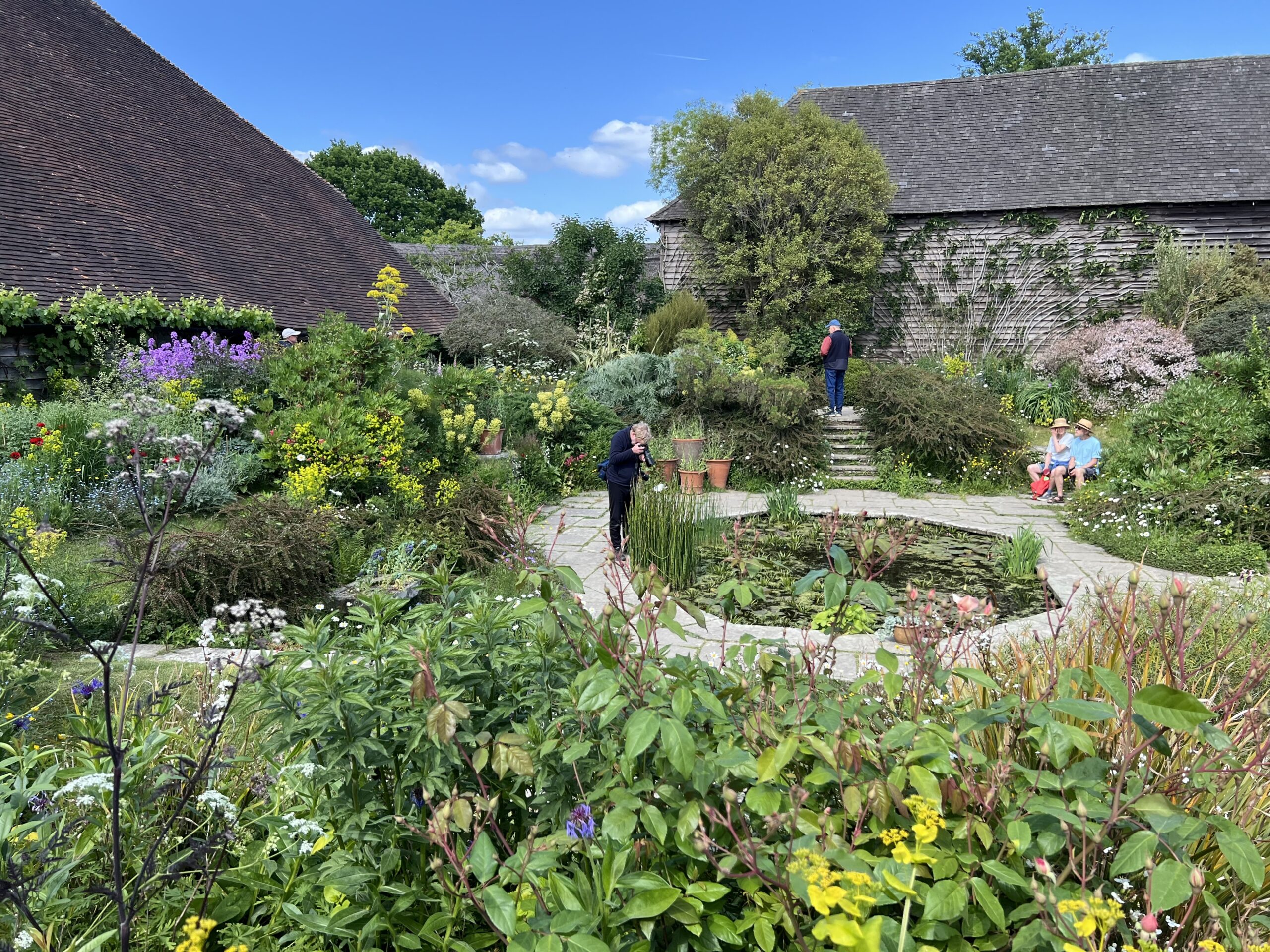
The sunken garden. It was very apparent everywhere that the insect population was healthy, with pollinators buzzing everywhere.
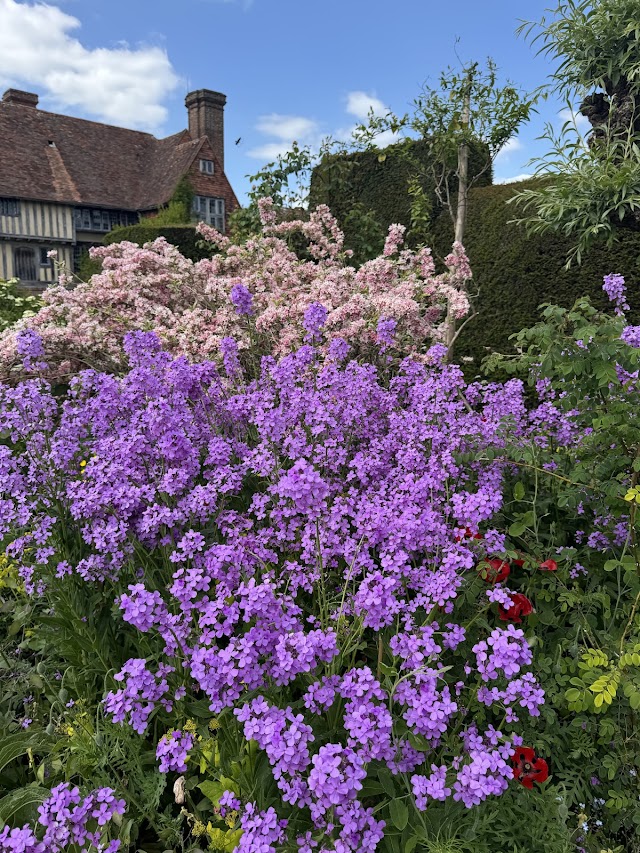
Sweet rocket and weigla
Too much to see and admire! When we were all eventually coralled into the bus (several stragglers) the bus driver attempted to turn the large coach around – we were puzzled why he hadn’t spent the two hours we were away doing this… it was a long and protracted process involving a 100 point turn (we all had several suggestions afterwards for better and easier places it could have been done) . He eventually gave up and backed slowly and painfully up a length of lane, turning at the entrance and achieving it finally with applause from both inside and outside the bus as everyone was blocked in both directions during the convolutions! In general though, I don’t envy the bus driver’s job manouevering the huge coach through narrow streets with parked cars on either side, and sometimes U turns in the road. We were told by Lynn that the Beatles’ song “The long and winding road” was written by Paul McCartney who has a country house near here, upon one of his many journeys there from London. Very apropos.
We headed last to a medieval smuggling town at the confluence of three rivers, Rye; it had much power during the 100 year war with France as a ship building area and between that and smuggling did very well monetarily. It was charming, with many original buildings and some lovely looking gift shops which were unfortunately all closed by the time we got there. Alison and I did manage a quick trip down to Costcutters for a bottle of single malt, to add a medicinal tot to our itinerary after the long days on our feet ahead.
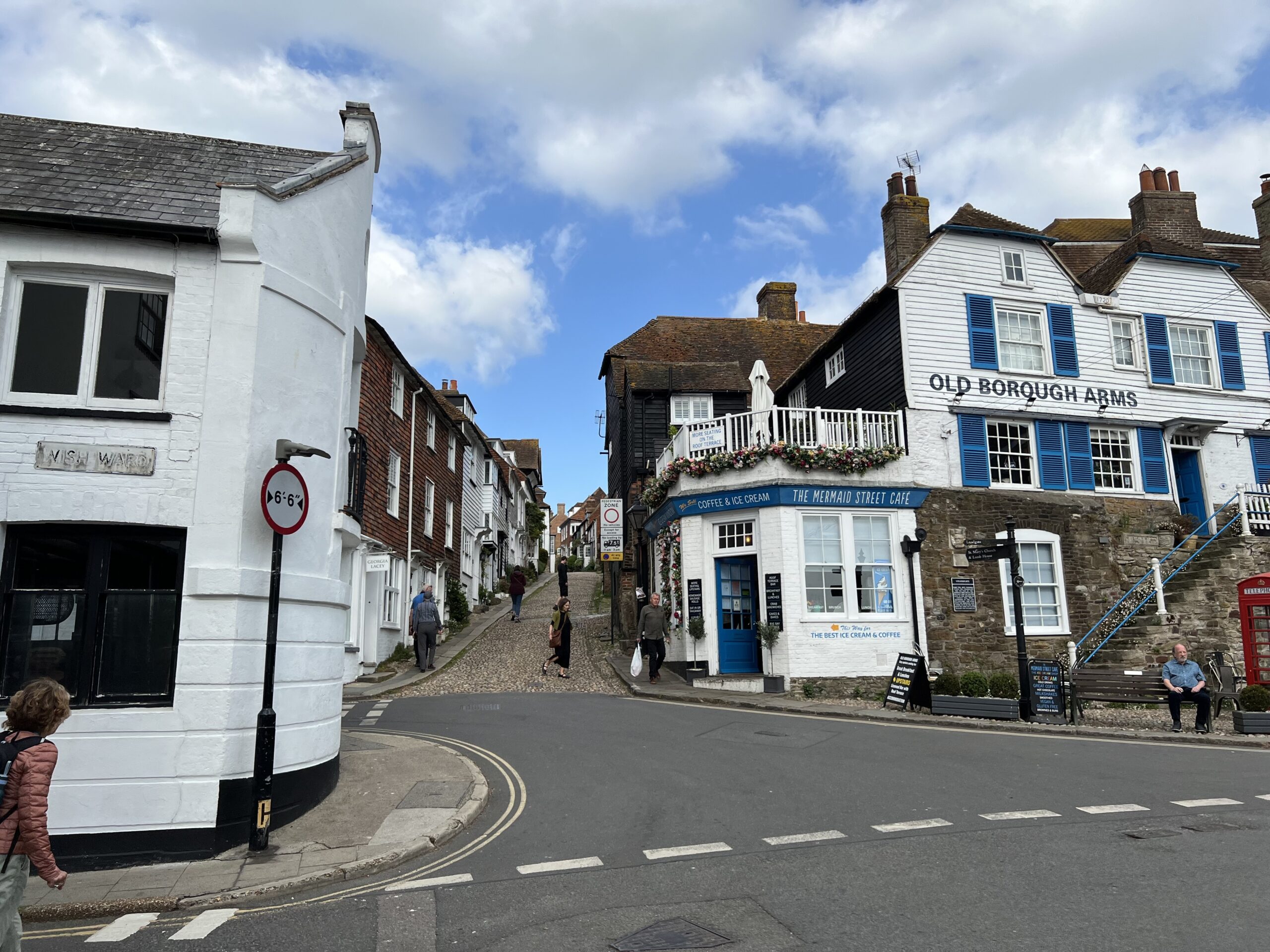
Entrance to Old Town
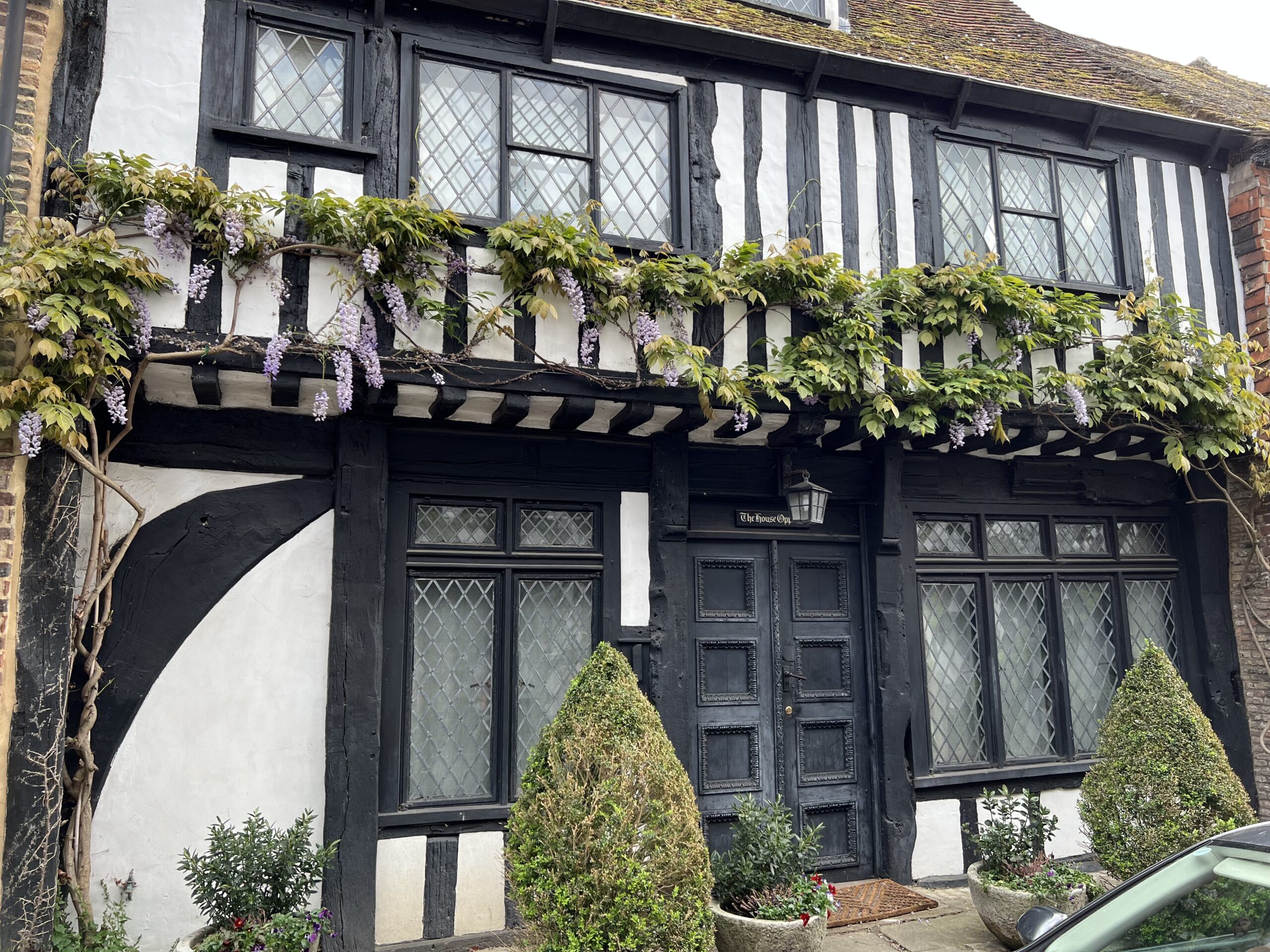
Each house had its own quirky name
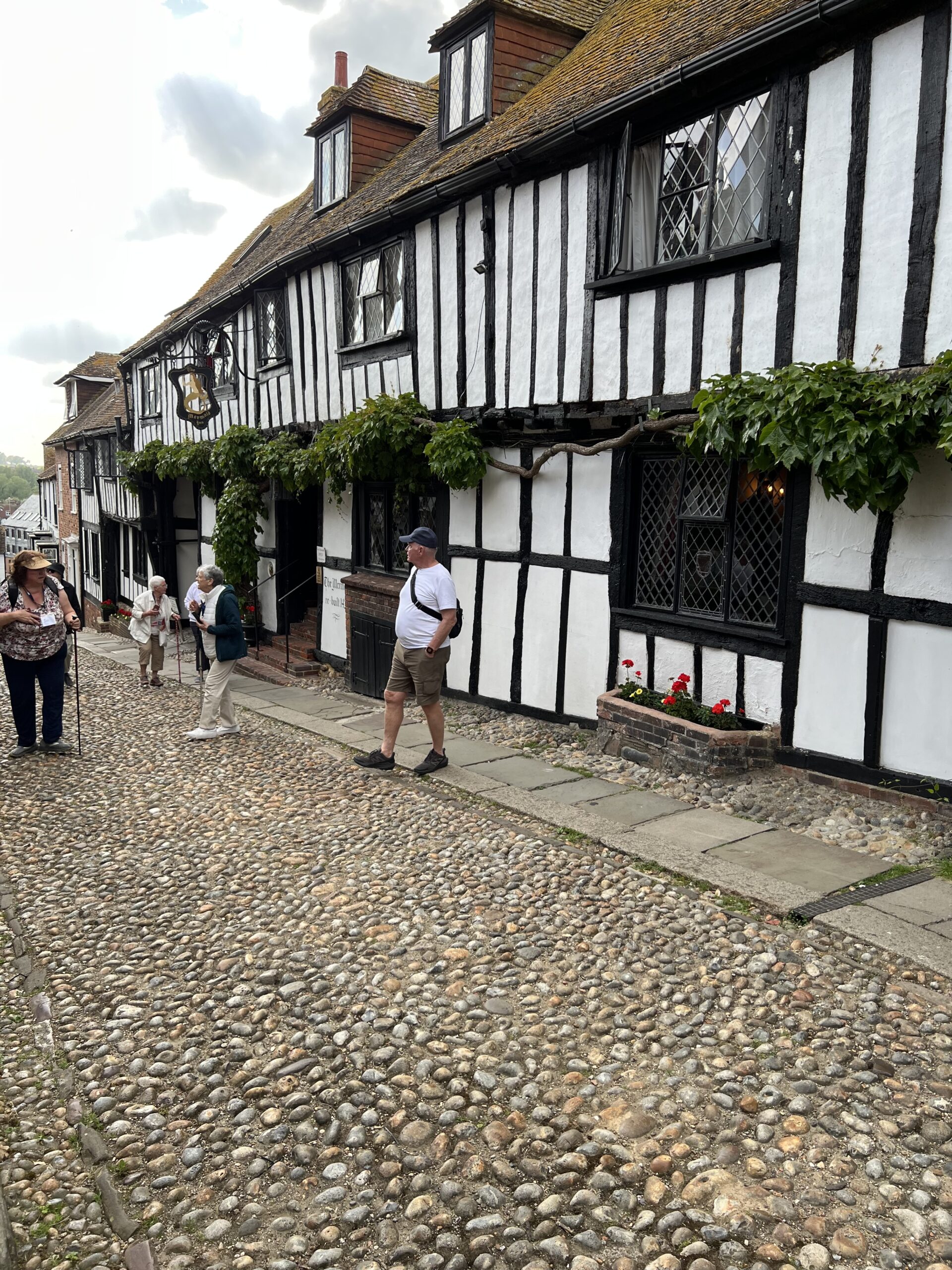
Wattle and daub building technique
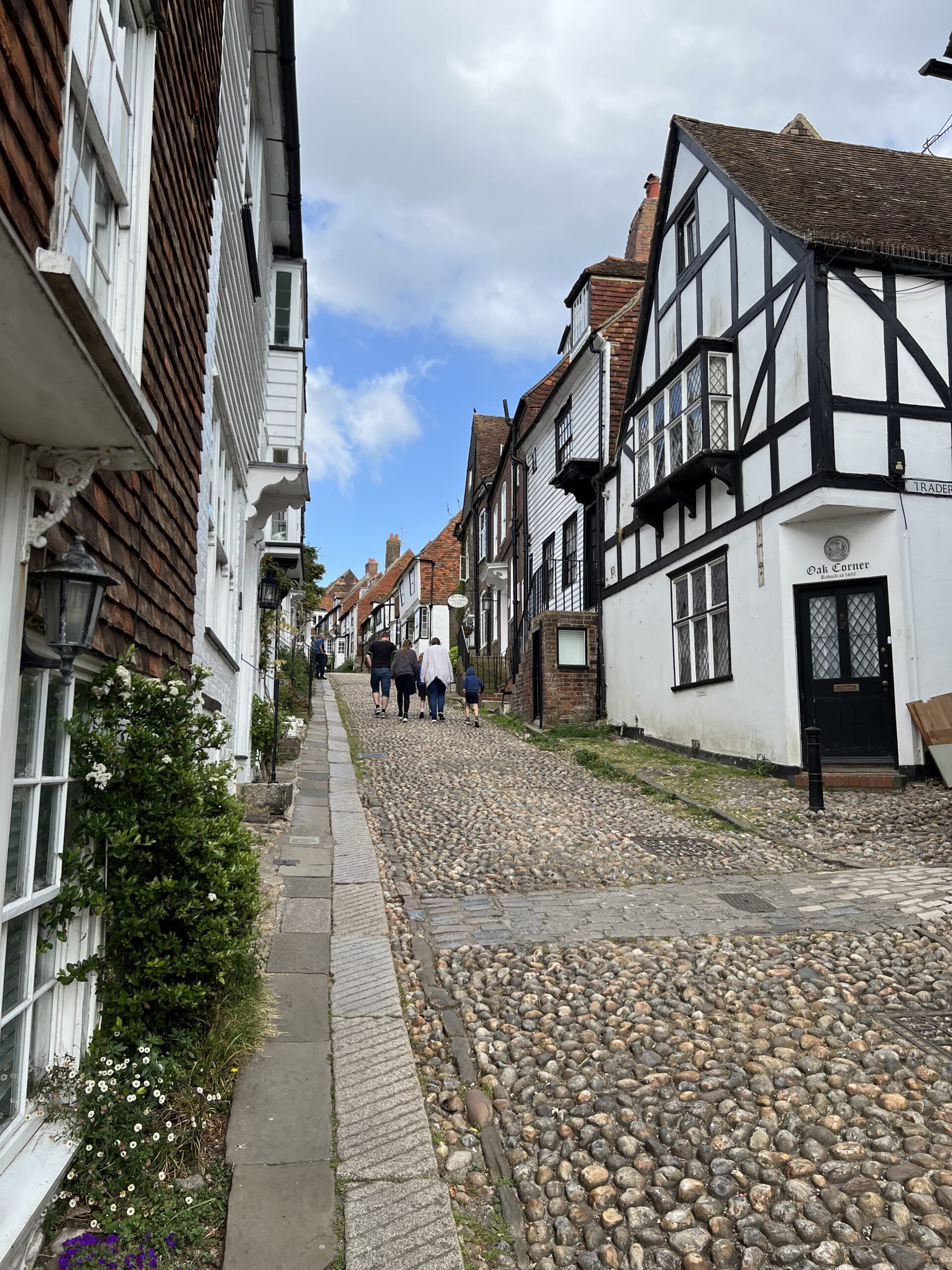
Likely more hazardous to navigate in rain and winter weather!
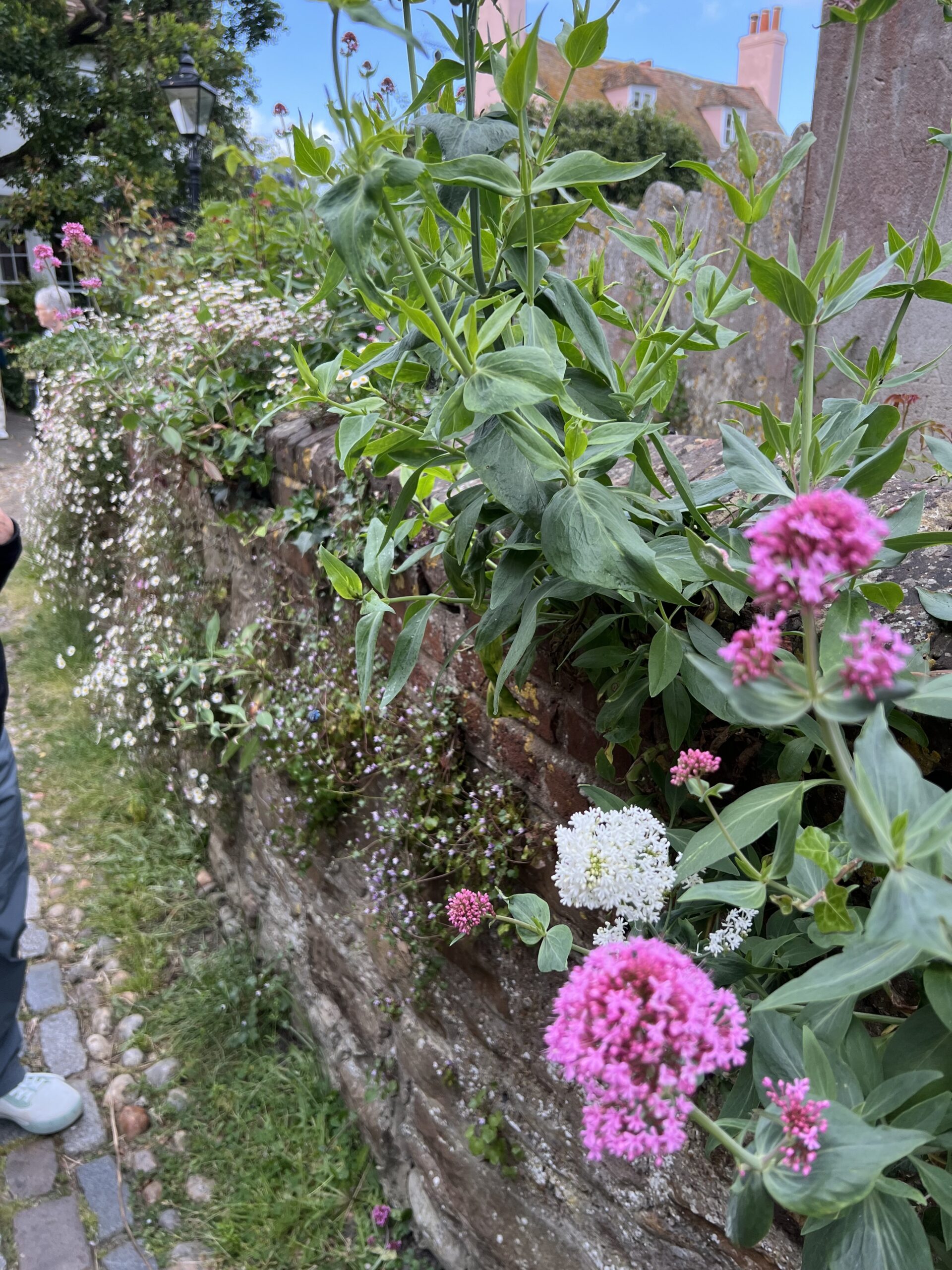
Wall overlooking churchyard sporting it’s own garden
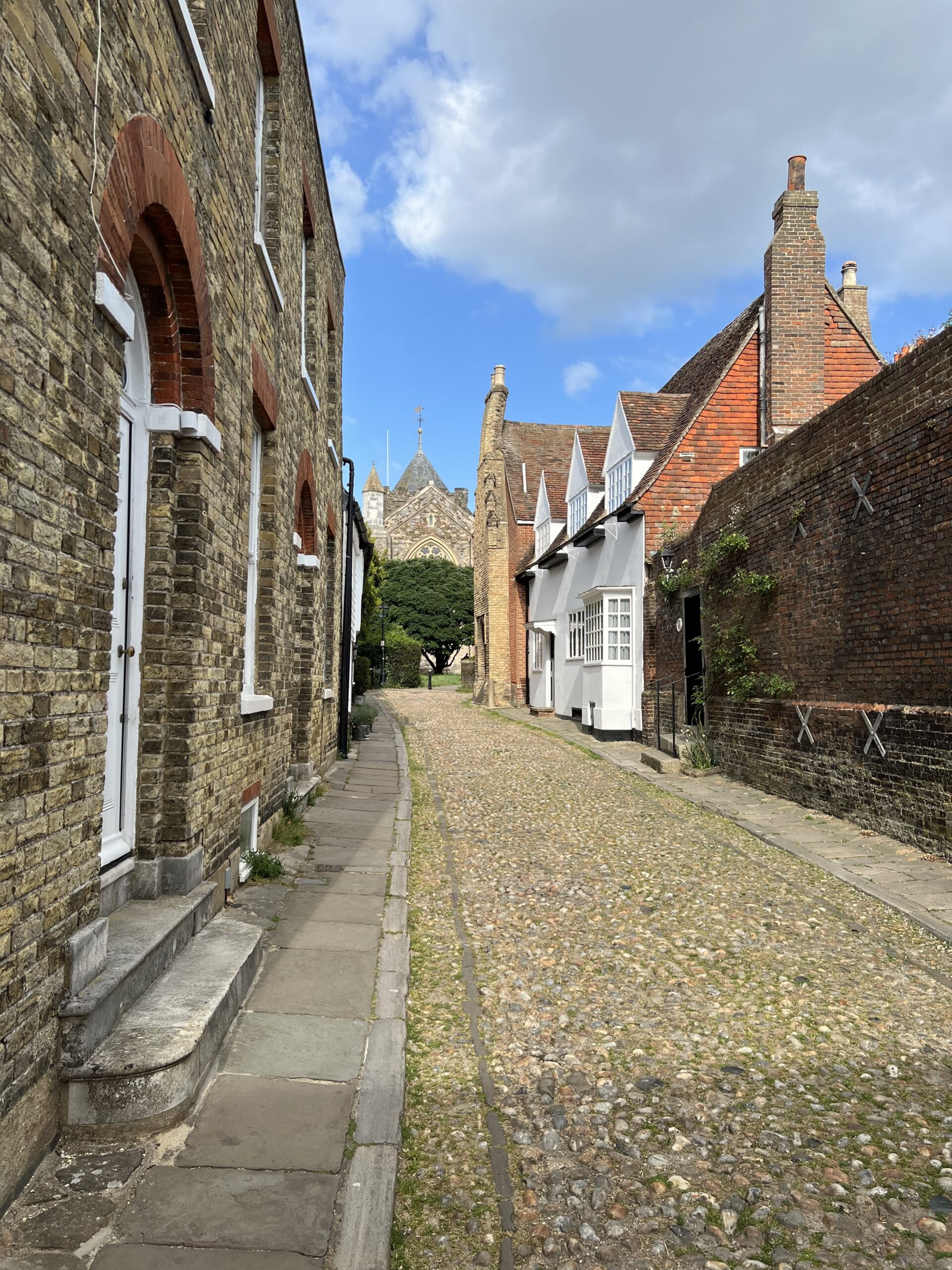
Churchyard at the end of the street
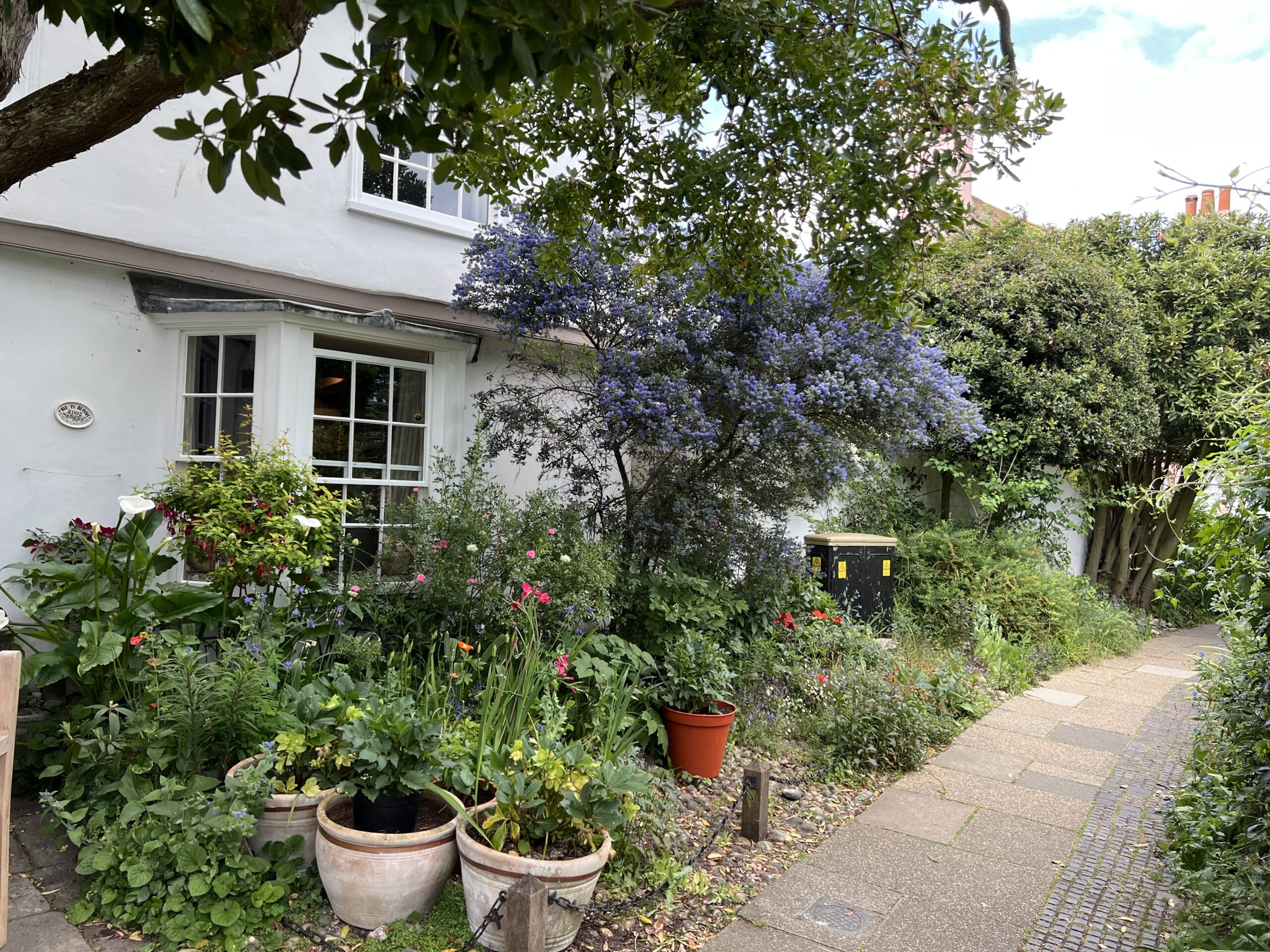
They’ve obviously adapted the Christopher Lloyd techniques of container gardening!
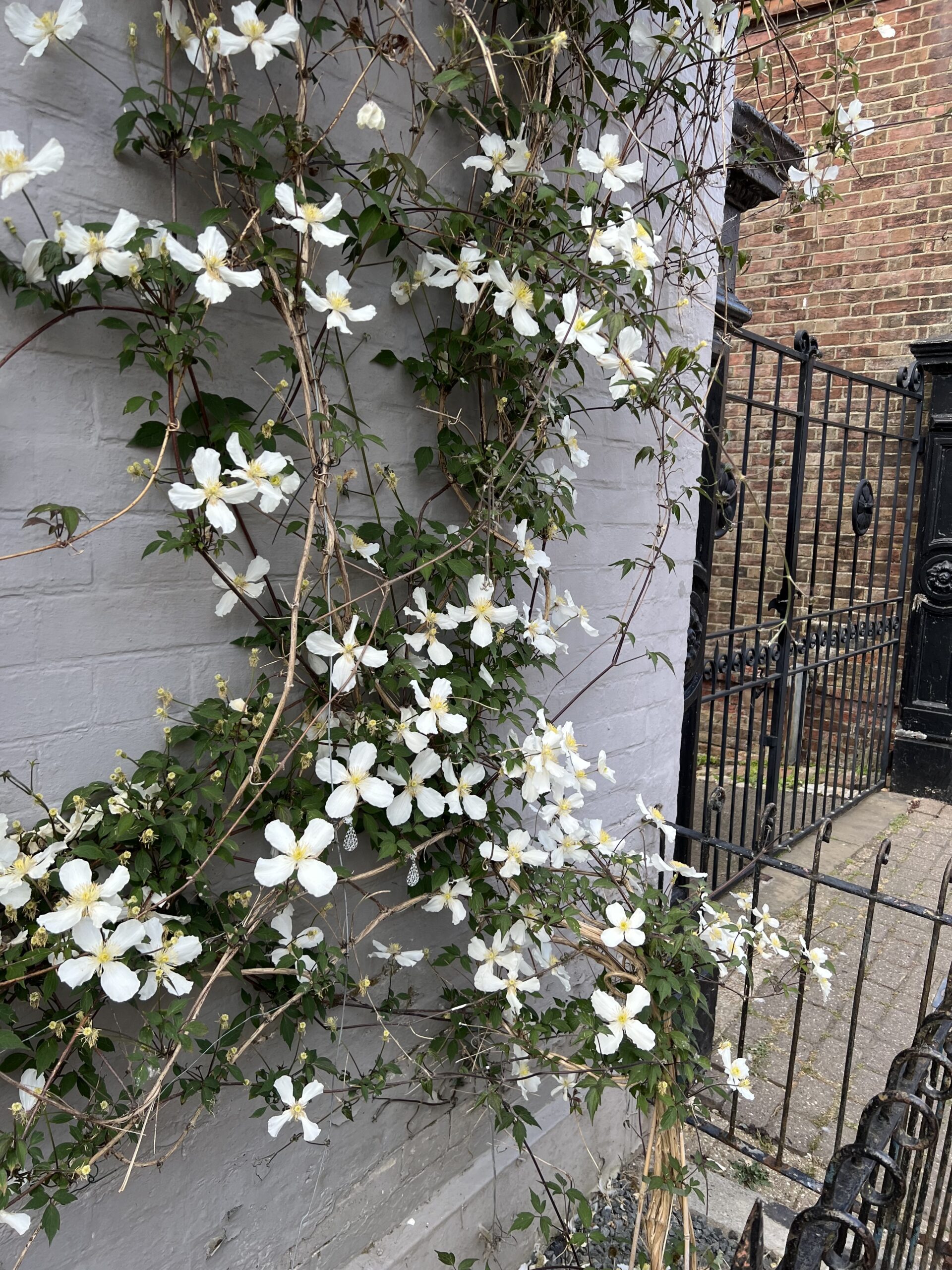
See if you can spot the earrings in here…
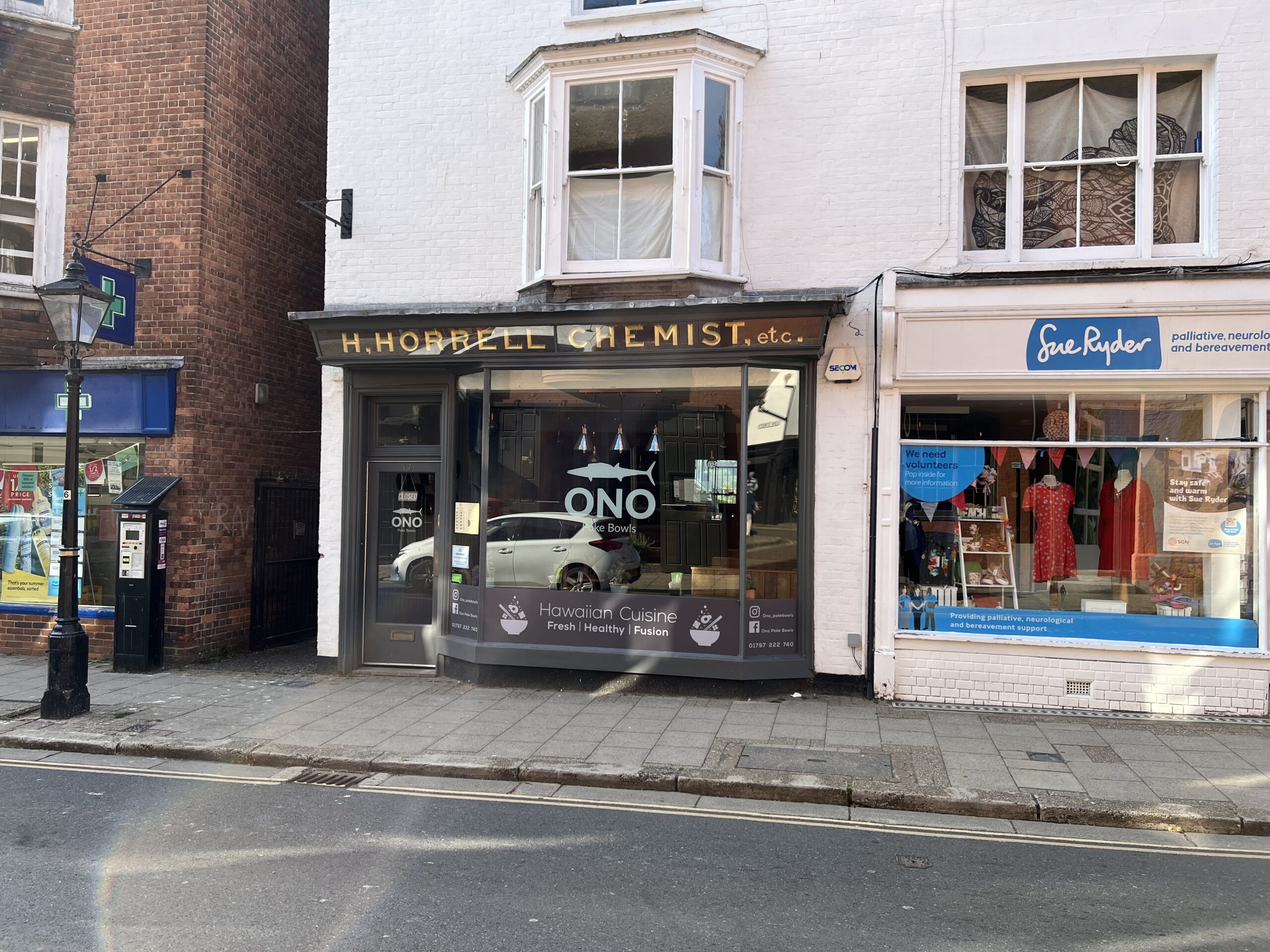
Chemist turned poke restaurant…
Some more interesting bus manipulations as the driver waited for us to get back then spent ages attempting to turn around in a huge (we thought very roomy) parking lot before once again giving up and backing out a considerable distance. He might not have passed this part of the driving test….
Along some more winding roads an hour home, our dinner was pushed back to 7:45 p.m. Excellent again, but we were all starving by the time we got it, some having not stopped for lunch at either of the gardens (or grabbed food to go). We dispersed after like dandelion puffs in a wind, everyone very tired after a long day of walking.
PS the medicinal tot of Glenfiddich pre-dinner was very helpful for my sore legs! Better than an advil.
Barbara Kisiel
17/05/2025 at 1:00 PMLove your gardens tours.You took amazing photos .