Day 10 – Day 6 of tour
A good sleep!!! Amazing croissants at breakfast! And decent coffee. Love the deep fried lotus root with the scrambled eggs 😊 and the almond jelly cubes are delicious (made with agar).
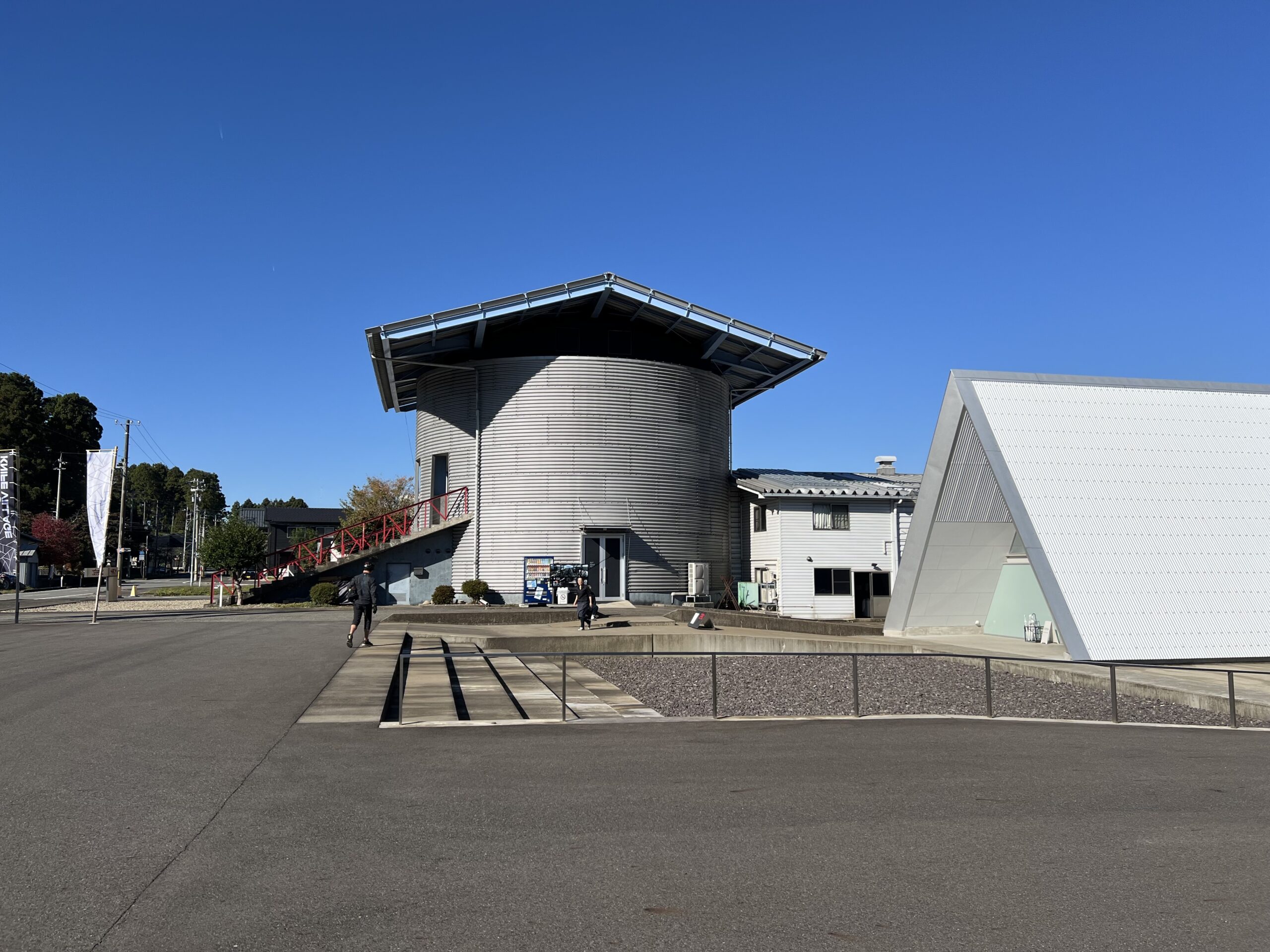
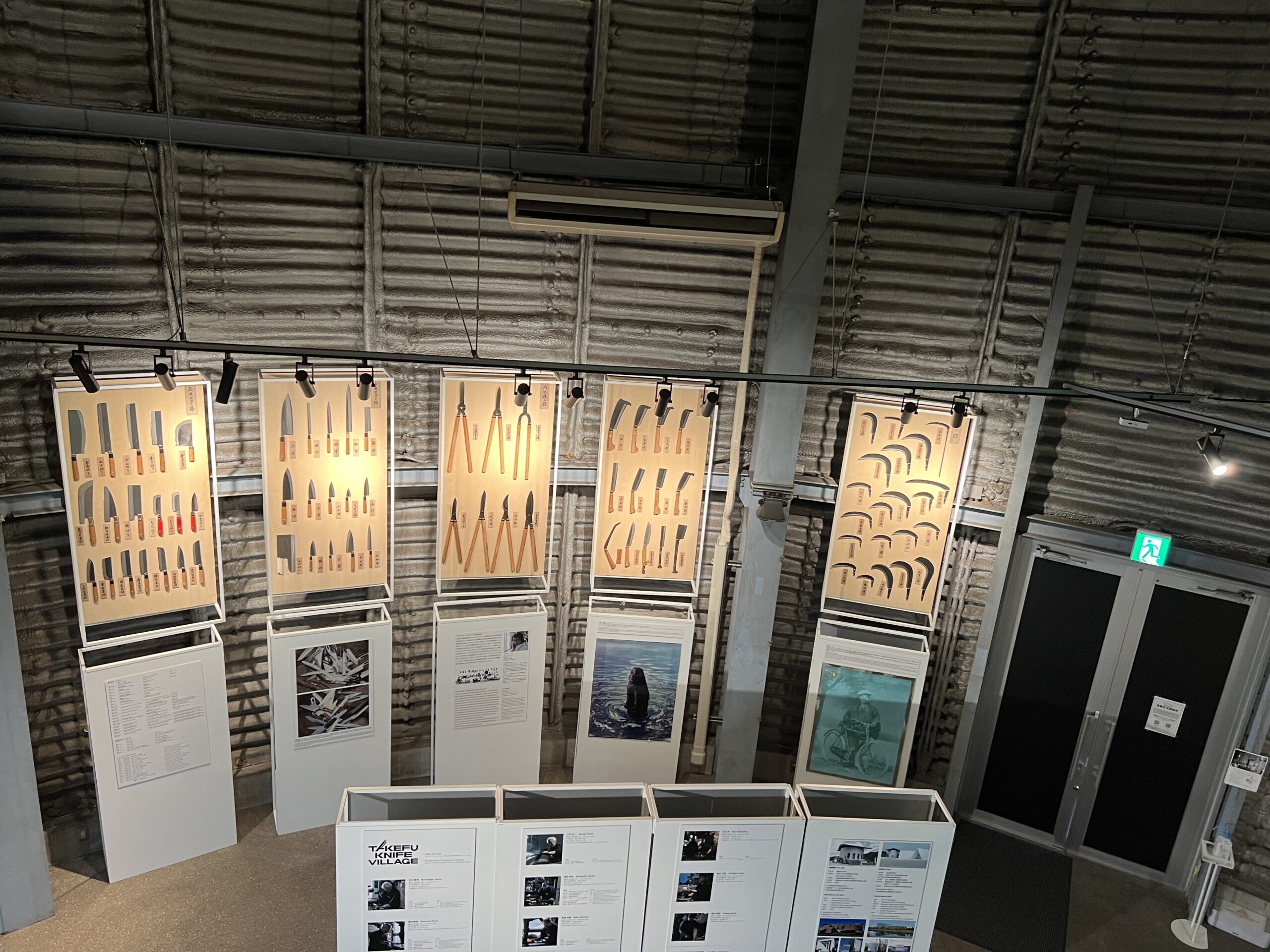
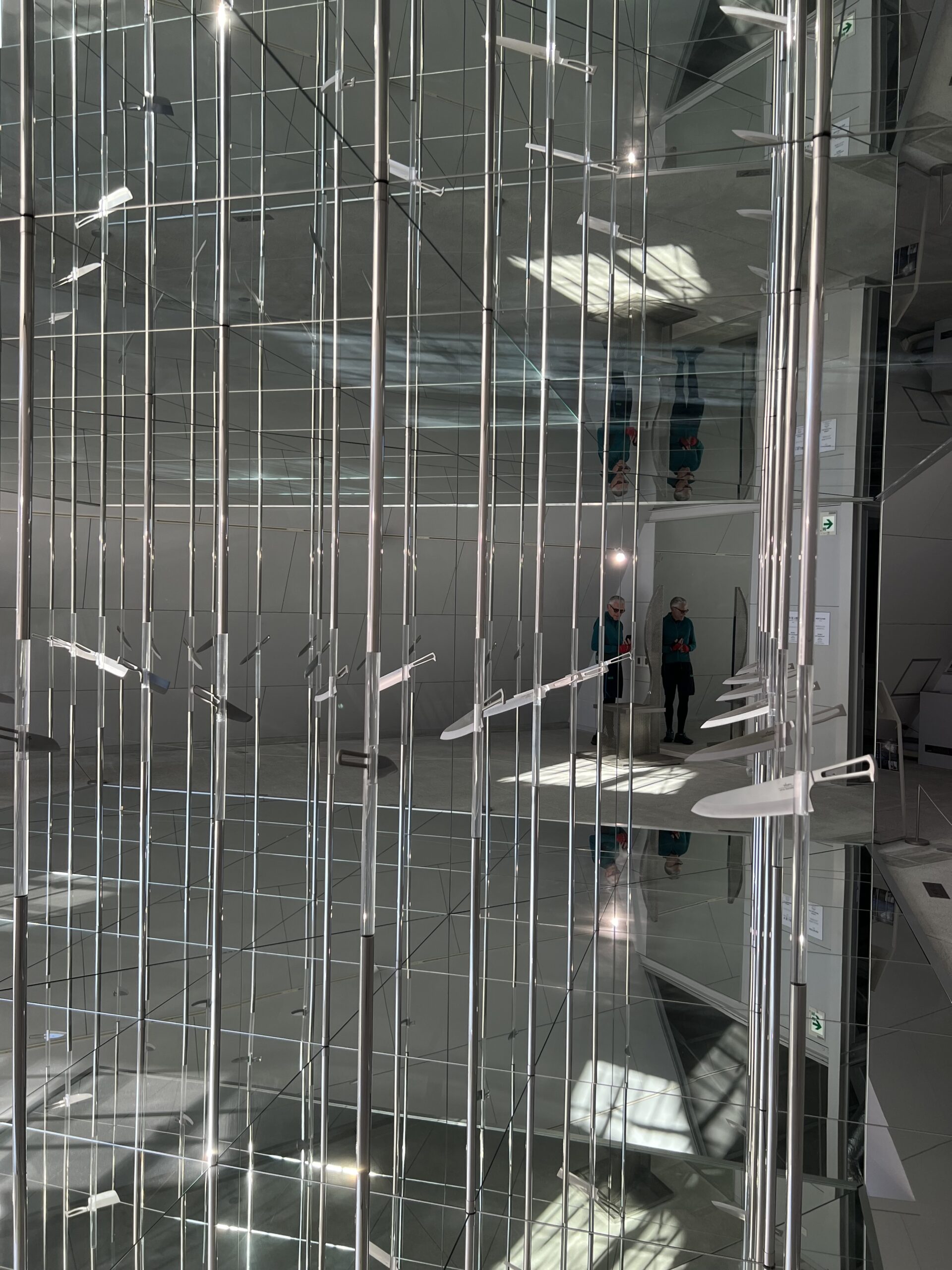
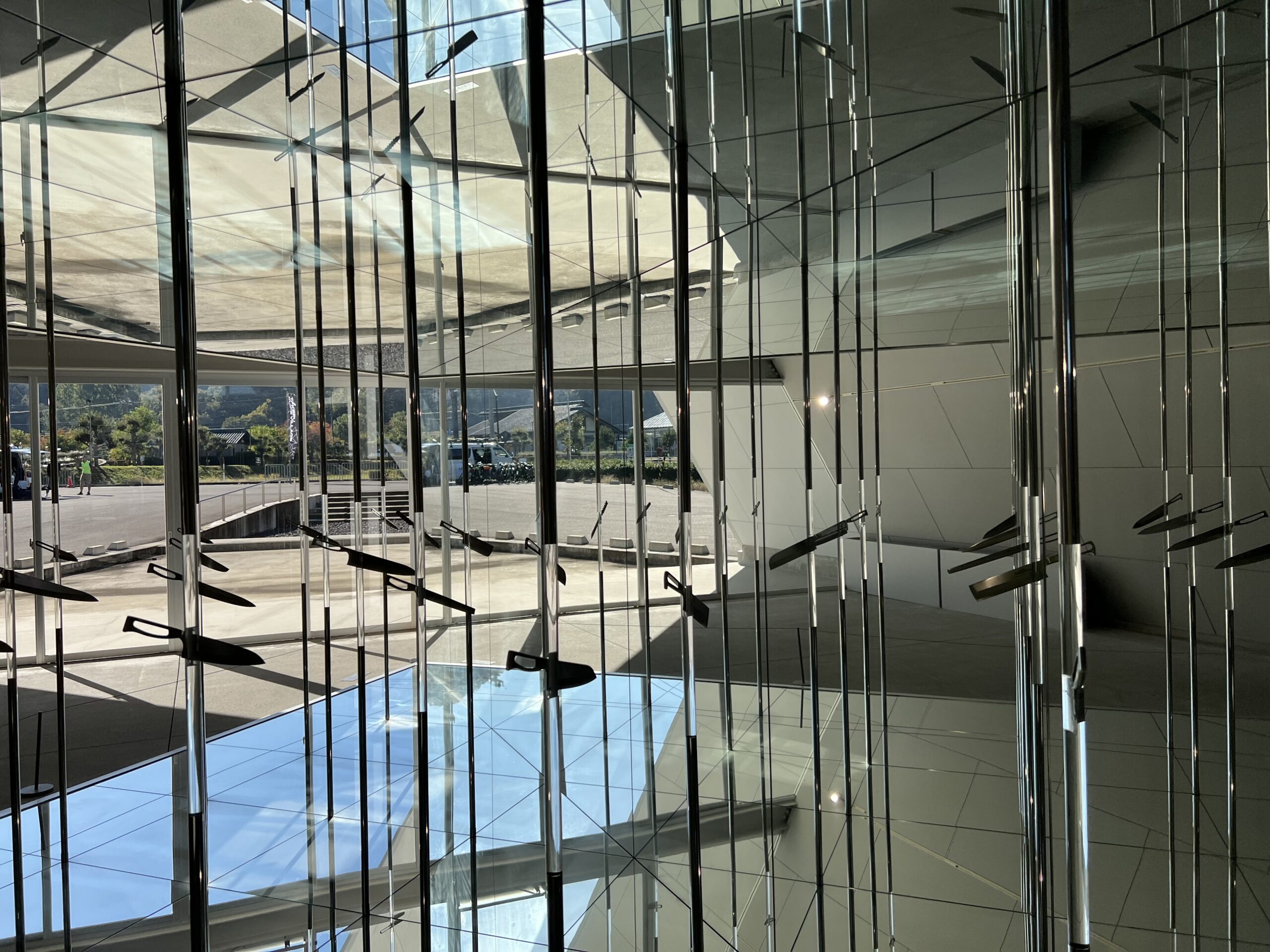
Sunny today but single digits when we left so three layers on to start. We rode 6 km to Takefu Village to visit a knife making collective, 14 individual artisans making distinctly different knives/sythes. The region was selected by the original knife making master because of the excellent water; they are also known for pottery. Unfortunately we didn’t see them at work as it was a religious holiday for the village, but they kindly opened the knife museum, toured us around the workshop where they are made, and then opened the shop (we made it worth their while!). There was an amazing art piece there that was made with suspended knives and mirrors.
Workshop building and museum
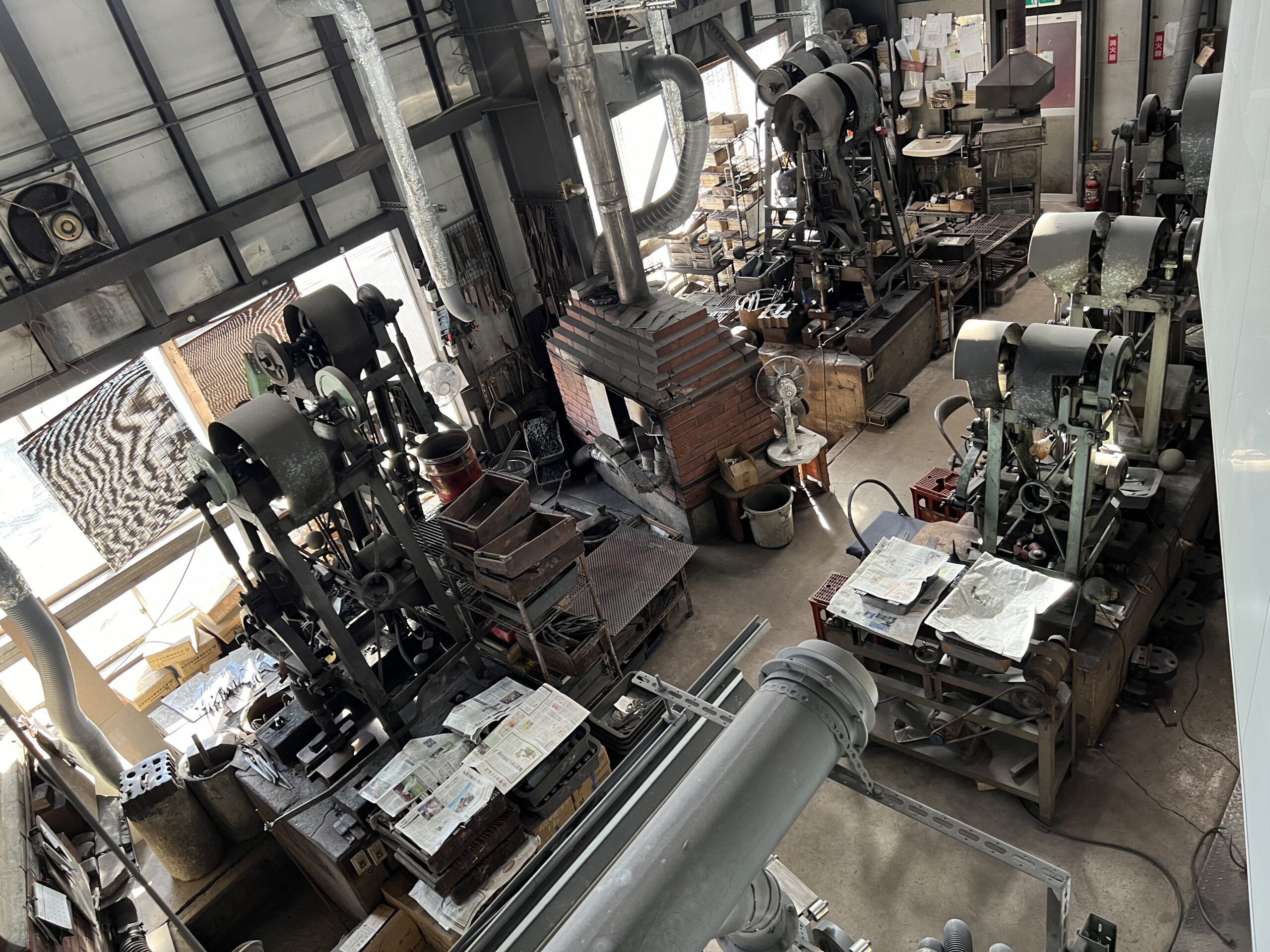
Forge (coke fed) and knife making equipment in workshop
Knife sharpening stations – each has a different stone
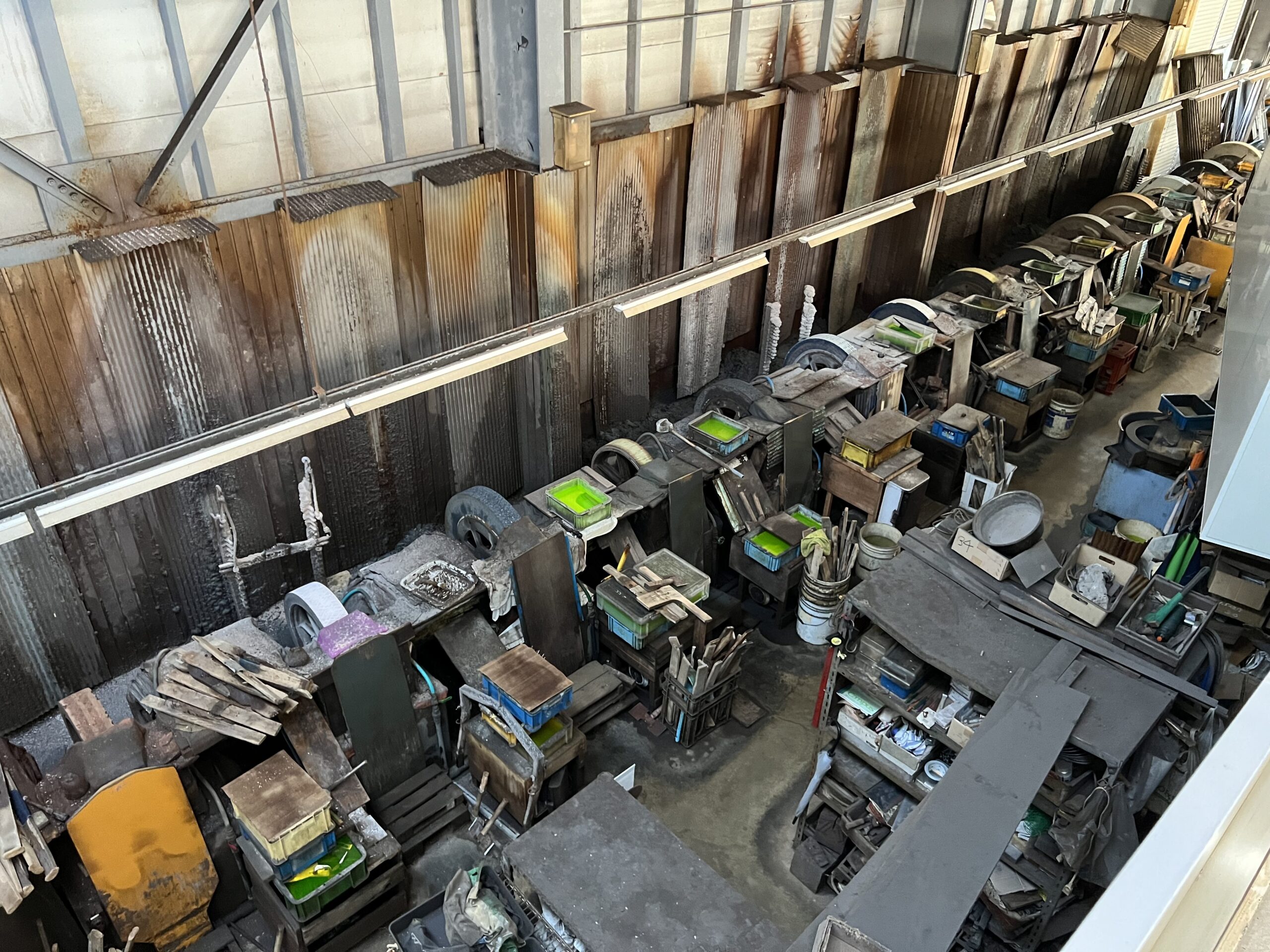
VERY hot in summer and the back wall away from the forge VERY cold in winter.
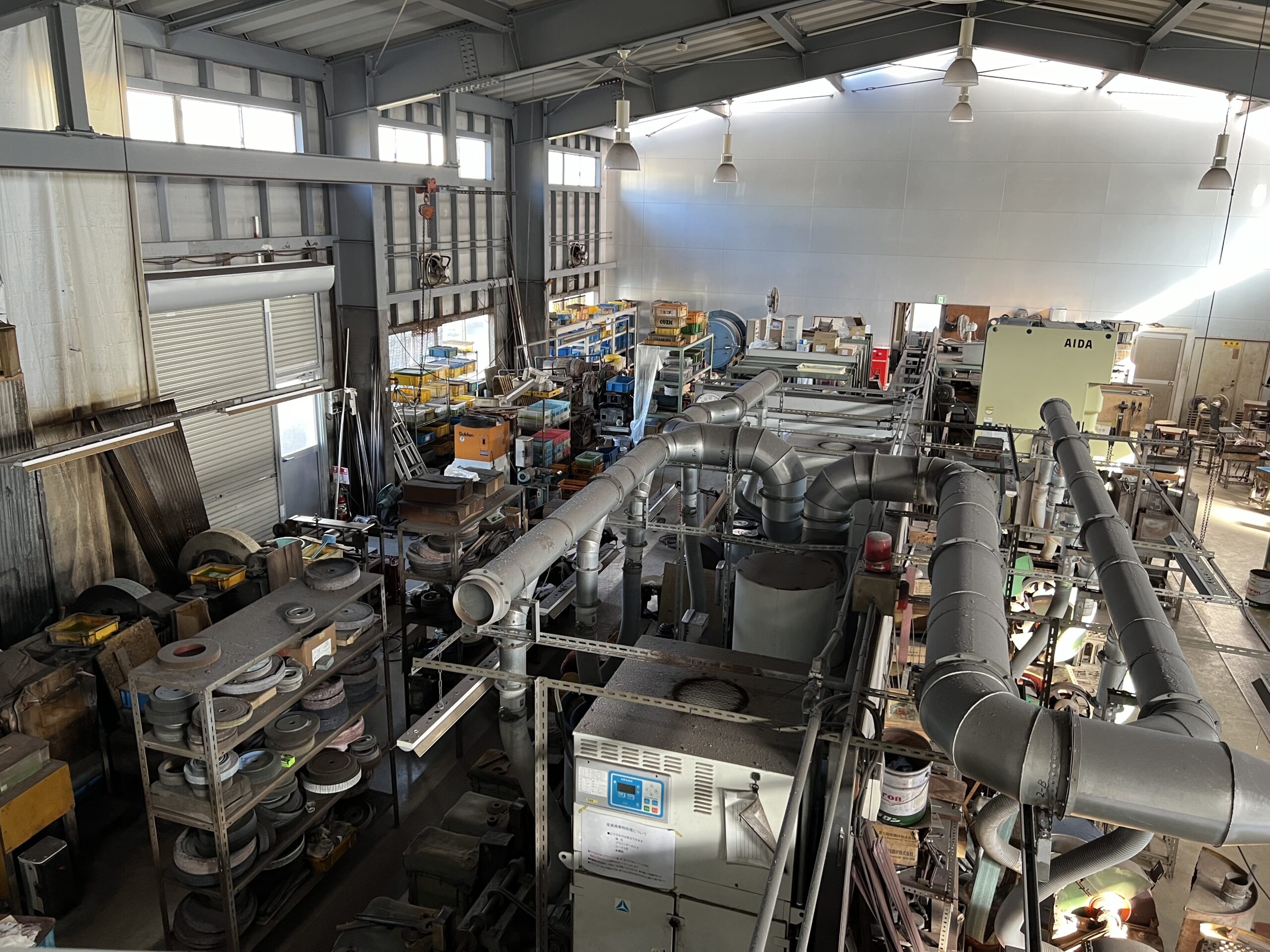
Originally making scythes, they have branched out into all kinds of knife making.
art with mirrors and knives!
The complex was fairly new, and full of glass – someone from our group walked into a heavy glass door that was moving and got quite a clunk!
Then it was off towards Tsuruga, 40 km or so away; for the most part, once through Takefu village, we were on bike paths. We had strict timelines, as there is a tunnel system from the original railroad built in the 19th century to move goods unloaded from ships (described in the shipping museum a couple of days ago) but they were under construction and not usually open weekdays. Our guide had gotten special permission for us to get in, and so we had between 1 and 2 p.m. to get through.
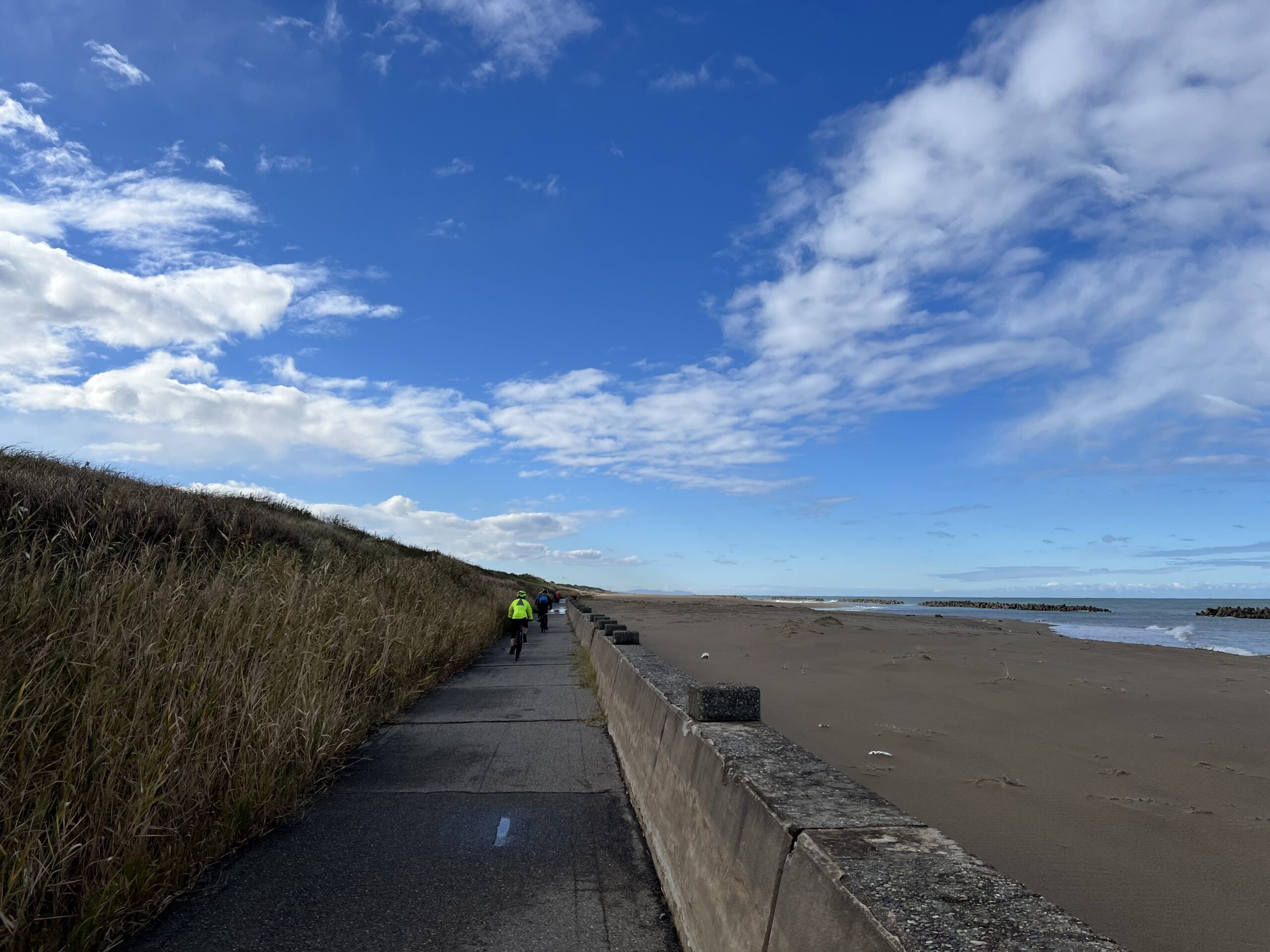
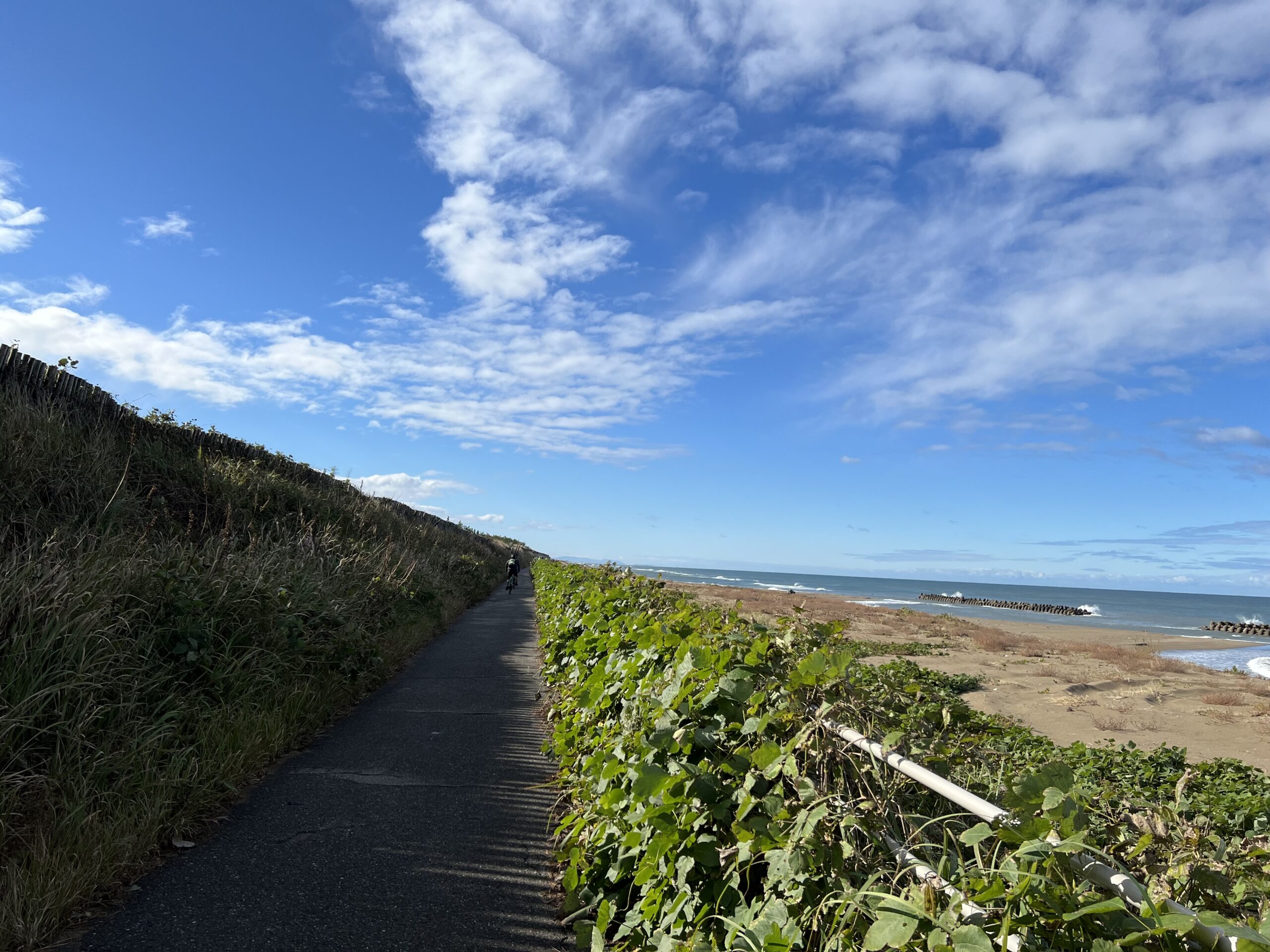
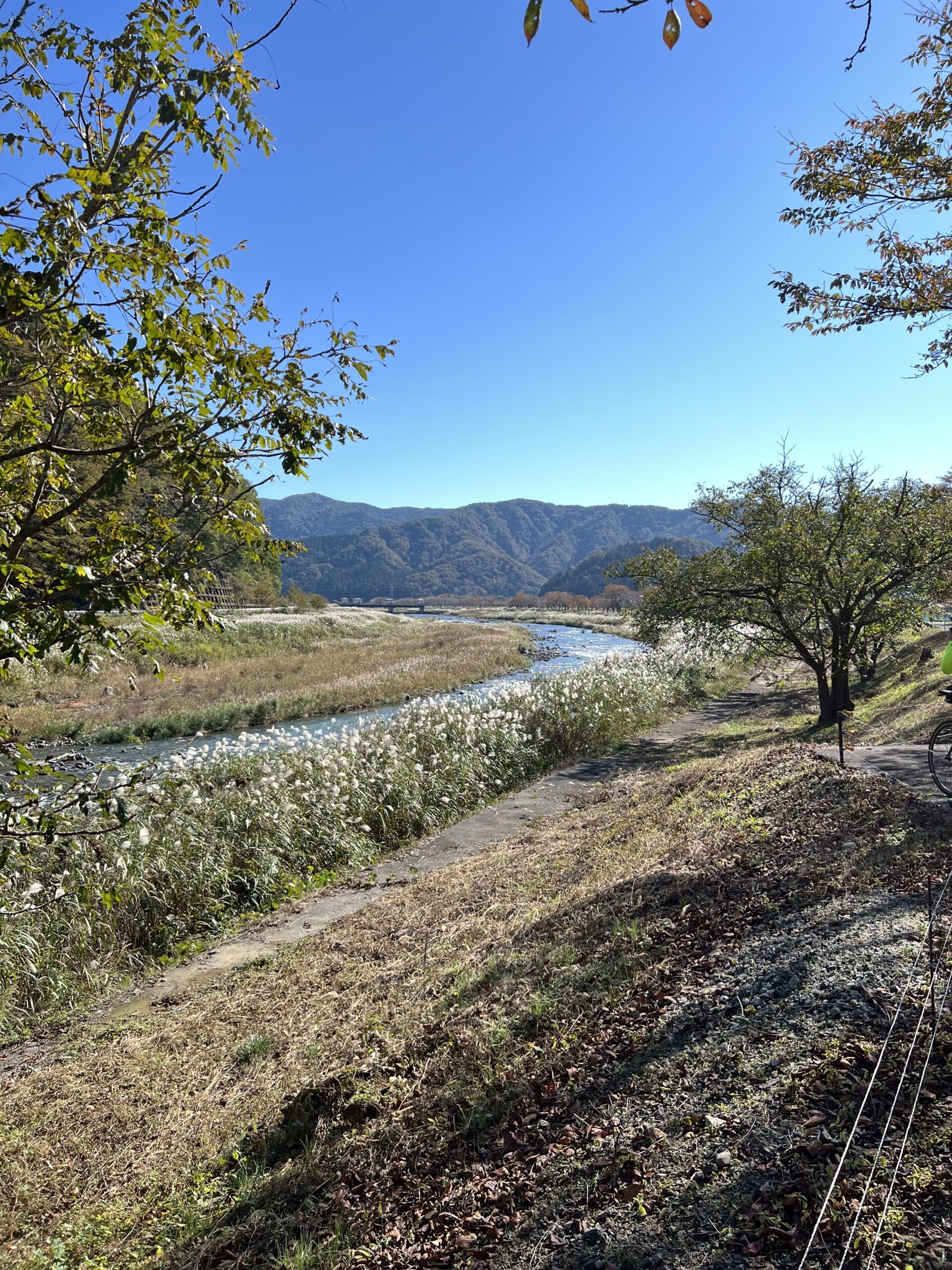
The riding was lovely – along a river, with rice paddies on the sides and feather grass on the river side.
We had to get off and walk a couple of times due to groups of small children on the path near a school; so cute. They formed a ring holding hands around their carer as we went by.
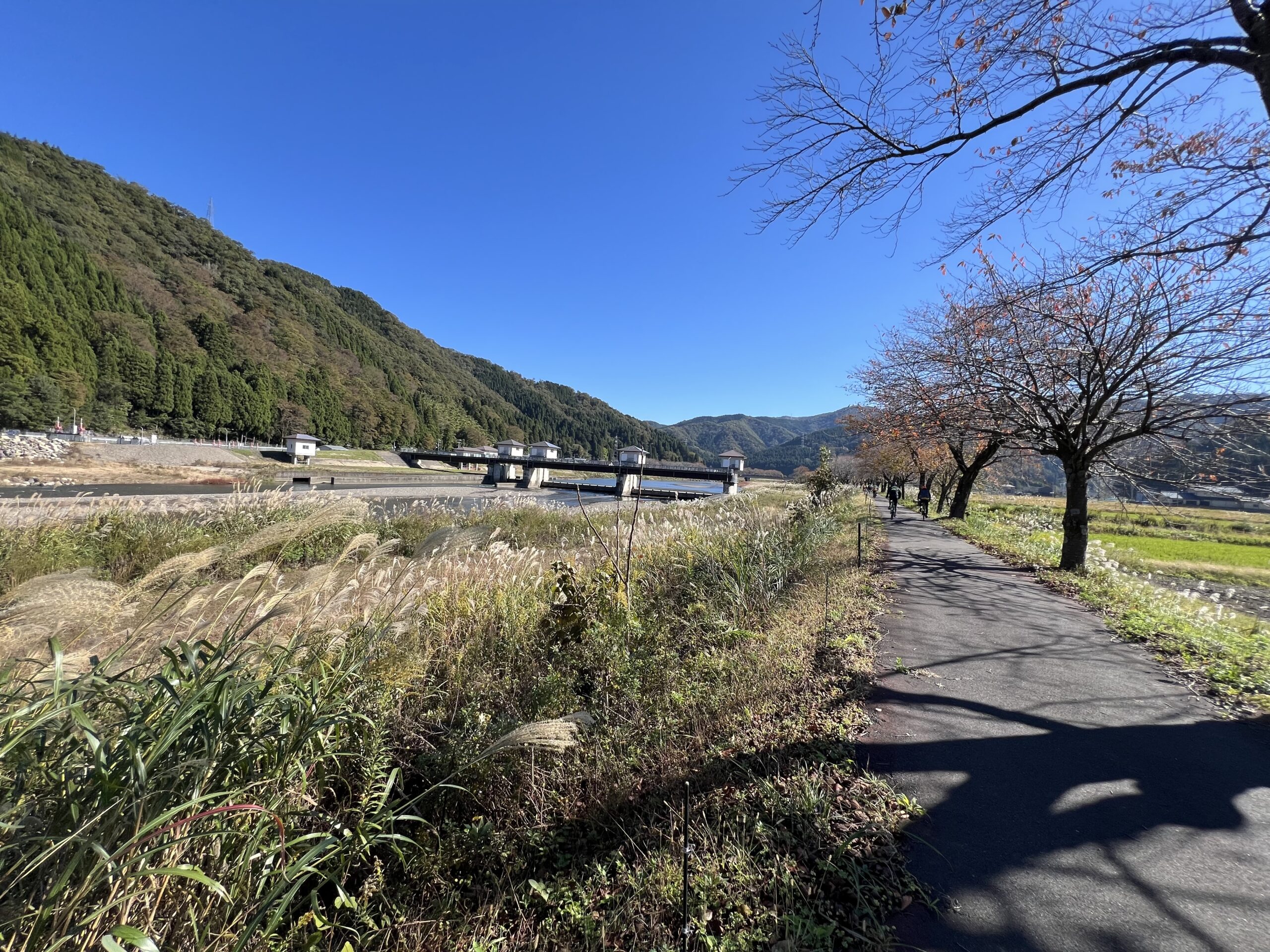
Starting to get a little autumn colour, but the forests are mainly conifer.
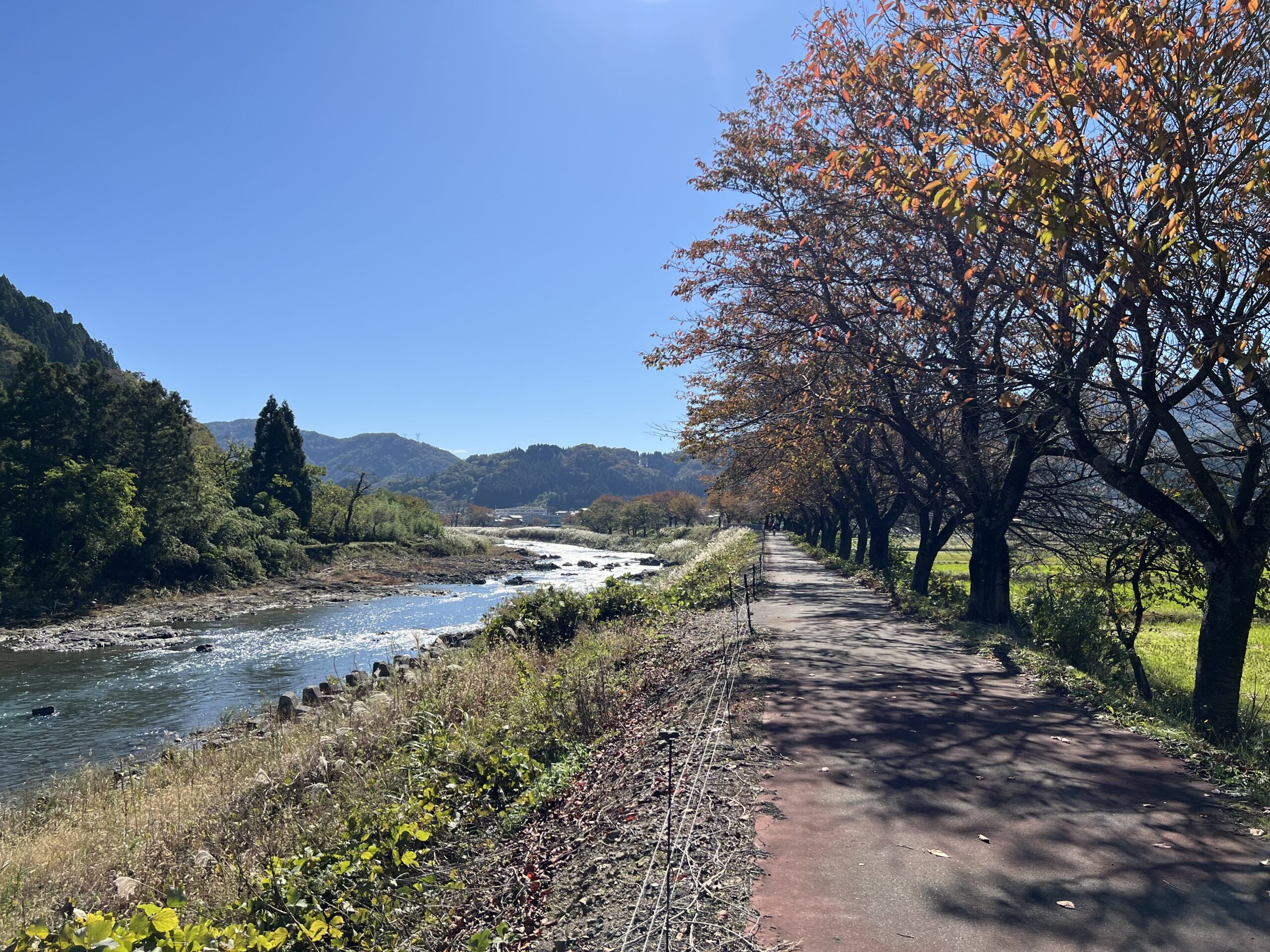
rice paddies on the right
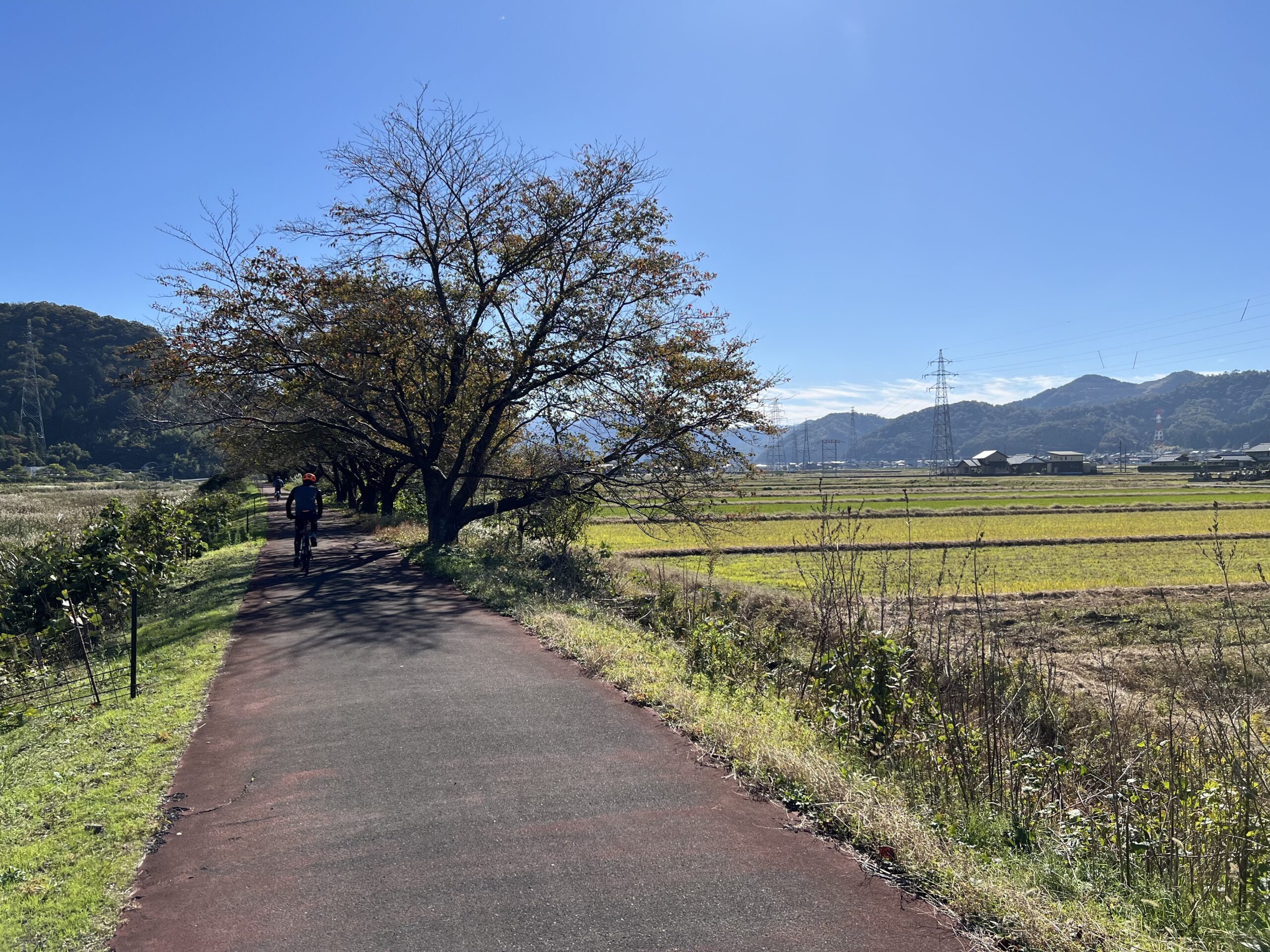
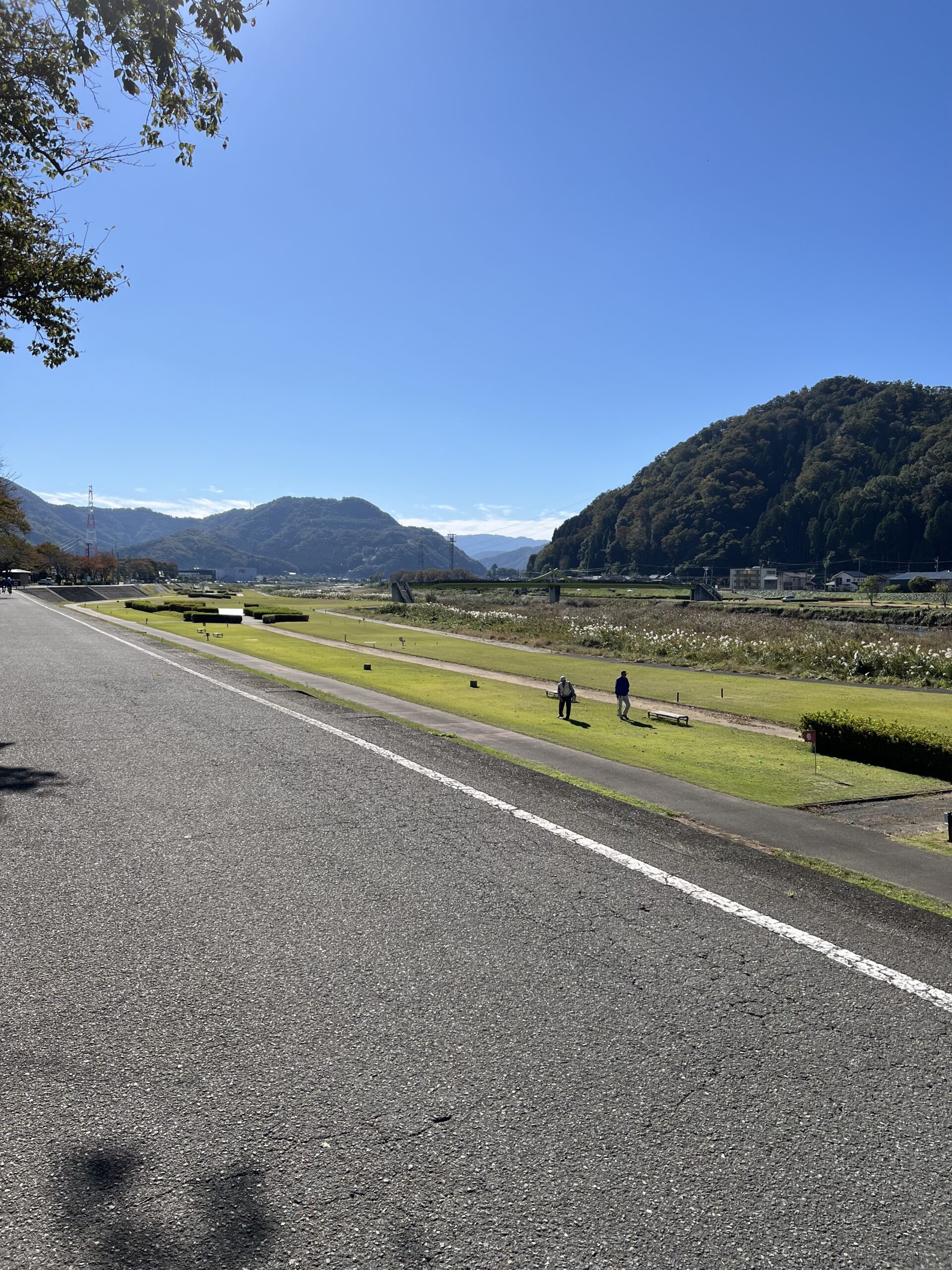
croquet course!
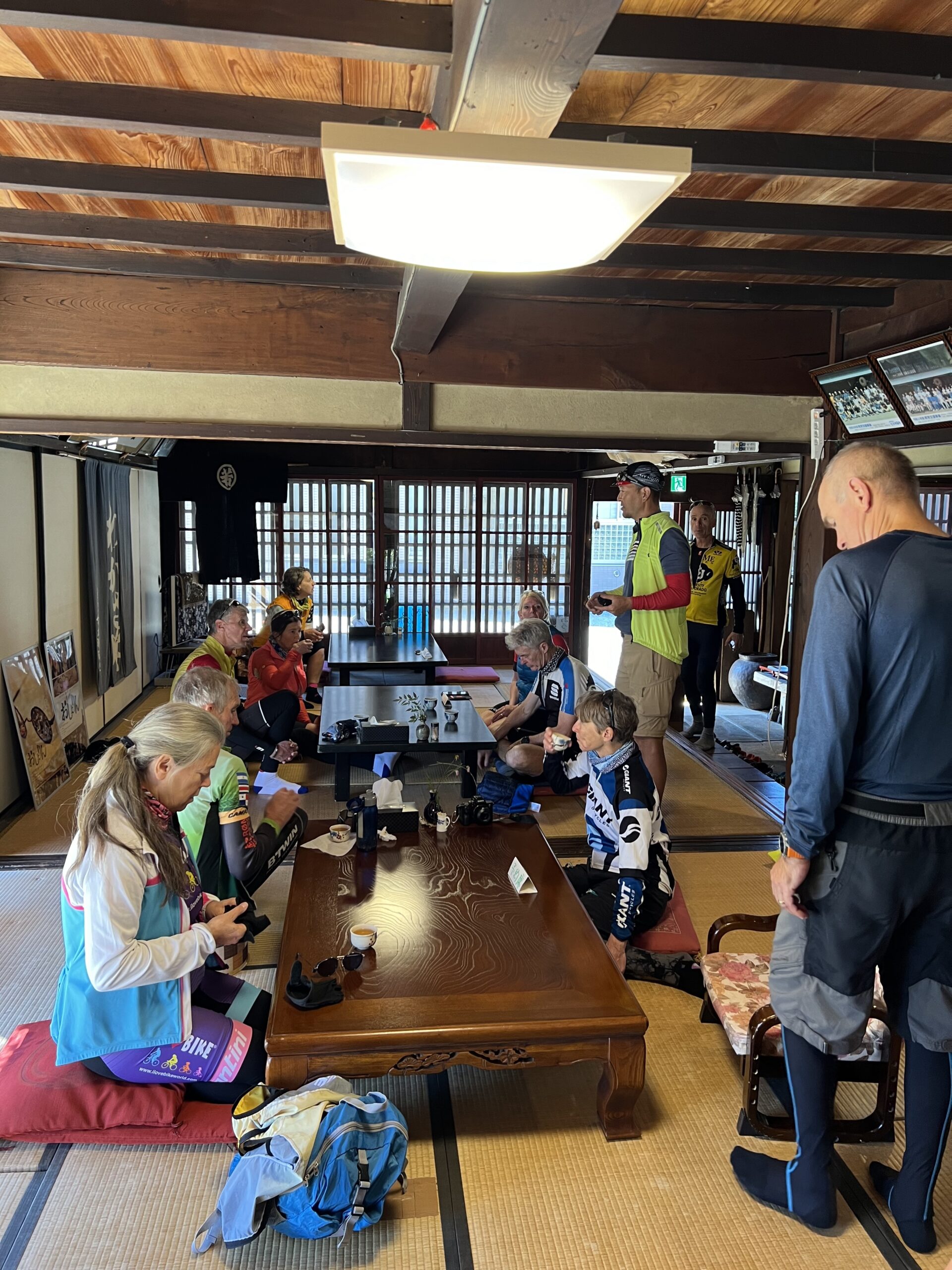
We rode to a village famed for its soba noodles, a very quiet and small village but which had some amazing stores – a specialty coffee bar! and a high end clothes store. Yet there was barely anyone about. The place we went for lunch is 200 years old, now an NGO (non-profit) but used to be a hotel; it wasn’t frequented enough as it’s too far off the beaten path so now serves soba noodles and functions as the HQ of the NGO. Beautiful old traditional house.
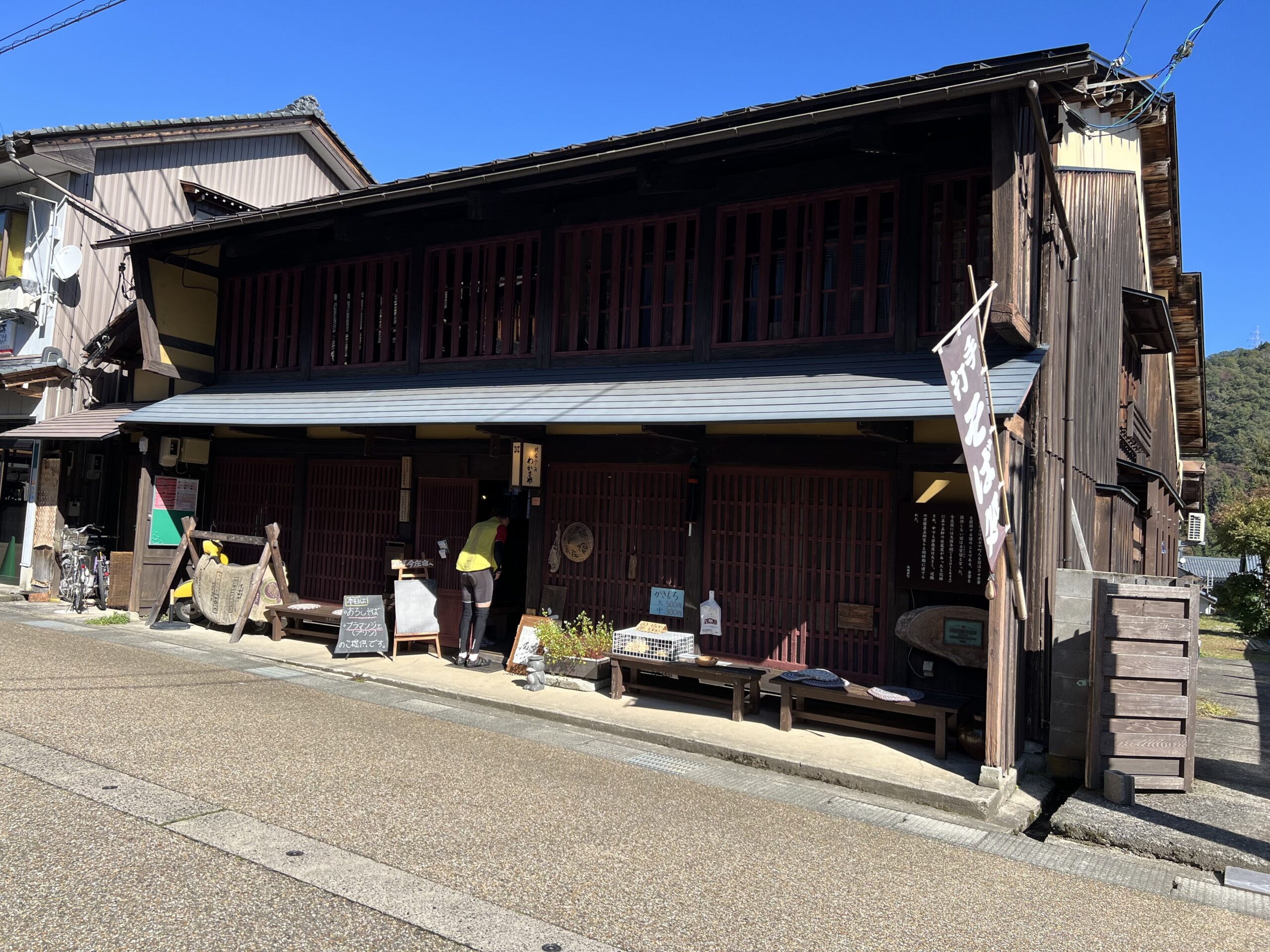
A local came by to chat, quite excited to see a group of foreigners at their soba place, and gave us all pamphlets about the NGO. He also took us upstairs and showed us ancient skis, and told us about a “ski robot” he and another villager had invented and built in his house many years ago. They were invited to Innsbruck to give a talk about it… He wanted to come riding with us, and escorted us on bike to the edge of the village 🙂
He also brought to show us a 100 year old Japanese massage tool, which worked by hand turning and was rated fairly effective by the British couple who tried it.
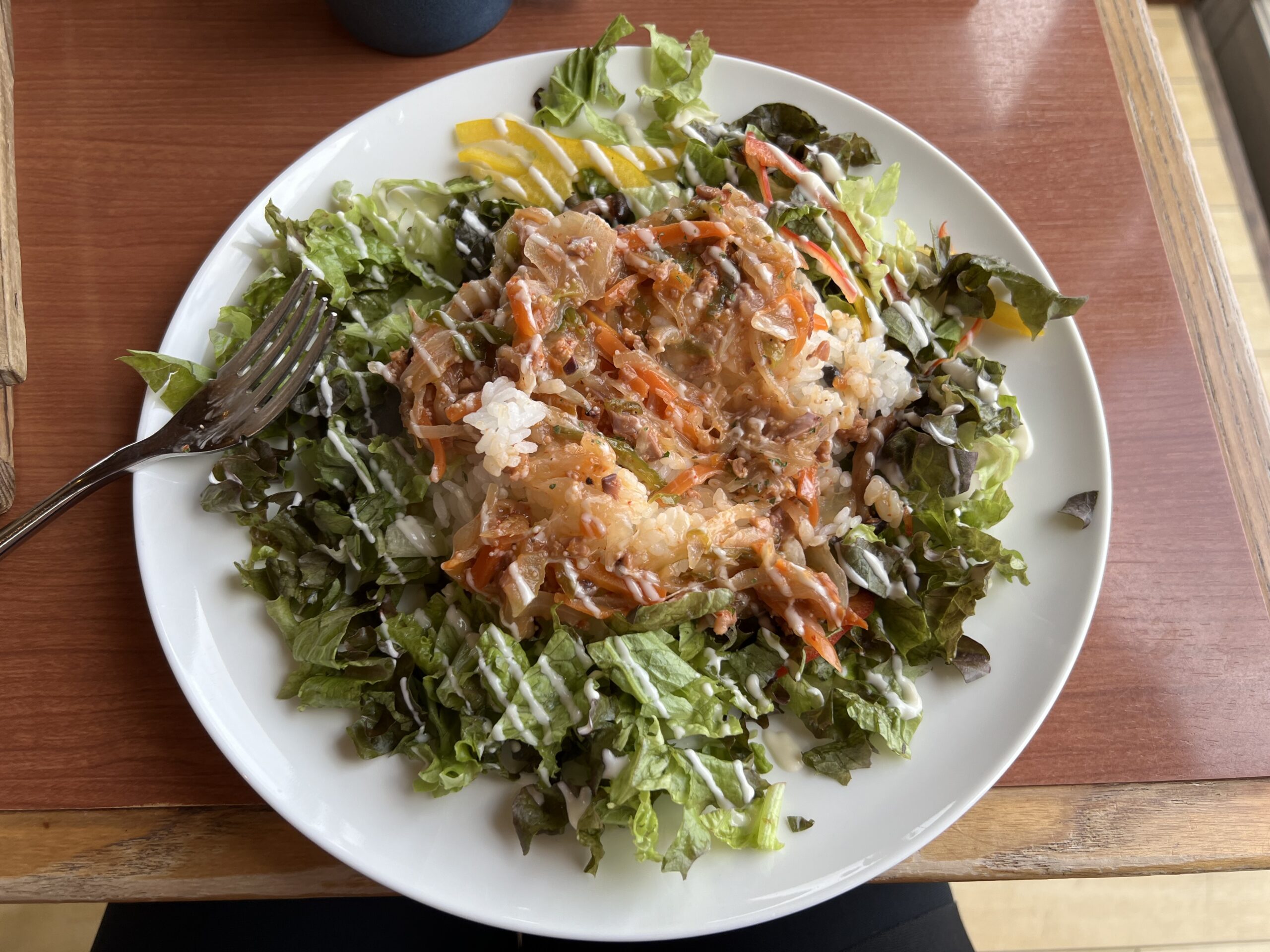
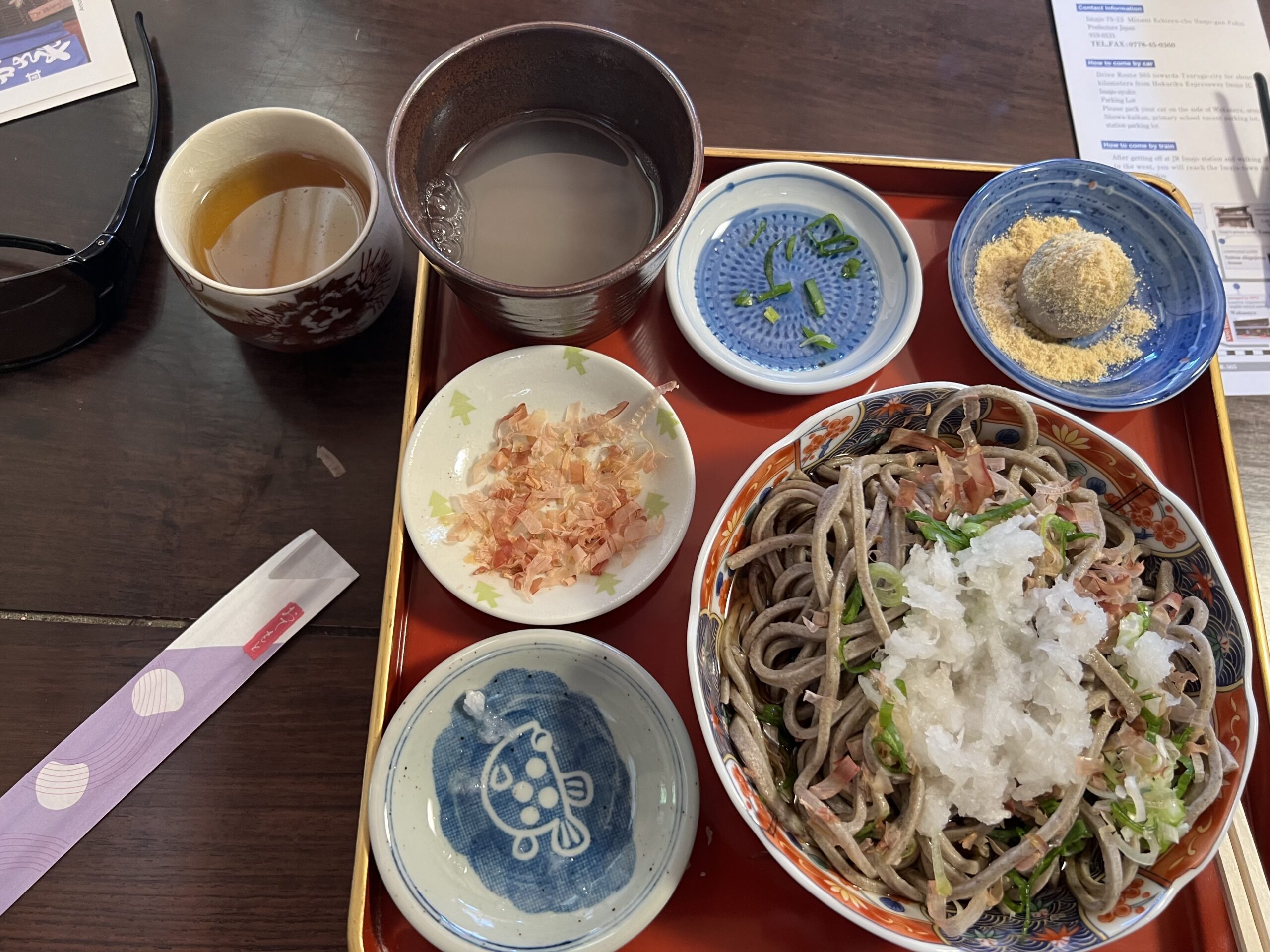
The food was delicious, apart from the dish on the upper left; they served us the water the soba was cooked in, which likely has some nutrients, but it tasted like dishwater. The upper right is a dongo ball, usually made with glutinous rice but I suspect here was buckwheat flour, served with ground almond. It didn’t go down well with most of the Caucasians but I enjoyed it.
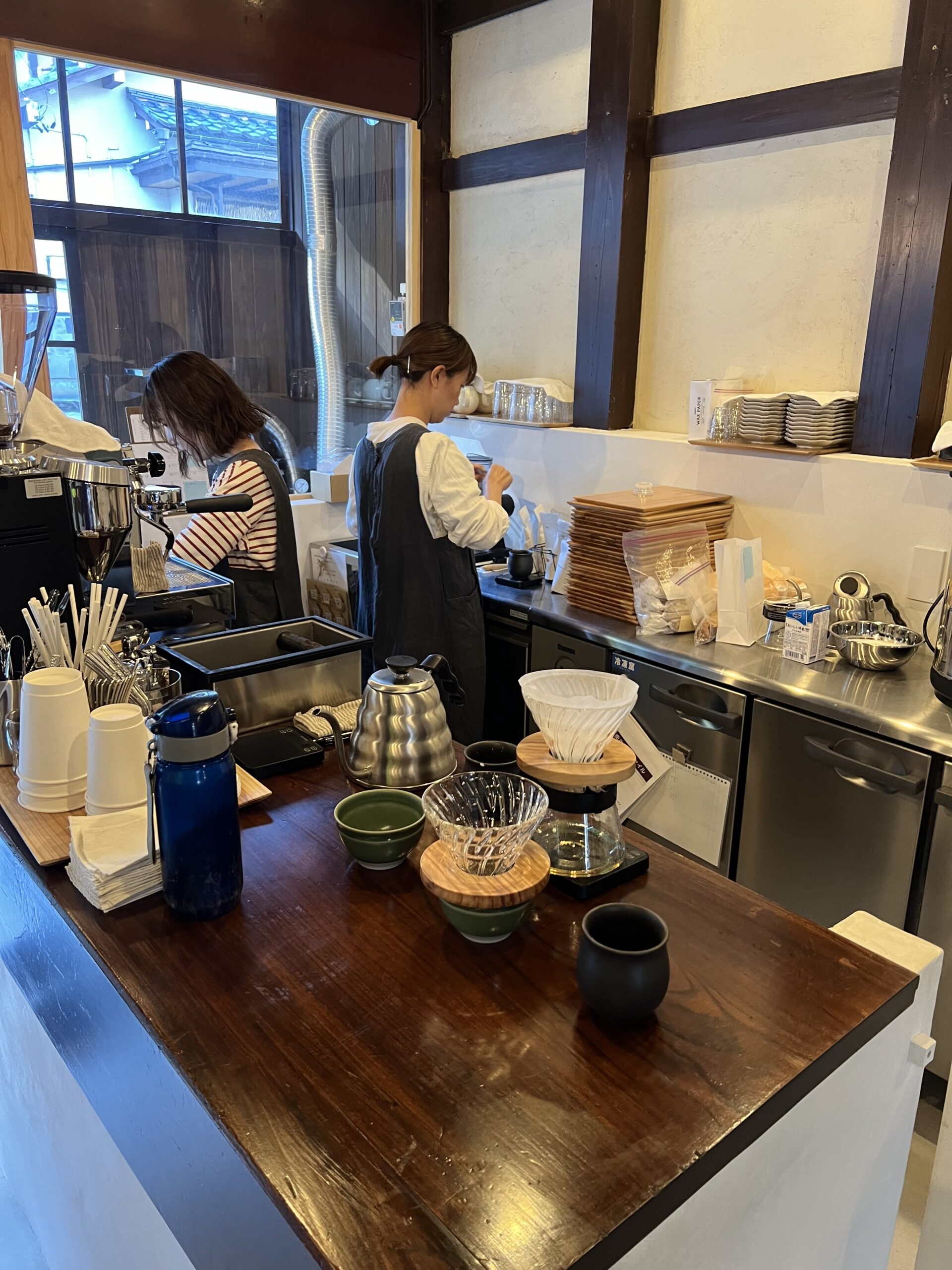
Some of us headed to the coffee bar and were amazed at the variety of coffees to be had. It took a while to get them though as they use a traditional drip method and clearly weren’t in a hurry. Amazing to see that in such a small village, however… the few people we did see waved and smiled at us as we rode by.
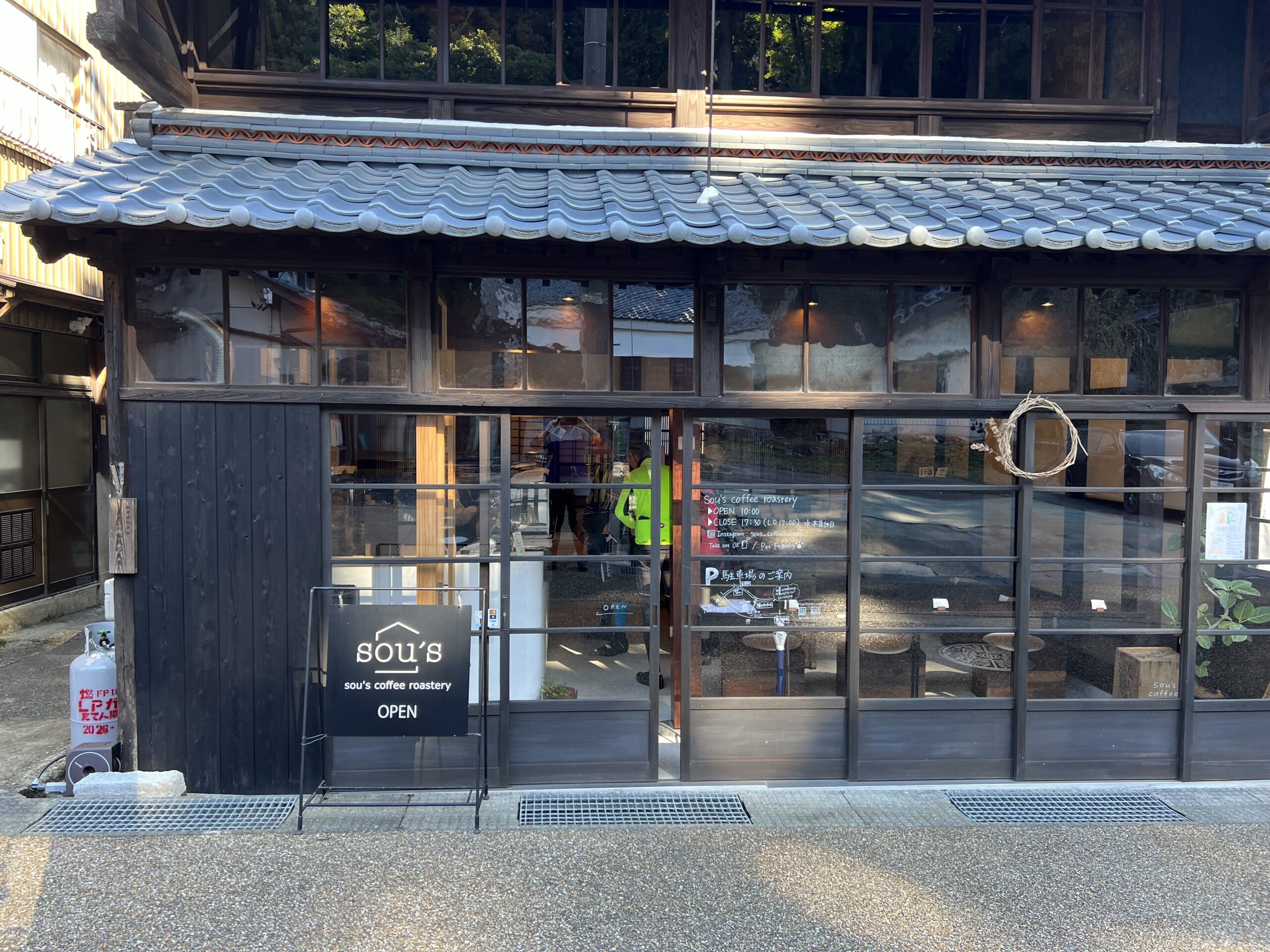
Each cup was ground with selected coffee beans and slowly dripped through, though it looks like there is a machine there as well.
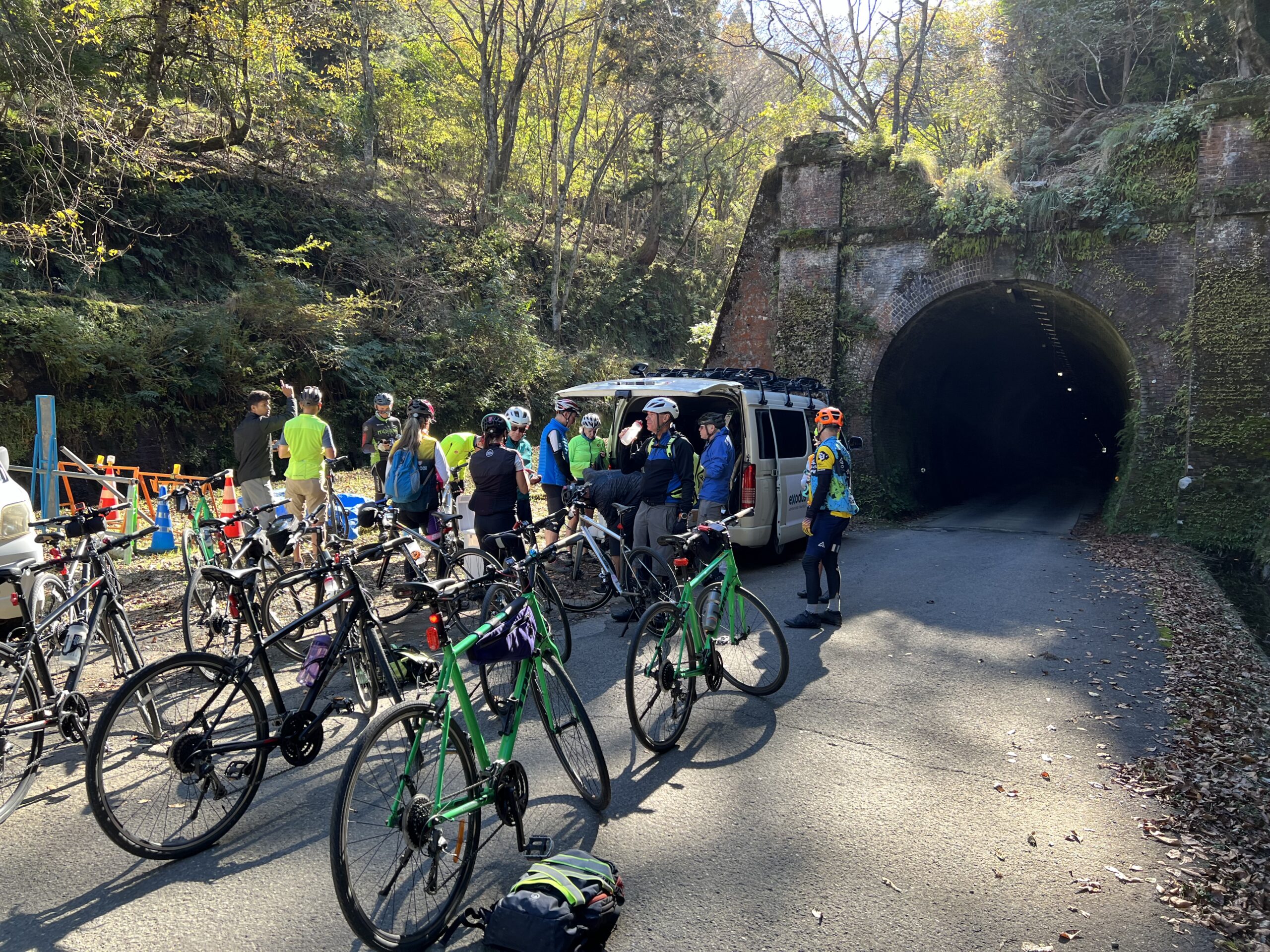
We set off fairly promptly to make our time at the tunnels. A fairly long but gradual hill led up to the start, and the first tunnel was a little downhill which was a tad disconcerting in the dark. We had been warned to only ride in the middle as there were potholes on the edges and that was indeed true; a couple of places were quite wet and the lights had burnt out making it pitch black, but fortunately in most of them it wasn’t long enough to be a problem (the lights on our bikes were completely useless). One long tunnel however had no lights whatsoever and you couldn’t see the other end (there was no light at the end of the tunnel) so it was like skiing in a whiteout – no idea of which end was up. I walked most of that one.
Getting ready to go into the first tunnel.
There were about 8 tunnels in all, owned by different companies apparently and in order to patch the route together each company had to be individually contacted. Some refused initially and then agreed when the others gave permission. Trying to imagine construction of these in the 18th century is mind boggling – dynamite didn’t appear until 1867. Maybe gunpowder from China helped the excavation?
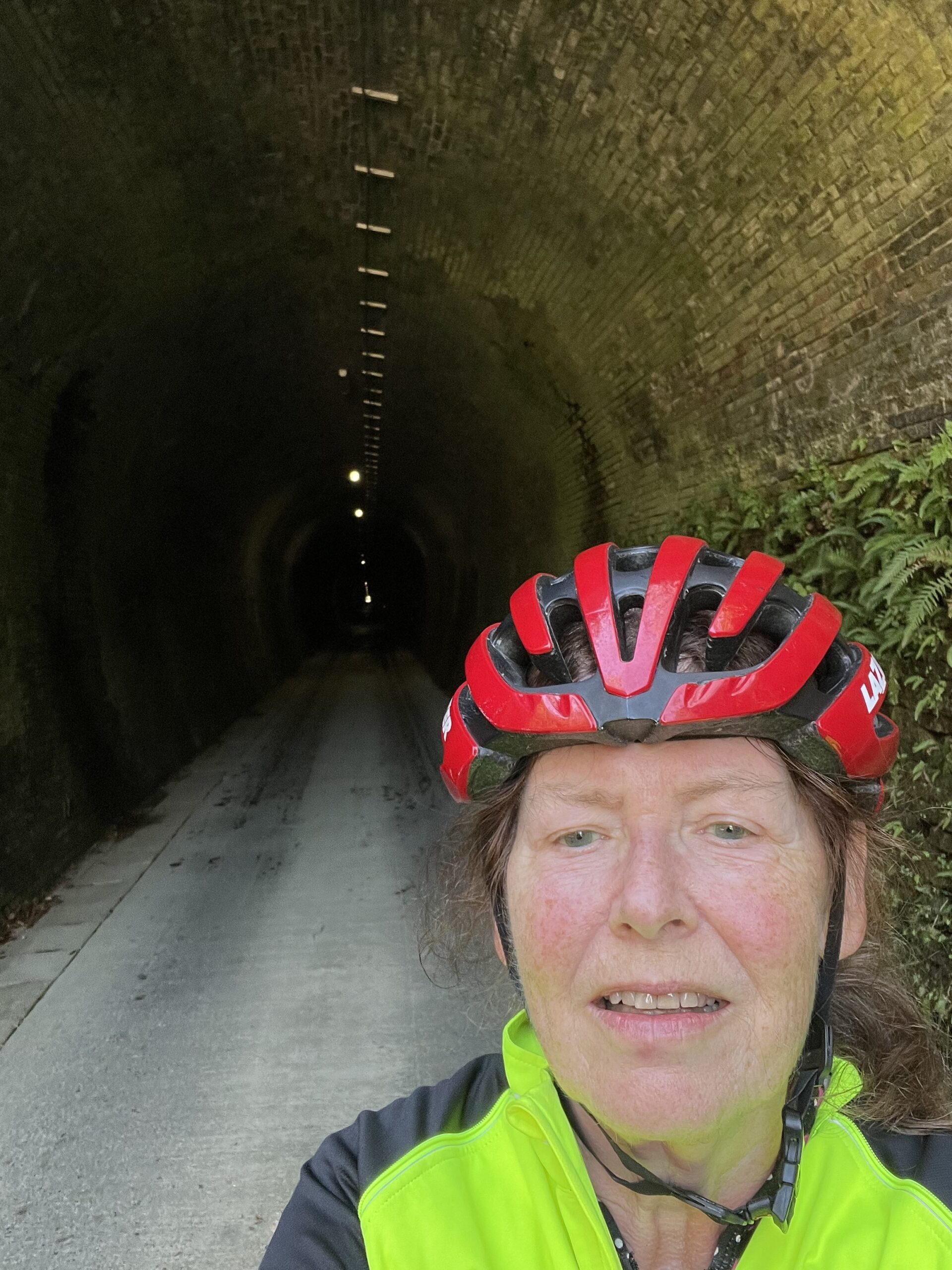
Not my favourite part of the trip, interesting to be sure but having cataracts doesn’t assist in seeing in the dark.
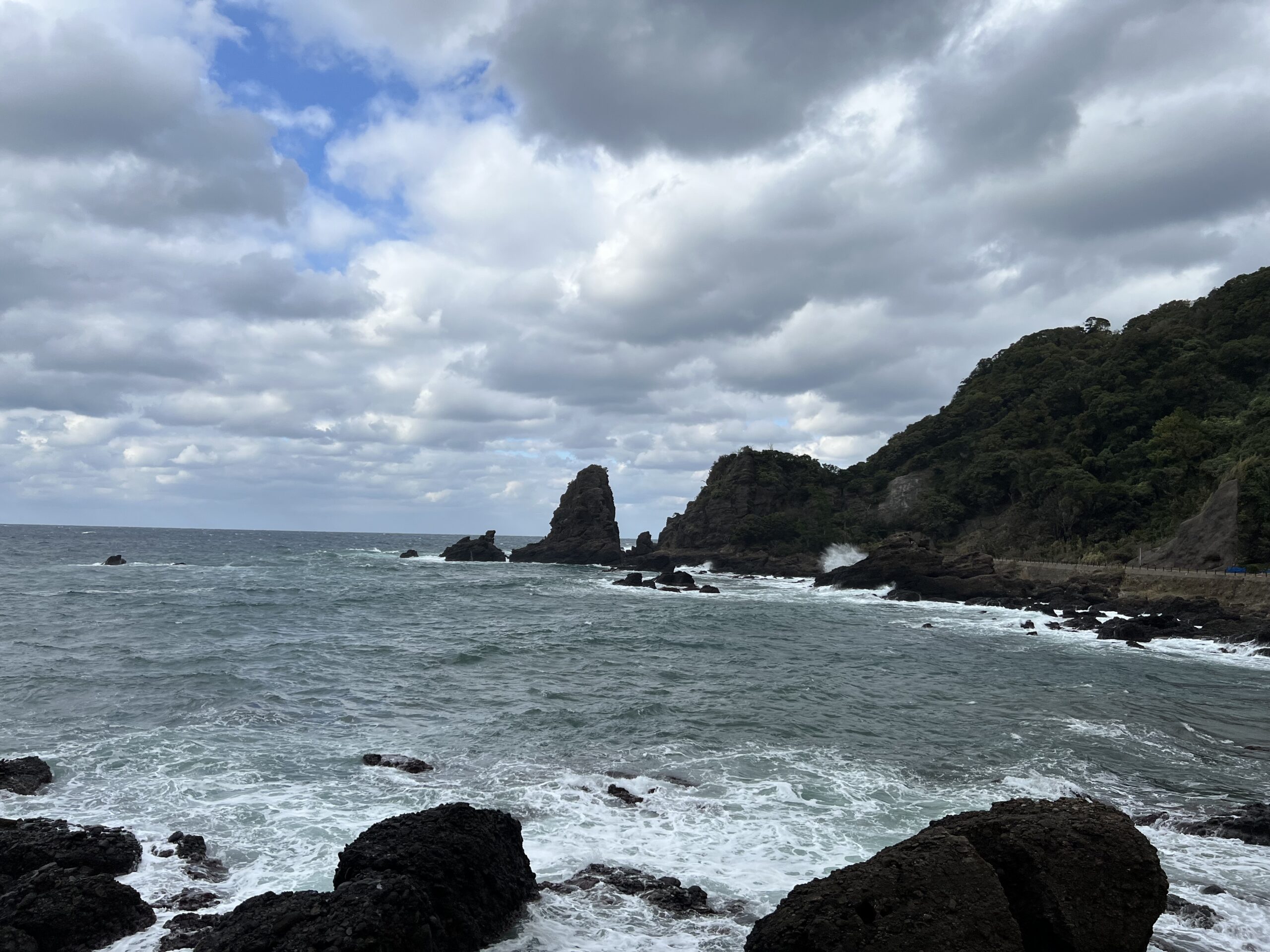
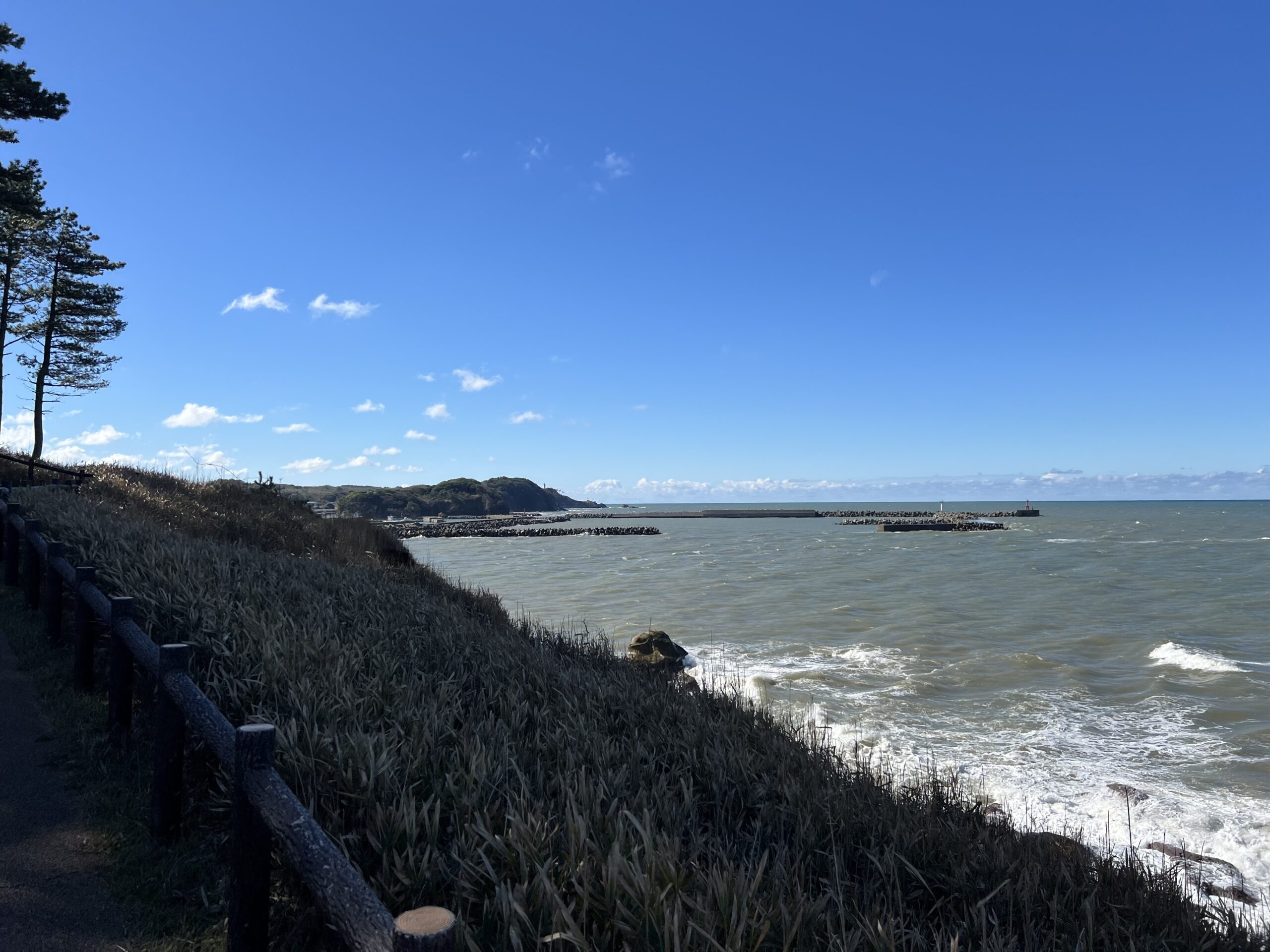
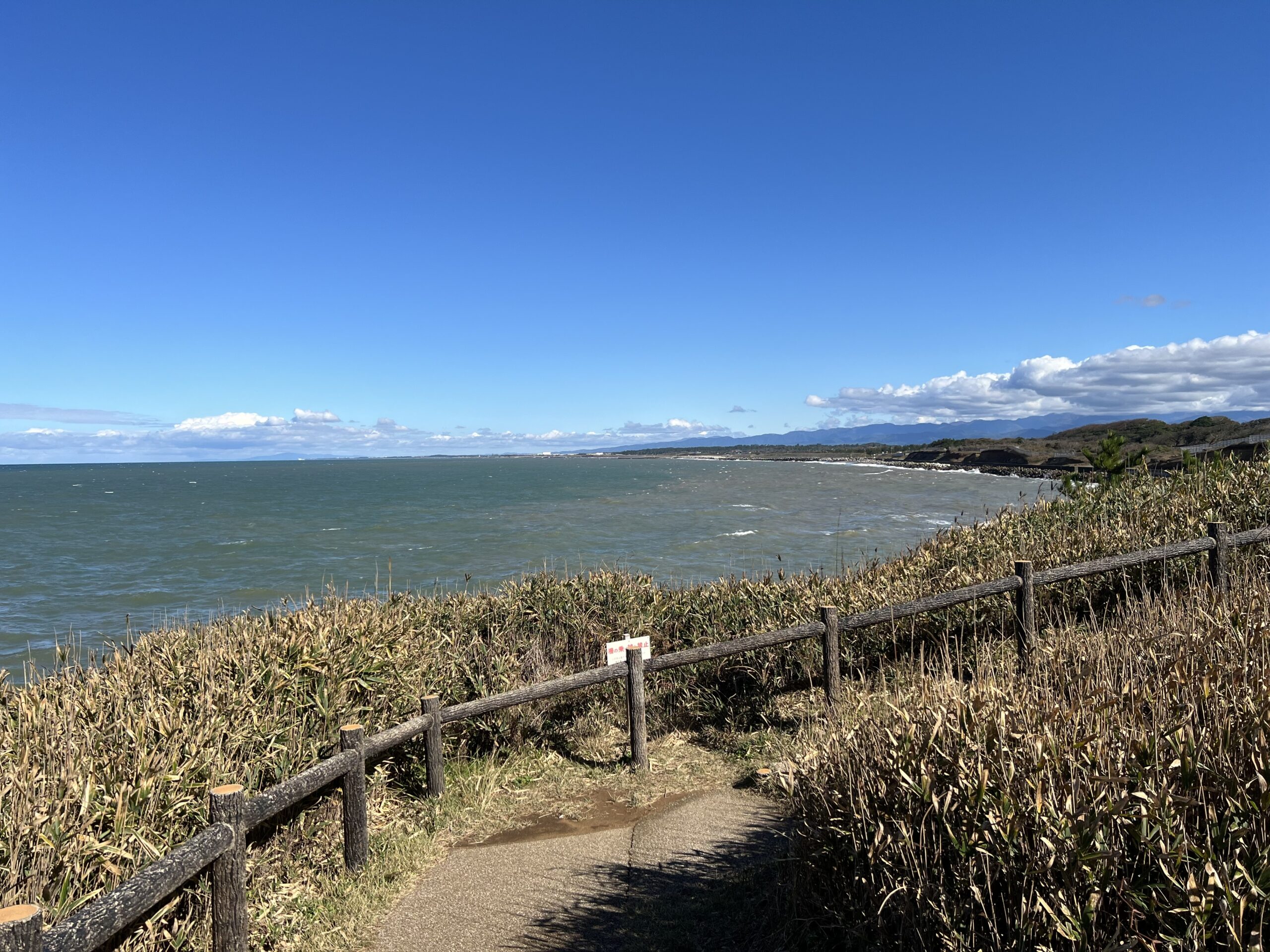
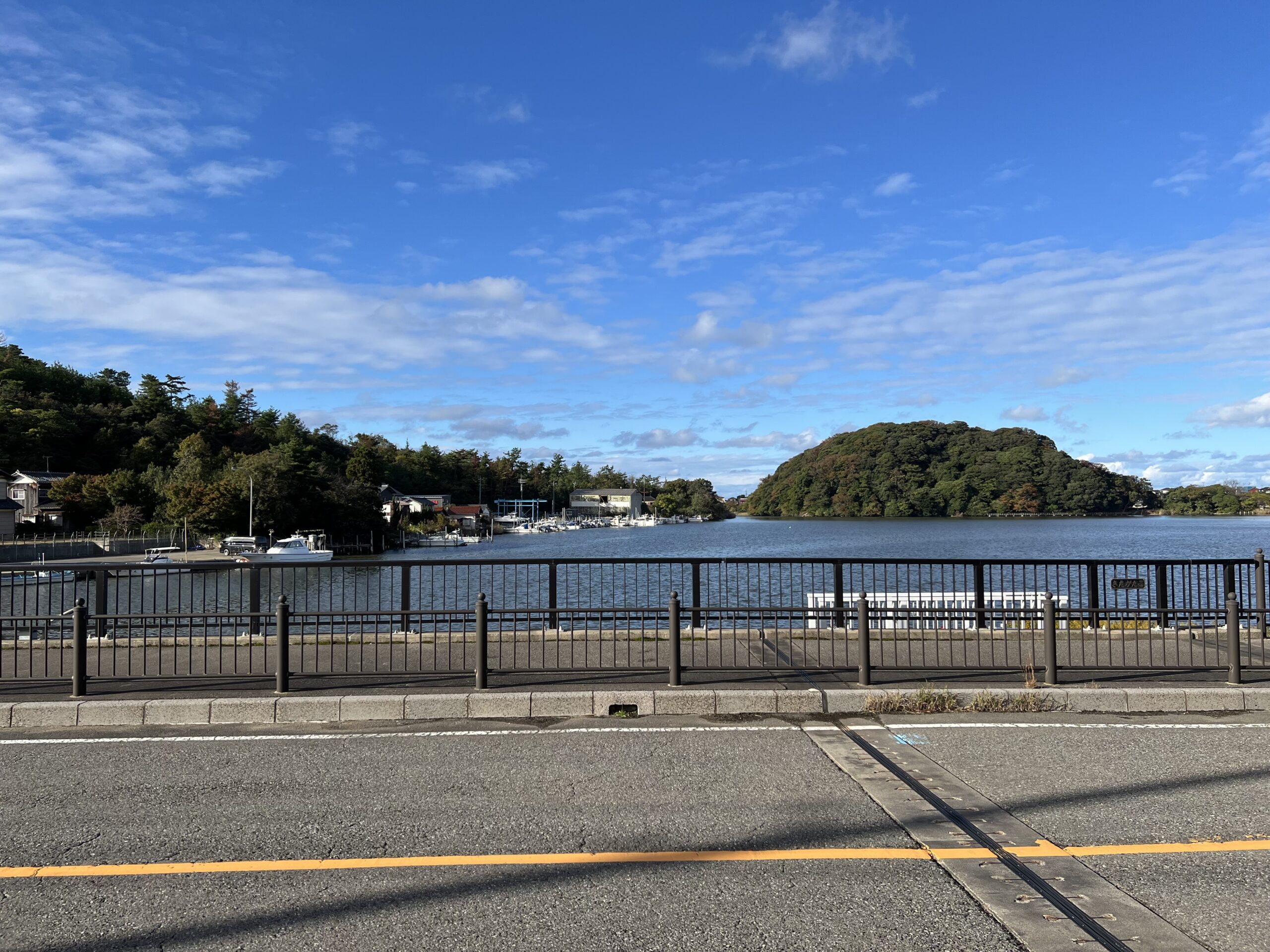
Nice views from up there though! Tsruga Bay.
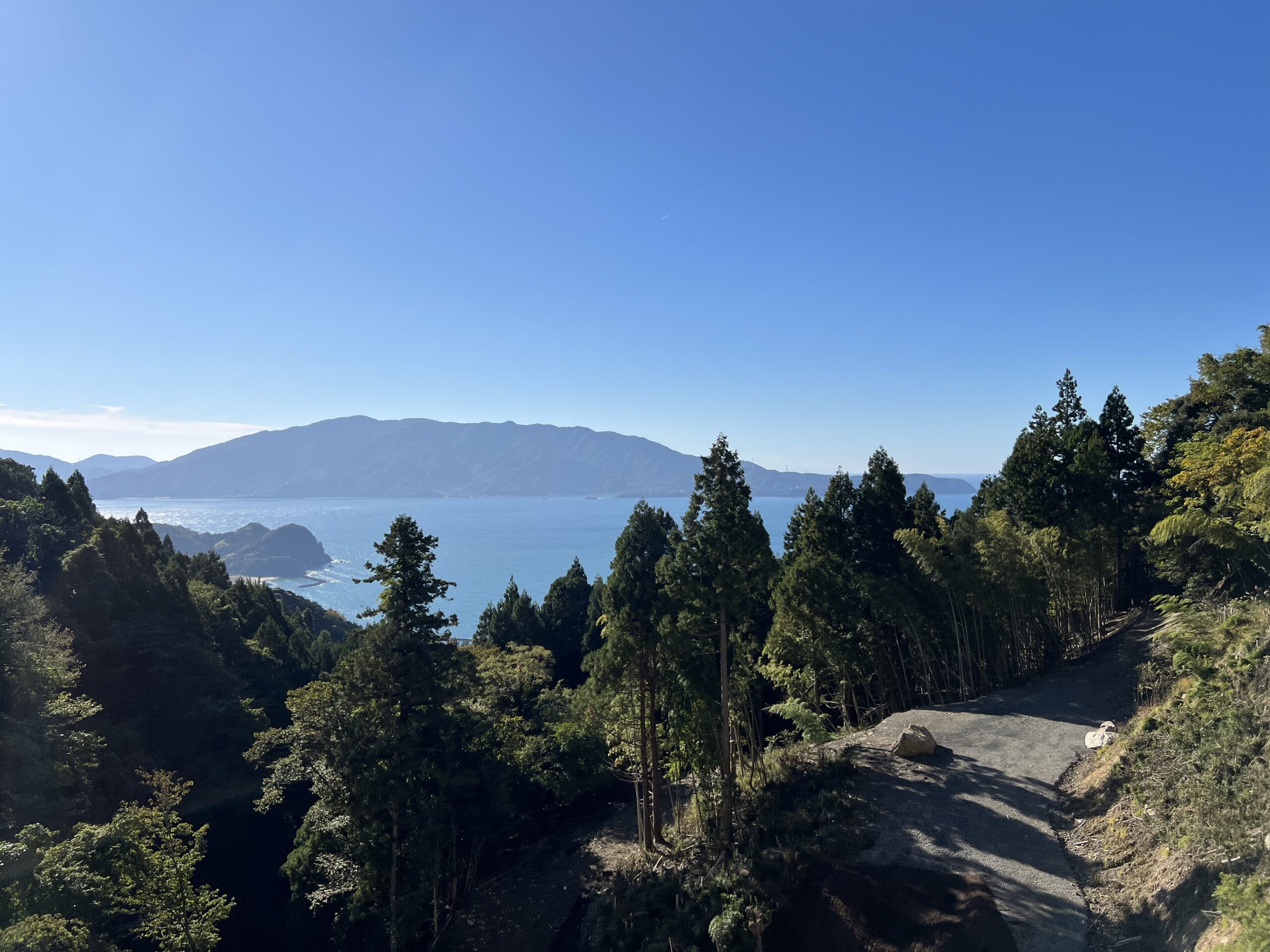
And so from here it was mostly downhill, over back roads and bike paths beside and under a major highway at times and eventually into Tsruga where we will be staying for two days. After the usual soak in the onsen, dinner together with far too much food and drink (pre-ordered inclusive dinner) and VERY noisy and hot in the restaurant so was glad to get back into the cool air. It was generally chilly today, up to 14C in the direct sunshine but cool when moving and apparently another cold day over most of Japan, cooler than yesterday. That’s what we bring layers for though!
Today’s distance: 51 km, 349 m elevation gain
Highlight: the soba lunch and village in a close tie with the knife museum.